
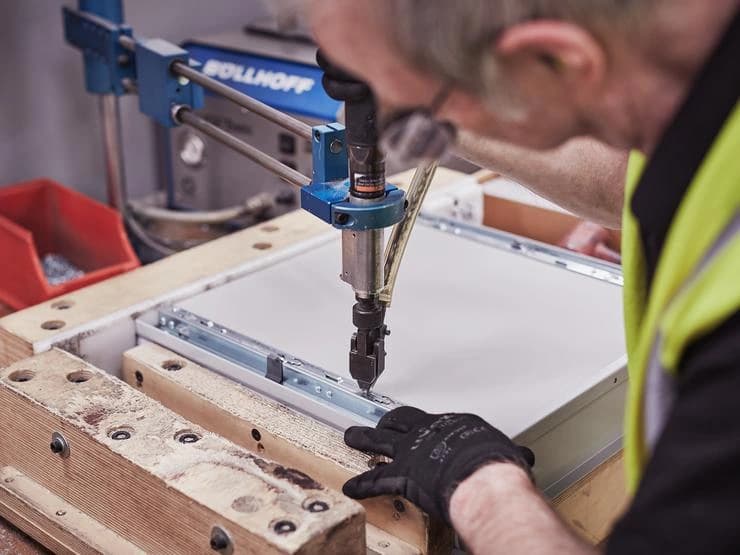

Delivering a bespoke kitchen into a developer programme is a fundamentally different exercise from fitting out a private home. Timelines are shared across trades, handover dates shift, and the cost of delay compounds quickly. Understanding where a kitchen manufacturer fits into your critical path, and what decisions must be frozen before production begins, is the difference between a smooth handover and an expensive last-minute scramble.
Why the Critical Path Starts Earlier Than Most Developers Expect
A bespoke kitchen is not a product you order and receive; it is a manufactured object built to the specific geometry of a finished room. That means the critical path for the kitchen begins at the point when floor-to-ceiling heights, structural openings, and service positions are confirmed, not when you are ready to place an order. Developers who treat the kitchen as a late-stage procurement item routinely find themselves either accepting a modular substitute or absorbing an express surcharge that could have been avoided with earlier engagement.
Freezing Units Before Production Can Begin
The single most important discipline in a developer kitchen programme is the unit freeze. Once cabinet dimensions, door styles, and internal configurations are agreed and signed off, they must not change without a formal variation process. Even a small alteration, relocating a column fridge by 150 mm, for instance, can cascade into revised carcass sizes, new door pairs, and a revised worktop template. Establish a clear freeze date in your programme and treat it with the same rigour as a structural information release.
Managing Outstanding Details Without Delaying Production
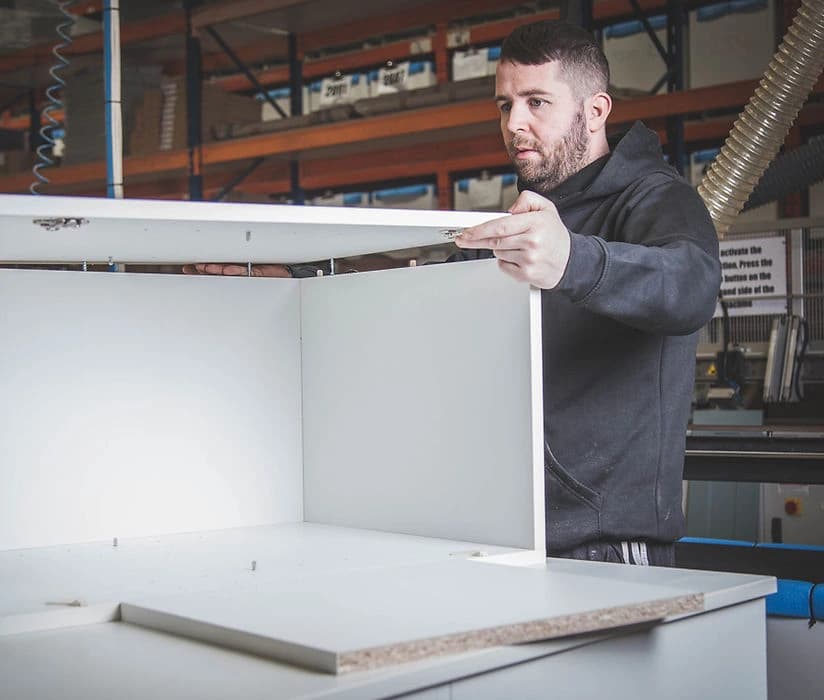
Not every decision needs to be made on the same day. A well-structured kitchen manufacturer will distinguish between items that gate production, carcass sizes, appliance models, handle specification, and items that can follow shortly after, such as internal drawer inserts or lighting colour temperature. Mapping these two tiers of information at the outset allows production to begin on the critical elements while secondary details are resolved in parallel. Ask your manufacturer explicitly which decisions are production-critical and get that list in writing.
Variations: Containing the Damage
Variations are inevitable in developer projects, but their impact on a kitchen programme can be disproportionate. A door finish change after cutting has begun may require a full re-order of that component. A worktop material switch after templating wastes the template visit entirely. The practical mitigation is a written variation protocol agreed before production starts: who can authorise a change, what the lead-time and cost implications are, and at what stage a variation becomes impossible rather than merely expensive. This is not a legal framework, it is a project management discipline that protects both parties.
Express Production: What It Means in Practice
Nura has described a paid express option for suitable projects, subject to current availability and a written agreement. Ask what the indicative six-week window would cover for your order, which event starts it and what milestone ends it. Confirm the drawings, samples, appliance information and site conditions needed before the proposed dates can be agreed. Include survey work, transport, fitting, worktops and commissioning in the wider programme wherever they fall outside that quotation. An accelerated option is useful only when its scope and dependencies match the project’s actual handover requirements.
Stone Sequencing and the Templating Window
Worktop stone is one of the most common sources of programme slippage in developer kitchens. Stone cannot be templated until cabinets are installed and stable, and fabrication after templating typically adds further weeks depending on material and supplier. If your handover date is fixed, work backwards from it: allow for stone fabrication, then templating, then cabinet installation, then cabinet delivery, then production. Freight and site access logistics, particularly in central London developments with restricted loading windows, should be built into this reverse programme explicitly, not treated as a rounding error.
Site Access, Sequencing and Fitting Flexibility
Developer sites have access constraints that a domestic installation rarely faces. Hoisting restrictions, shared goods lifts, floor protection requirements, and concurrent trades all affect when and how a kitchen can be delivered and installed. A manufacturer with experience of developer and commercial environments, including projects outside the UK, will be familiar with these constraints and can adapt fitting schedules accordingly. Nura works with flexible supply and fitting arrangements and has experience coordinating installations across London and internationally. Discuss access logistics at the earliest design stage, not the week before delivery.
Snagging, Buffers and Practical Handover Readiness
No developer programme should plan for a kitchen to be complete on the day of handover. A realistic buffer for snagging, door alignment, soft-close adjustment, appliance commissioning, any minor finish touch-ups, should be built into the programme as a matter of course. The length of that buffer depends on the complexity of the installation, and should be agreed with the installation team rather than assumed from a generic minimum. Developers working with Nura on trade projects can access two complimentary initial consultations to map the programme before any commitment is made, a useful starting point for establishing realistic timelines. For a broader view of how Nura works with design and construction professionals, see the for professionals page and the process overview.
Planning your next step
Use this guide as a starting point for your own brief. Compare the room, materials and practical requirements with the way you want the space to work.
Read the bespoke kitchen planning guide or explore Nura bespoke kitchen services before discussing your project.
Ready to discuss the brief? Contact the Nura studio to share your plans, questions and priorities.