
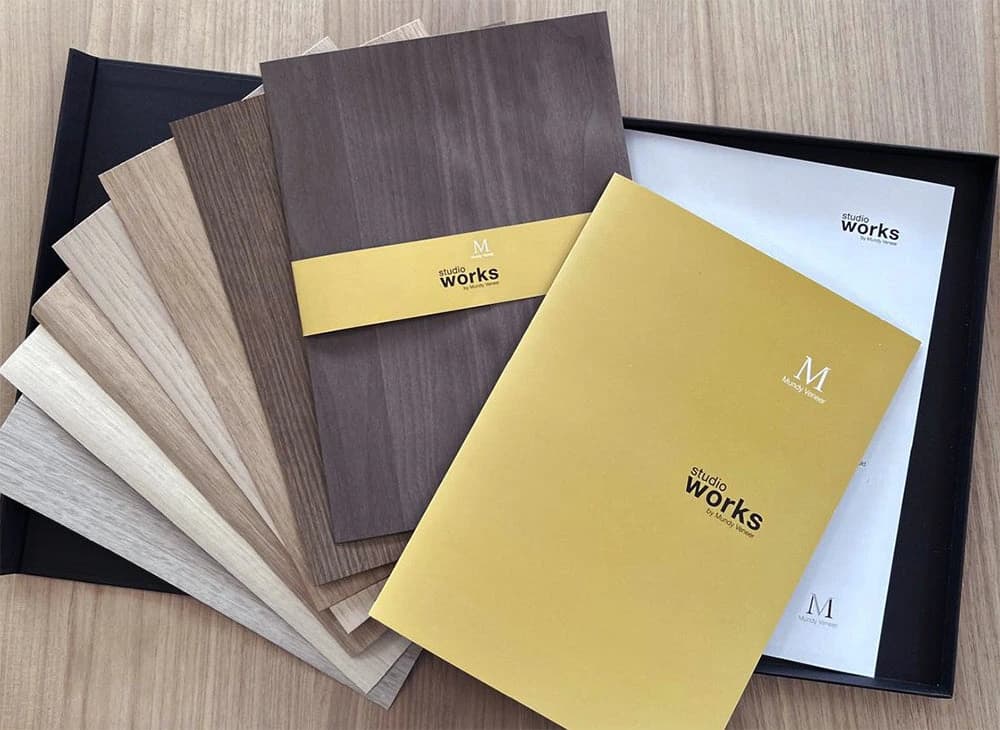

Choosing a timber veneer for a bespoke kitchen is one of the most rewarding decisions in the whole design process, and one of the most easily misunderstood. Oak, walnut and ash each carry a distinct visual character that shifts depending on how the log was cut, how the leaves are arranged across a door face, and whether a stain or oil is applied. Understanding those variables before you sign off on samples will save you from surprises when the first cabinet arrives on site.
Why the Cut of the Log Changes Everything
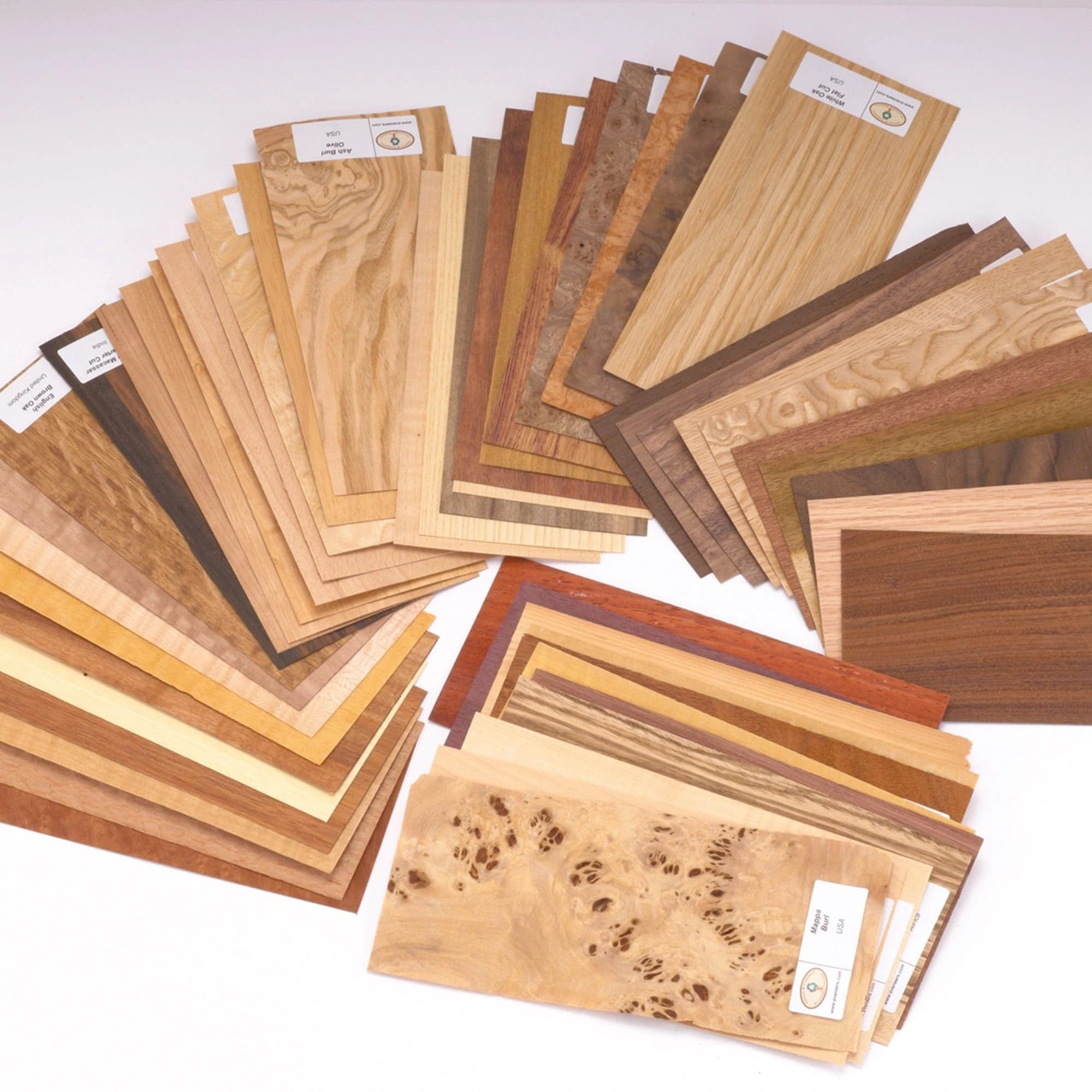
The way a log is sliced determines the grain pattern you see on the finished door. Crown-cut veneer, taken tangentially through the log, produces the familiar arching cathedral figures associated with classic oak furniture. Quarter-cut veneer, sliced closer to the radius, yields tighter, straighter lines and, in oak specifically, the distinctive medullary ray flecks that many designers prize for their quiet, contemporary quality. Ash quarter-cut can appear almost linear, while walnut crown-cut tends toward broad, sweeping waves. Ask your supplier or joiner which cut is being used before approving a sample, because the difference is dramatic at door scale.
Natural Variation Is a Feature, Not a Fault
Every veneer leaf comes from a living tree, so colour, grain density and figure will vary across a run of doors, sometimes noticeably. Heartwood and sapwood can appear within the same panel, and mineral streaking is common in walnut. This variation is inherent to the material and is generally considered part of its appeal, but it is worth discussing your tolerance for contrast with your designer early. If you are expecting the uniform consistency of a painted door, veneer may require a shift in expectation rather than a change of specification.
Face Matching: Mirror, Book and Slip
When a door is wider than a single veneer leaf, two or more leaves must be joined. The arrangement of those leaves, the matching method, has a significant effect on the finished appearance. Book matching folds adjacent leaves like the pages of a book, creating a symmetrical, mirrored grain that reads as formal and considered. Slip matching slides leaves in the same orientation side by side, producing a repeating pattern with a more relaxed, linear quality. Mirror and repeat-slip matching are among the most common methods used in cabinetry; your supplier can advise which suits the species and door width in question.
Viewing Samples at the Right Scale
A small sample is useful for colour and texture, but cannot fully describe the appearance across a tall elevation. Grain that looks subtle on a small piece can feel overwhelming across a bank of tall larder doors, while a figure that appears busy in isolation can settle beautifully when seen at elevation. Wherever possible, ask to view full-height door samples or, at minimum, a sample that represents the widest panel in your layout. Holding the sample vertically under the lighting conditions of your actual kitchen, natural and artificial, will tell you far more than any studio viewing.
Staining Veneer: Possibilities and Honest Limits
Veneer can accept stain, oil and tinted lacquer to shift its natural colour, but it behaves differently from solid timber and from painted surfaces. Because the veneer layer is thin, aggressive sanding to correct an uneven stain application risks breaking through to the substrate beneath. Stain also interacts with the species: oak's open grain absorbs colour unevenly without a pore filler, ash can streak, and walnut, already rich in natural tannins, may respond unpredictably to certain pigments. Stain is not an opaque paint; the grain remains visible, and the result is a tinted version of the wood rather than a flat colour.
Nura's Custom Stain Process
Nura can explore stain and colour matching within the agreed project scope. Bring the surface you want the veneer to complement, then discuss representative timber, preparation and coating samples. The approved result needs to show both the colour and the grain character you want to retain. Confirm what matching and sampling are included in the quotation, particularly if the reference involves a specialist effect or a difficult relationship between different materials. Our consultation is a useful place to establish that brief before final selections are made.
Repair and Long-Term Maintenance
Veneer is not universally sandable. Minor surface marks can sometimes be addressed with careful spot treatment, but deep scratches or localised delamination require specialist attention, and the outcome depends on the thickness of the veneer layer and the finish applied over it. This is not a reason to avoid veneer, it is simply a reason to treat it with the same care you would give any quality surface. Regular cleaning with a lightly damp cloth and a pH-neutral product, combined with avoiding prolonged moisture contact at edges, will keep a veneer kitchen looking well for many years.
Choosing Between Oak, Walnut and Ash
Compare representative oak, walnut and ash rather than relying on a fixed ranking. Each can offer different grain patterns and tones depending on the selection, cut and finish. Decide how much contrast and natural variation you want across the elevation, and review it beside the other materials in your home. A species name alone does not establish the resulting colour or the way a stain will appear. For coordinated interior projects, the professional collaboration page explains how to begin a conversation with the studio.
Sources and further reading
Planning your next step
Use this guide as a starting point for your own brief. Compare the room, materials and practical requirements with the way you want the space to work.
Read the bespoke kitchen planning guide or explore Nura bespoke kitchen services before discussing your project.
Ready to discuss the brief? Contact the Nura studio to share your plans, questions and priorities.