


Is porcelain right for your kitchen worktop?
Porcelain can be considered for a kitchen worktop when the named product, finish and fabrication details suit the brief. Compare care instructions, edge details, cut-outs and installation requirements before ordering; the material name alone does not establish suitability.
A worktop has to do more than look beautiful. It needs to suit how you prepare food, clean, entertain and use your kitchen every day. Porcelain is one option worth exploring, but the right decision depends on the exact product, finish and installation.
What is a porcelain kitchen worktop?
Porcelain worktops use large-format ceramic surfaces. Manufacturers offer different thicknesses, finishes and decorative effects, so the word “porcelain” does not describe one uniform product. Ask to see a sample of the surface you are considering and its current technical specification.
Use this guide as a starting point for a conversation with your designer and fabricator. Product-specific care instructions and installation requirements take priority over general advice.
Benefits to consider
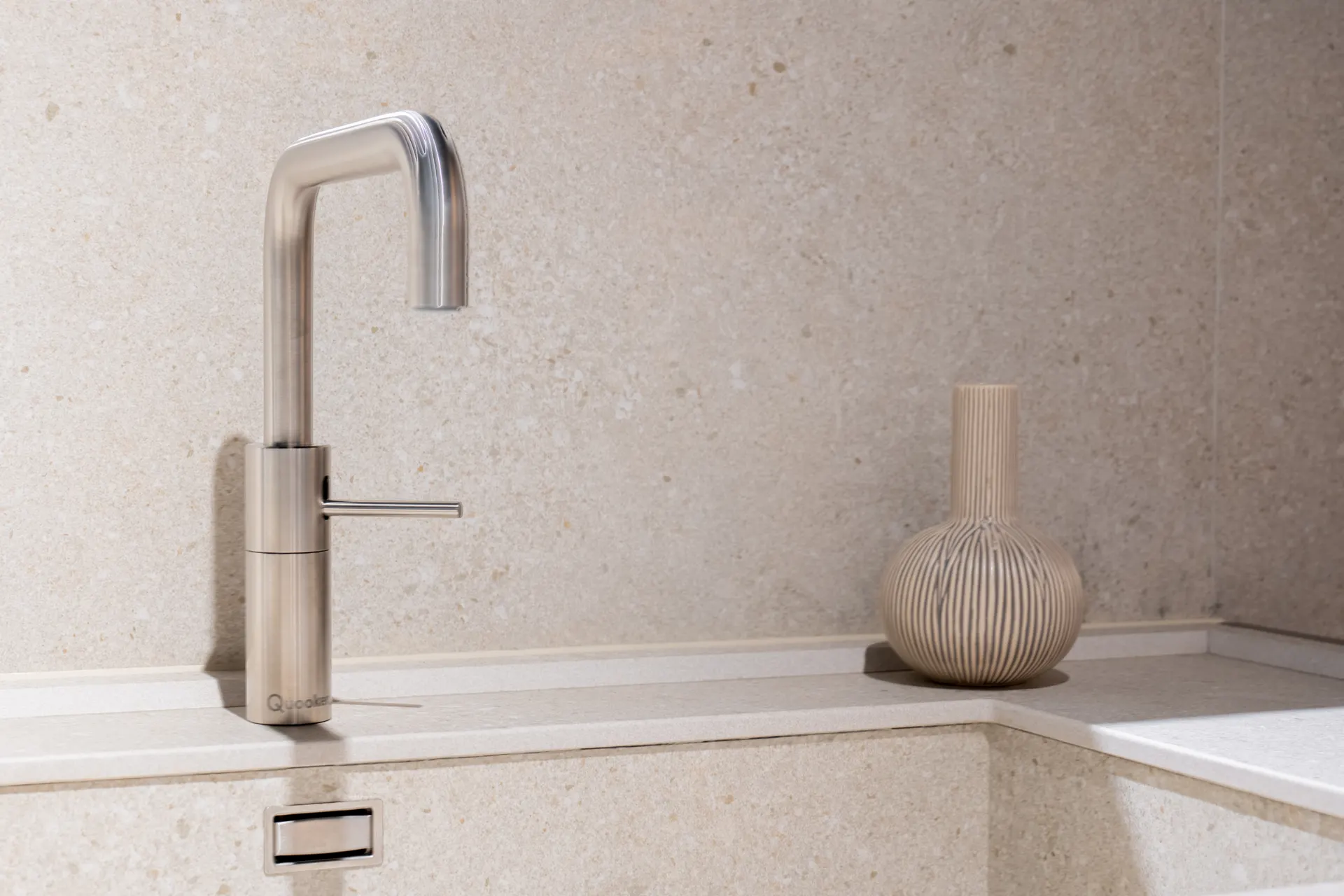
Porcelain can bring a consistent material language to worktops, splashbacks and other surfaces. Stone-inspired patterns and quieter colours offer different ways to balance the cabinetry and room. Consider the scale of the pattern across a full slab, rather than judging only a small sample.
Care requirements can be straightforward, although they depend on the finish. Laminam’s guidance explains that fresh dirt is generally easier to remove and provides different cleaning instructions for different surface finishes. Read the manufacturer’s cleaning guidance.
Limitations and details to check
Before ordering, review the proposed edge profile, joints, sink cut-out, support and any overhang with your fabricator. Ask what happens if an edge is damaged and whether a repair would remain visible. Do not assume that a highly resistant surface is immune to every kind of impact or misuse.
Check how the printed pattern meets the edge and whether the chosen finish suits the lighting in your room. View the sample in daylight and under the proposed artificial lighting. The appearance of an online photograph can differ from the material in person.
Cleaning and everyday care
Keep the current care sheet for your specific surface. Start with the manufacturer’s recommended routine, and check its guidance before treating a difficult stain. A product suitable for one finish may not be the right choice for another.
Use chopping boards and appropriate heat protection as everyday habits, and ask the supplier to explain the surface’s stated limits. Avoid testing resistance by dragging tools across the worktop or placing unusual heat loads on it. Confirm which cleaning products are approved rather than assuming that all chemicals are safe.
Assessing environmental claims
A surface made from natural raw materials is not automatically impact-free. Ask for product-specific information about manufacture, recycled content, transport, service life and end-of-life options. Compare evidence for the exact product rather than relying on an “eco-friendly” label.
For example, Laminam’s FAQ describes its own porcelain composition and recycled-content claims. Those statements relate to that manufacturer’s products and should not be applied to every porcelain worktop.
Choosing a worktop for your kitchen
Start with your priorities: appearance, cleaning routine, budget, edge treatment and how the kitchen will be used. Compare porcelain with the other materials on your shortlist, then review the fabrication details before the cabinetry is finalised.
For the next step, read how to choose the right worktop for your kitchen, explore our bespoke kitchen design service or see how materials work together in the Elm Park Road kitchen project.
Compare the practical details
This comparison uses two named manufacturers as examples, not a ranking of every porcelain or composite product. Appearance, fabrication and the exact finish still matter.
| Surface | Everyday care | What to check before ordering |
|---|---|---|
| Porcelain (Laminam example) | A damp microfibre cloth and neutral detergent, followed by rinsing and drying. | Finish-specific cleaning rules, edge detail, support and fabrication requirements. |
| Mineral-based composite (Silestone example) | Neutral soap and a damp microfibre cloth; remove the residue and dry. | Use trivets for hot objects. Confirm the current care sheet and suitability for the intended location. |
Laminam cleaning and maintenance
Silestone maintenance and heat guidance
Your pre-order checklist
View the exact sample in daylight and under your kitchen lighting.
Approve the edge profile, visible joints and sink cut-out with the fabricator.
Confirm support, overhangs and installation responsibilities in writing.
Compare like-for-like fitted quotes, including cut-outs, delivery and installation.
Keep the current care sheet, warranty and repair contact for the chosen product.
Sources and further reading
Laminam: cleaning and maintenance · Laminam: product FAQs; manufacturer information consulted for this update. Consult your chosen supplier for advice about its own product.
Plan the whole kitchen
Bespoke kitchen guide: layout, materials, costs and installation