

How should you choose a kitchen worktop?
Begin with everyday use, the desired finish and your complete fitted budget. Compare physical samples and the manufacturer’s guidance for each named product, then confirm fabrication and installation requirements. A material comparison is useful only when the actual specification is clear.
The right kitchen worktop balances how you want the room to look with how you cook, clean and use it. Start with your priorities, then compare the exact products and fitted quotations on your shortlist.
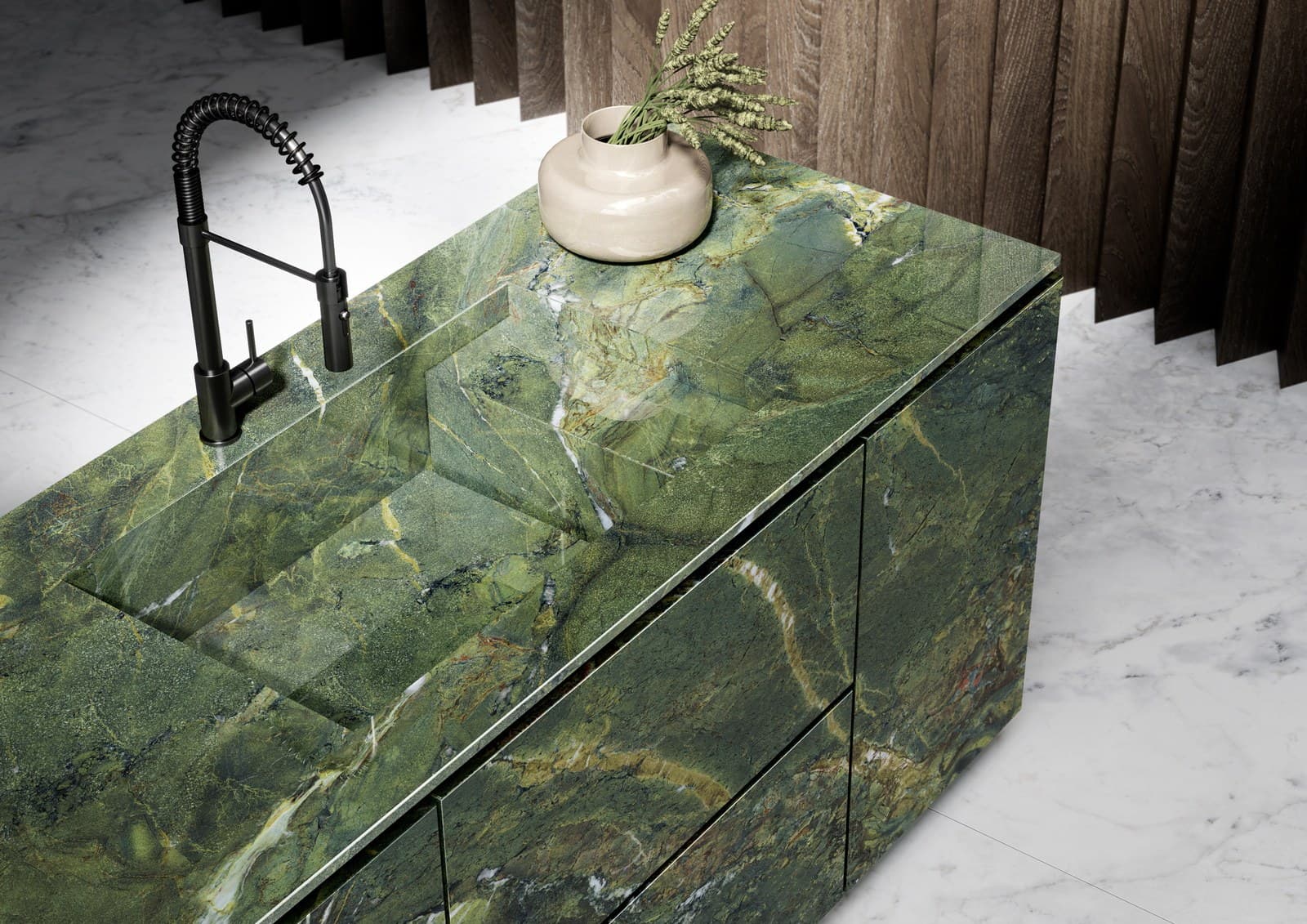
Start with everyday use
Think about food preparation, cleaning routines, family use and the areas around the sink and hob. Ask the supplier to explain the stated limits of the specific surface and finish, rather than relying on a material name alone.
Compare materials and care
Porcelain, mineral-based composite surfaces, natural stone and timber are different choices. Review a sample and the current supplier care sheet for each product. Do not assume that one material is always cheaper, tougher or more sustainable than another.
| Surface | Everyday care | What to check before ordering |
|---|---|---|
| Porcelain (Laminam example) | A damp microfibre cloth and neutral detergent, followed by rinsing and drying. | Finish-specific cleaning rules, edge detail, support and fabrication requirements. |
| Mineral-based composite (Silestone example) | Neutral soap and a damp microfibre cloth; remove the residue and dry. | Use trivets for hot objects. Confirm the current care sheet and suitability for the intended location. |
The table summarises manufacturer guidance for the named products. These instructions do not apply automatically to other brands or finishes.
Laminam cleaning and maintenance
Silestone maintenance and heat guidance
Look at the whole surface
View a sample in the room and examine a full-slab image where a strong pattern is involved. Consider how the worktop, cabinetry, splashback and lighting work together. Check how the proposed edge will look, including whether its appearance differs from the face of the slab.
Review fabrication before ordering
Agree the joints, sink and hob cut-outs, overhangs and supporting cabinetry with the designer and fabricator. Ask who measures, delivers and installs the worktop, how the installation is scheduled and who handles any damage or repair enquiry.
Compare fitted costs
Compare quotations for the same layout and specification. Include the material, fabrication, cut-outs, edge treatment, transport and installation. A lower slab price does not necessarily mean a lower completed-project price.
Check environmental evidence
Ask for product-specific evidence about recycled content, manufacturing, transport and expected service life. A natural-material description or a general eco-friendly label is not enough to compare environmental performance.
Your selection checklist
Choose a finish you have seen in the intended lighting.
Confirm the routine care you are comfortable carrying out.
Approve the fabrication drawing and visible edge details.
Compare complete fitted quotations and written exclusions.
Keep the supplier care sheet and warranty details.
Explore the next step
Read our porcelain worktop guide for benefits, care and details to consider.
Explore bespoke kitchen design with Nura.
Discuss your layout and materials with the studio.
Plan the whole kitchen
Bespoke kitchen guide: layout, materials, costs and installation