

Both solid wood and natural wood veneer can bring genuine timber grain to cabinetry. Veneer is real wood applied as a thin layer to a substrate; it is not the same as a printed wood-effect laminate. Compare the complete construction, finish and intended use rather than choosing by the label alone.
What is the difference?
Solid wood uses timber through the component. Natural veneer uses a thin wood face bonded to a supporting panel, commonly MDF or plywood. A kitchen can combine these approaches in different parts. Ask which construction is specified for the doors, frames, cabinet interiors and visible edges.
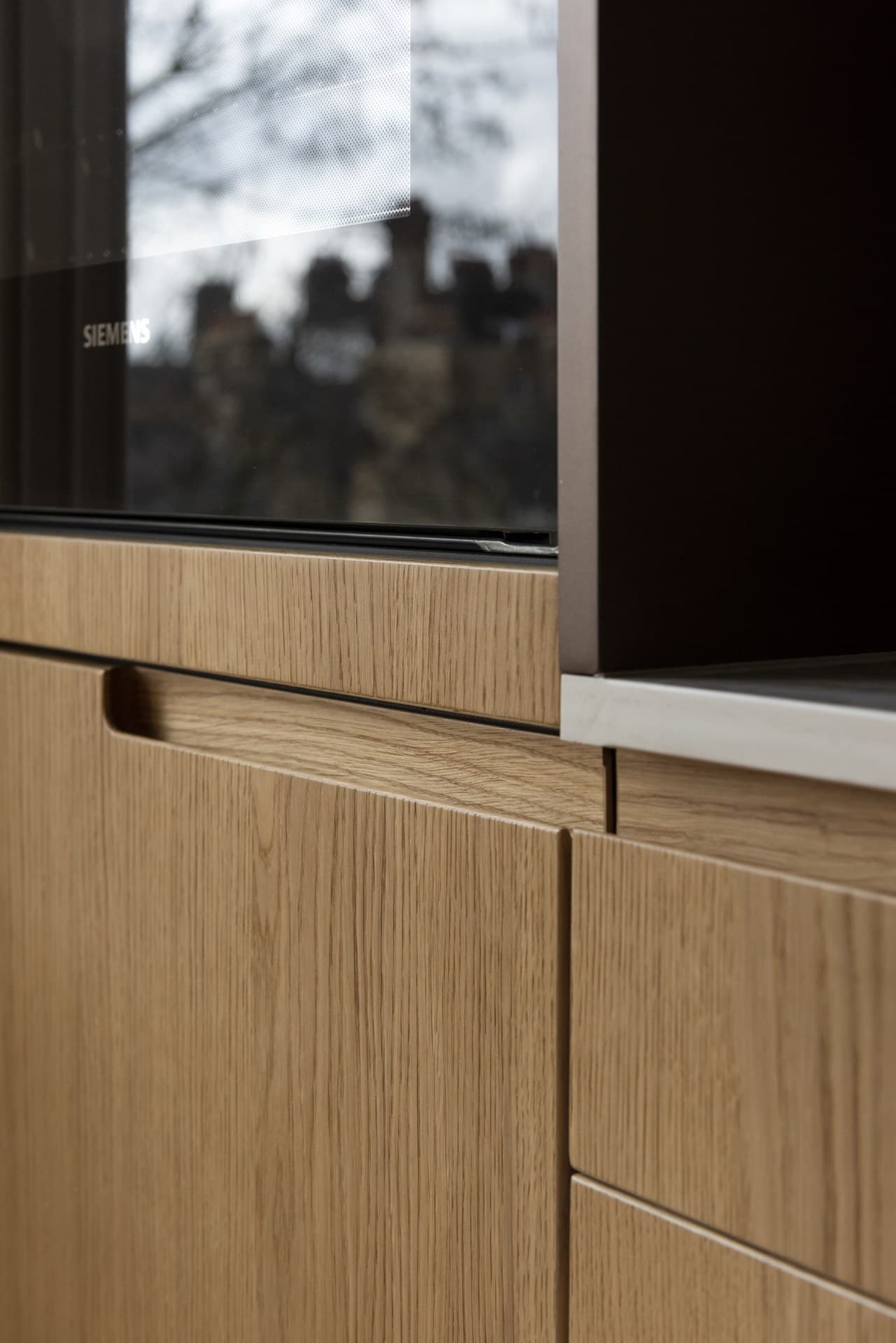
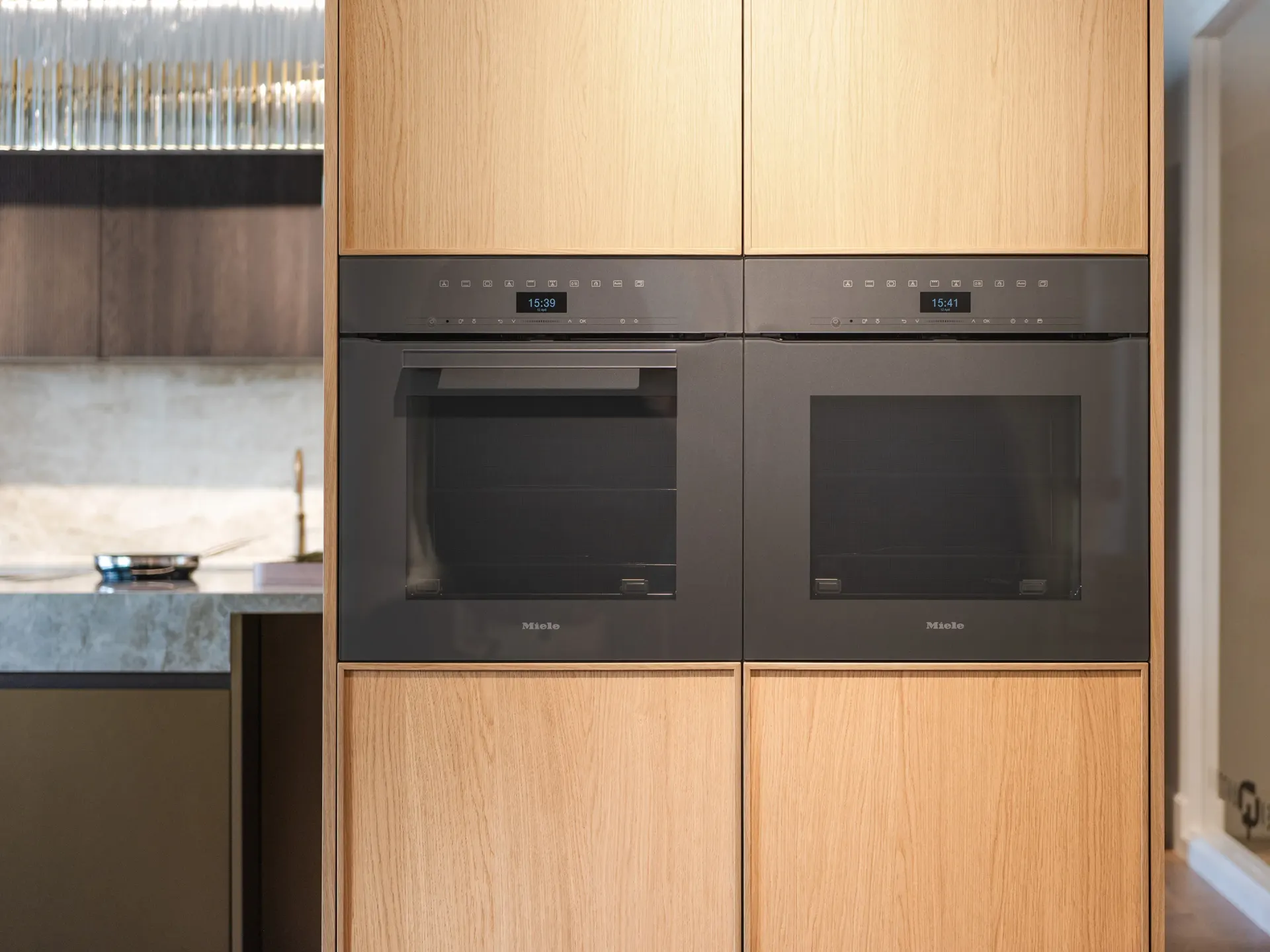
Compare the complete specification
| Detail | What to establish |
|---|---|
| Visible timber | Species, grain direction, sample and colour variation. |
| Panel construction | Substrate, thickness, edge treatment and how components meet. |
| Finish | Coating, cleaning instructions and suitability for the intended use. |
| Repair | What repair or refinishing is feasible for the actual construction? |
Is veneer a lower-quality choice?
The word veneer does not determine quality or price. The wood face, supporting panel, bonding, edge detailing and finish all form part of the specification. A considered design may use veneer on a broad panel and solid timber elsewhere. Review a physical sample and ask for the construction to be explained.
Can you sand or refinish it?
Do not assume either construction can be refinished in the same way. A thin wood face limits what can be removed. Repair options depend on the material, its thickness, the coating and the condition of the component. Ask the manufacturer or joiner before sanding, stripping or treating a finished door.
What should you ask before ordering?
- Is the visible surface natural wood, a decorative laminate or another finish?
- What substrate and edge construction are included?
- How will grain and colour variation be handled across adjacent doors?
- Which care instructions apply to the finish supplied?
- What repair options and written warranty terms apply?
Bring the sample into the wider kitchen palette
Compare timber beside the worktop, flooring and wall finishes under relevant lighting. Review how grain direction and junctions work across the room, not only on a single door. Your specification should describe the approved sample and details clearly enough for manufacture.
Compare kitchen worktop materials
Plan the wider bespoke kitchen brief