

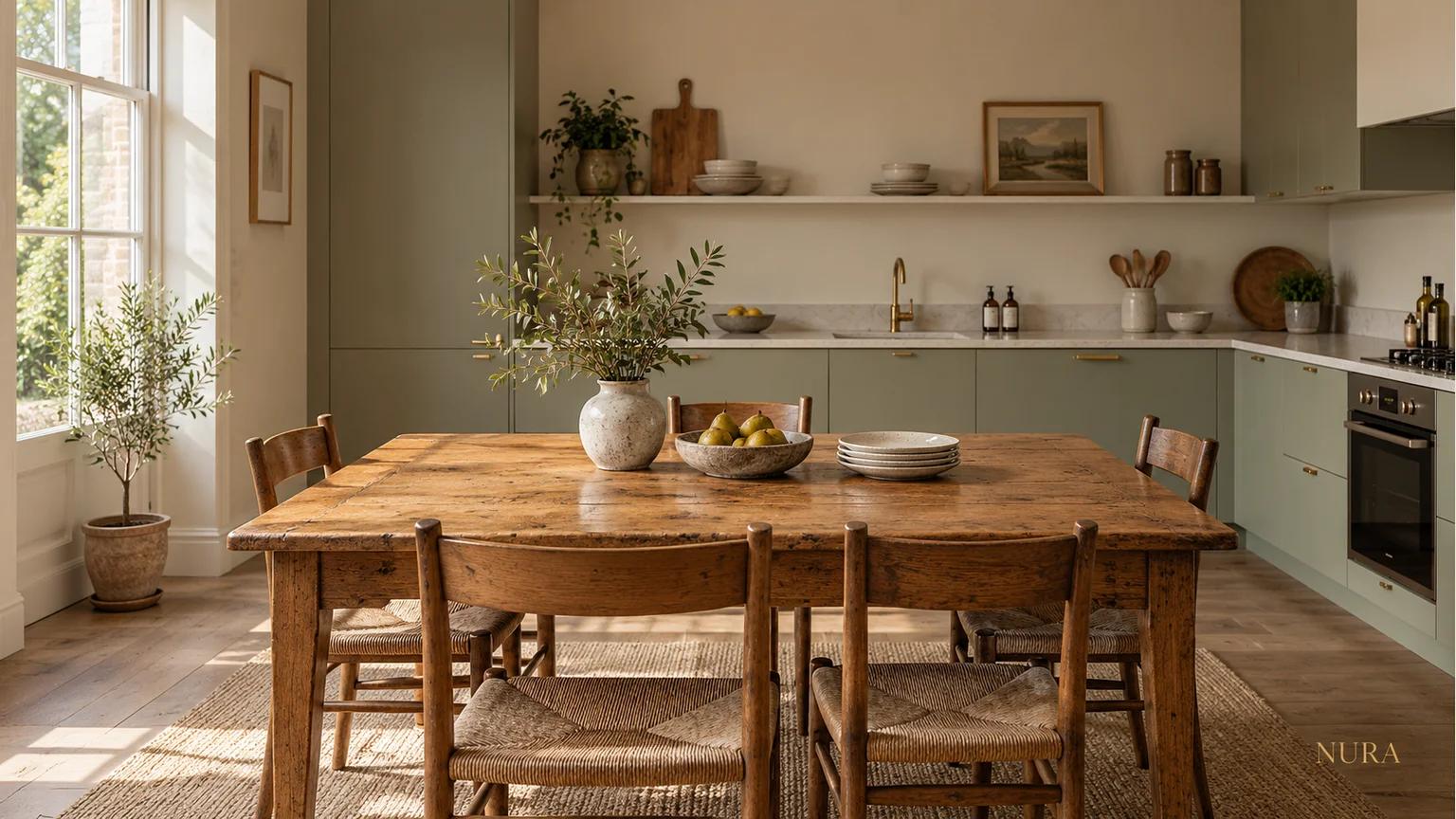
Sustainable interior design starts with the room you already have. Before choosing new finishes, identify what still works, what needs attention and what no longer suits the way you live. Then compare proposed changes using product information, maintenance requirements and the practical needs of the whole space.
A timber finish, a recycled component or a room full of plants does not, on its own, establish the environmental performance of an interior. The useful questions are more specific: can an existing item stay, can a worn part be replaced, and what evidence supports the claims attached to something new?
Use these five decisions to prepare a clearer brief for your kitchen, joinery or wider home.
1. Decide what can stay before choosing what is new
Make a room inventory with three columns: keep, assess and replace. Include flooring, cabinetry, worktops, furniture, lighting and appliances. Record why each item is in its column rather than judging everything by appearance.
A table may look dated beside the current cabinetry but still be comfortable and well suited to the room. A cabinet may have an attractive door but a damaged structure. Those situations need different responses.
Ask which concerns are cosmetic, which affect everyday use and which need a qualified assessment. Do not treat keeping an item as the right answer when its condition, safety or compatibility remains uncertain.
The British Institute of Interior Design's sustainability overview includes reuse, refurbishment and design for disassembly within circular design. For a homeowner, the practical starting point is to establish what exists and whether it remains suitable.
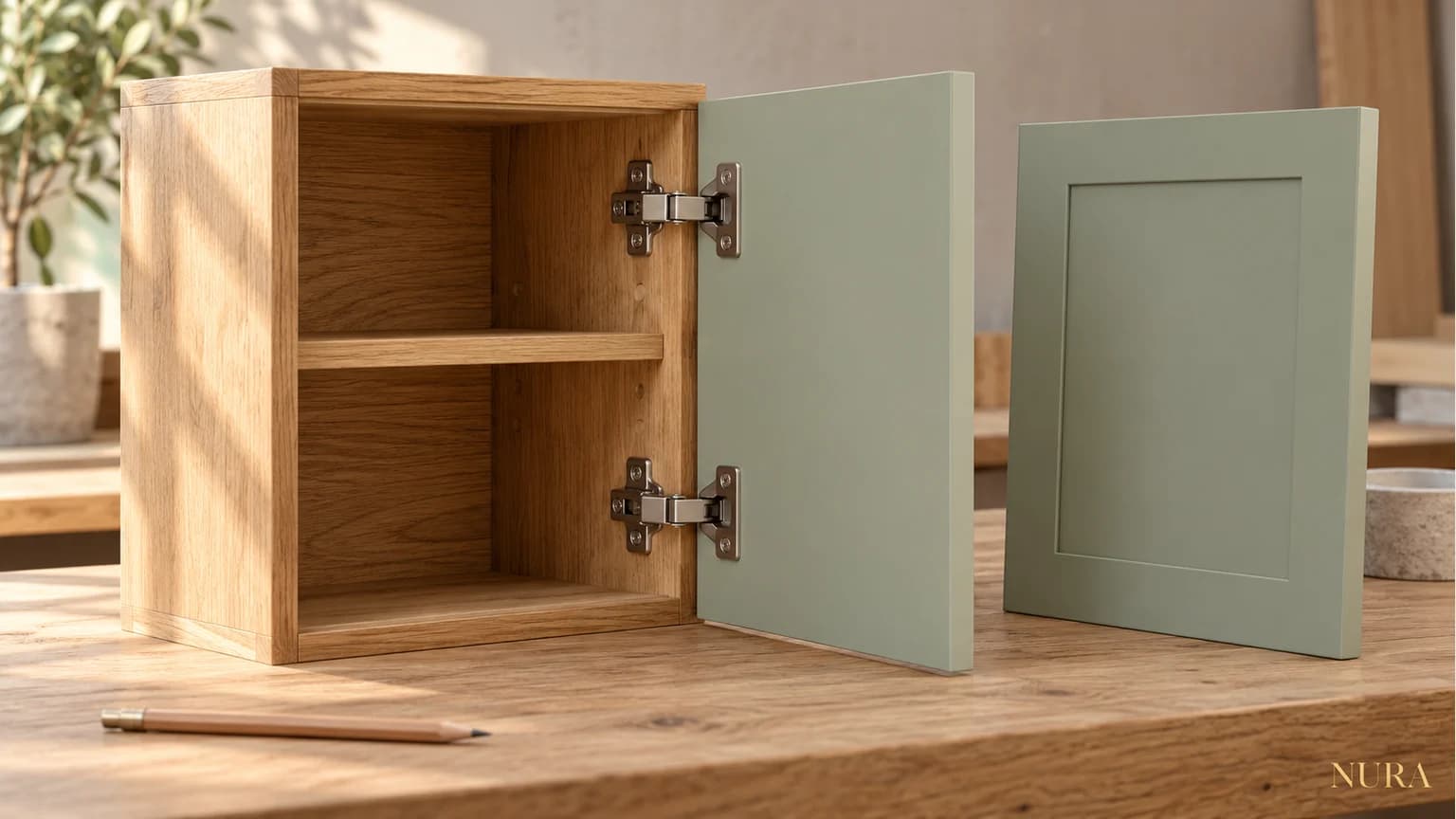
2. Find out what repair or replacement actually involves
“Built to last” is more useful when you know what happens if one part wears out. Ask about the actual product, its fittings and the proposed method of assembly.
- Can a hinge, runner, door or internal fitting be accessed and replaced separately?
- Which replacement parts are available now, and where can they be ordered?
- Does changing one component affect neighbouring finishes, fixings or appliances?
- What information should you retain for future maintenance?
Current availability is not a guarantee of supply years later. Keep product names, fitting references, drawings and care instructions together, and ask what support the supplier actually offers.
In sustainable interior design, repairability is a question to investigate, not a property to assume from a material's appearance. A solid-looking surface may still be difficult to alter, while the suitability of a repair depends on the particular construction and damage.
3. Choose a finish you can realistically live with
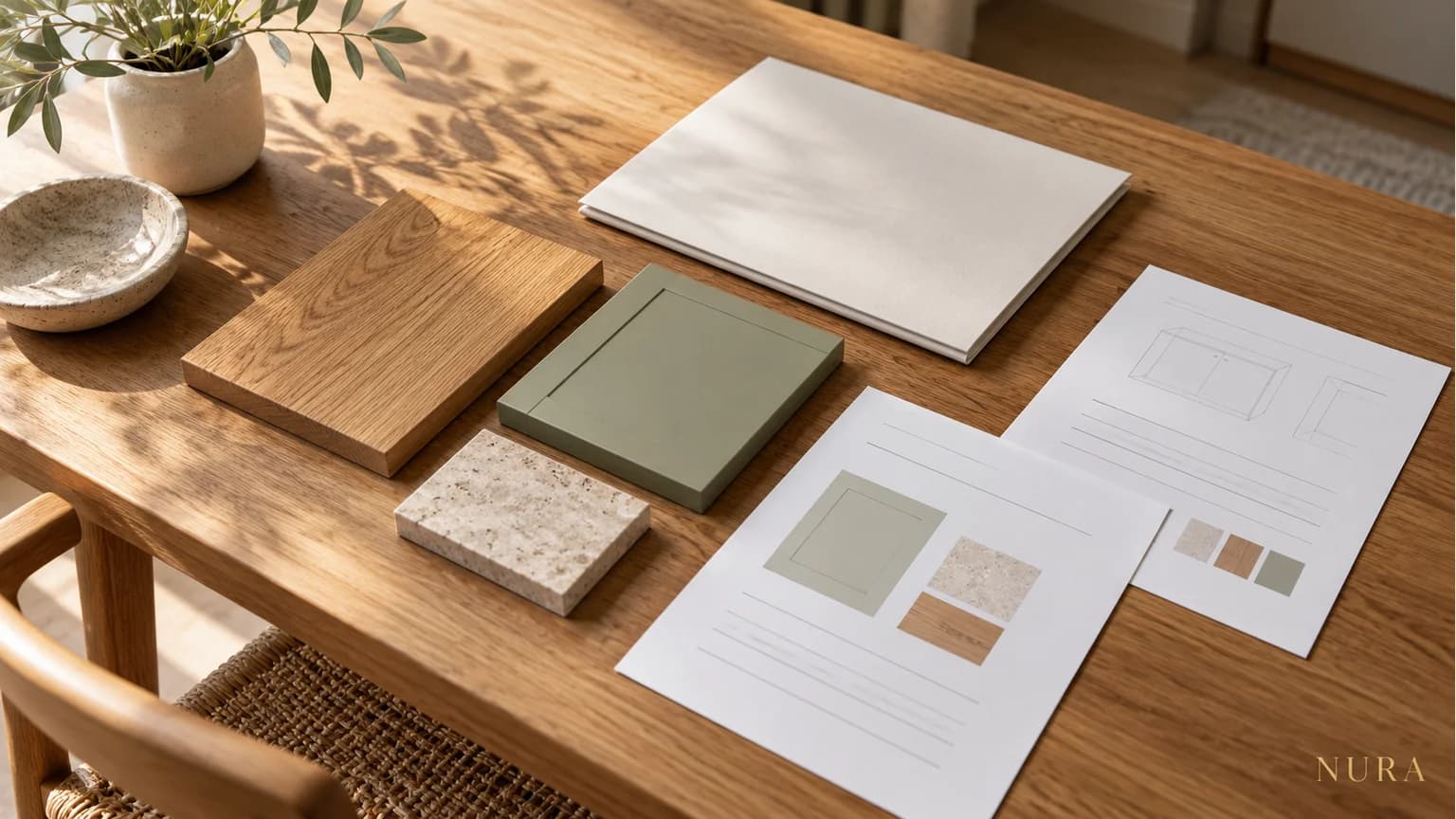
Compare samples alongside the materials you are keeping. Look at the combination in the room's light, then read the care requirements for the exact product and finish.
Ask about approved cleaning methods, precautions, repair options and any conditions attached to the warranty. Consider whether those requirements fit your household. Do not assume that every timber, stone or composite product behaves in the same way.
Our guide to kitchen worktop materials can help frame the comparison. For timber choices, mixing wood tones around existing materials connects the appearance of a new selection to what stays.
A kitchen decision with consequences beyond the sample
Imagine a household that likes its oak dining table and existing floor but dislikes the kitchen door colour. This is a hypothetical example, not a completed Nura project.
Before planning a full replacement, the household asks for the cabinet condition and layout to be assessed. If those remain suitable, it can explore whether a compatible door or finish change is feasible. If storage or circulation is the real problem, a colour change alone will not resolve it.
The designer's contribution is to connect appearance, function and compatibility. The brief should record what stays, why each change is needed and which checks remain outstanding. This example does not establish a cost or carbon saving; either would require evidence for the actual options.
4. Ask what an environmental claim covers
When researching sustainable interior design materials, move from a broad label to the specific product and claim. A statement about a board, a coating or its packaging should not leave you guessing whether it describes the whole item.
The CMA's Green Claims Code checklist calls for clear claims backed by credible, current evidence, with relevant limits made understandable. Use that principle when asking suppliers for clarification.
If a product carries an FSC label, check which label applies. FSC UK explains the differences between FSC 100%, FSC Mix and FSC Recycled. These relate to forest-based materials; they do not establish the complete environmental performance of an installed kitchen.
Record an unanswered question as unanswered. A missing document is not evidence that a product is harmful, but it is not a basis for repeating an environmental claim either.
5. Plan the change as part of the whole room
A material selection can affect more than the visible finish. Ask how retained furniture, appliance requirements, access, services and the proposed layout interact before approving the specification.
If items will leave the room, establish their condition, whether they can be removed intact, who will handle them and whether there is a suitable recipient or recovery route. Confirm acceptance and collection arrangements rather than assuming everything removed will be reused or recycled.
Compare a limited update and a wider redesign against the same brief. Note the work each option requires and the problems it would leave unresolved. Sustainable interior design should help you examine those decisions clearly, rather than make a new purchase feel responsible through a single label.
Bring a keep, assess and replace list to the conversation
Prepare photographs of the existing room, an available plan, the materials or furniture you hope to keep and three reasons you want the space to change. Add any product claims or care instructions you would like to understand better.
Read Nura's approach to considered materials and durability, then ask which design process and service scope would suit your project. Do not assume that repair, refurbishment or certification services are included without confirming them with the studio.
Arrange a kitchen or joinery consultation, or contact the Fulham showroom before visiting. Start with what you want to keep and the decision you need help making.
London Bespoke Inspiration
Explore contemporary palettes, storage mechanisms, and architectural joinery.