
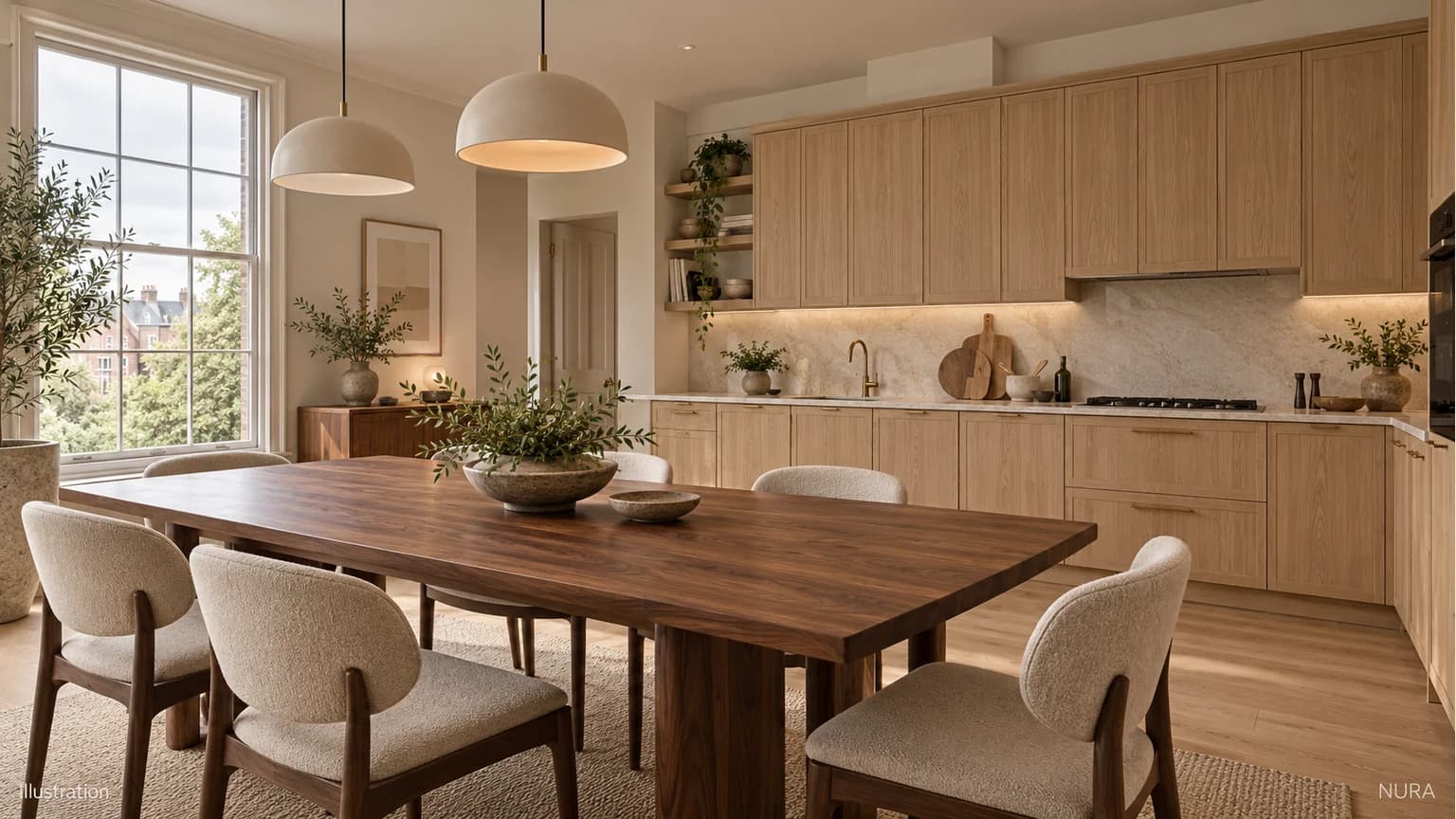

Mixing wood tones in a kitchen starts with the pieces that will stay: a dining table, the floor or existing joinery. Put those finishes into the conversation before choosing a new cabinet colour. You can explore a contrast without making every wooden surface match.
Give the existing piece a place in the palette
List the wooden surfaces visible together from the kitchen and dining area. Which are fixed, which are moving with you, and which are still undecided? A table you love is a useful design starting point, even if its finish differs from the cabinetry you first imagined.
Studio McGee’s wood-tone guide similarly begins with major existing finishes. Treat this as design guidance, rather than a formula prescribing how many woods a room must contain.
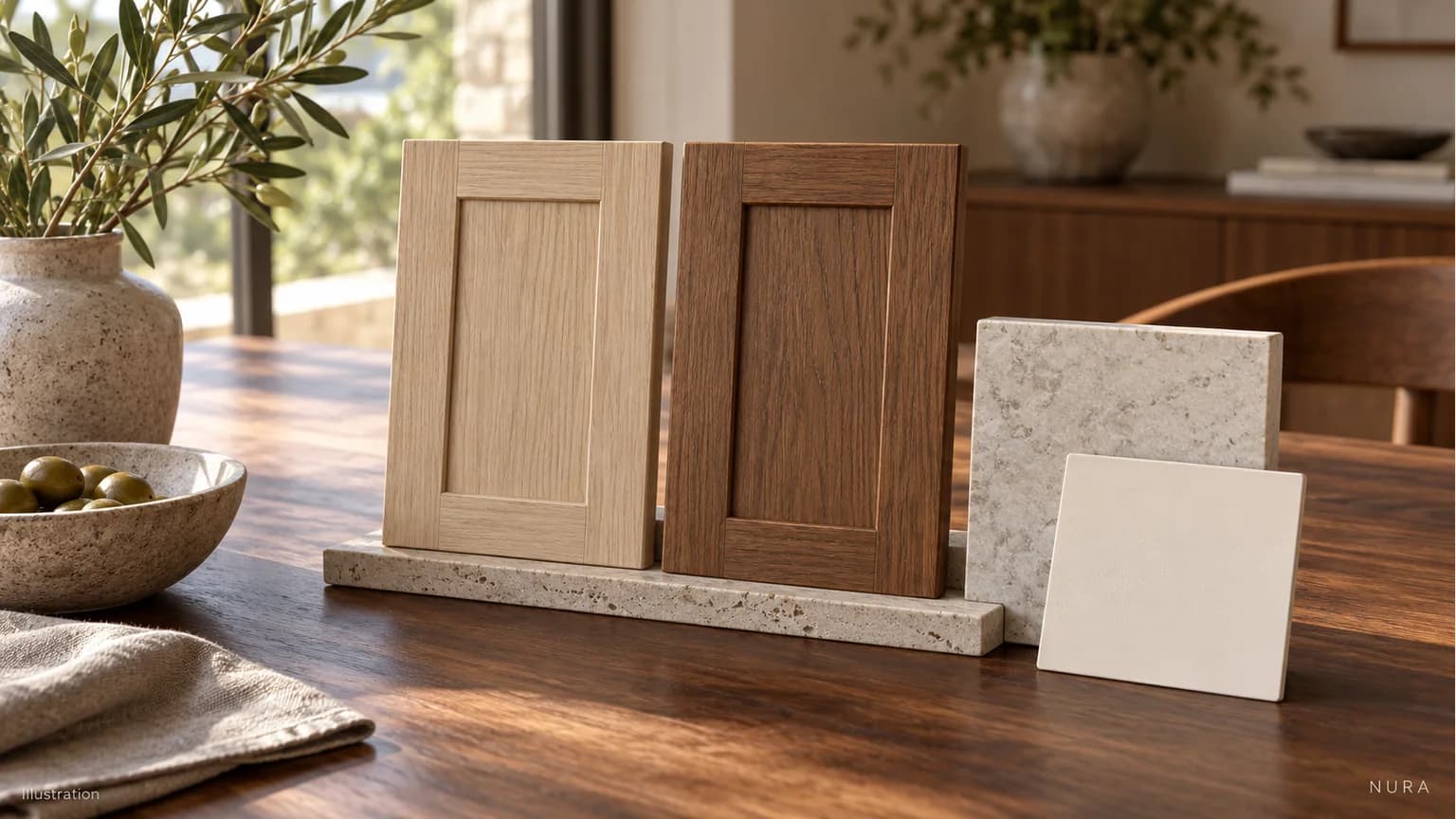
Compare the finished surfaces together
Ask suppliers which finished samples are available for the products you are considering. Compare each with the retained furniture or flooring, then step back to include the cabinetry, worktop and neighbouring room. Change one candidate at a time so you can describe what you prefer.
Look separately at lightness, visible colour and sheen. Does a sample seem golden, reddish or grey beside the existing surface? Warm and cool are useful visual descriptions, not a guarantee that two named wood species will work together. Record the exact finish reference rather than relying on “oak” or “walnut” alone.
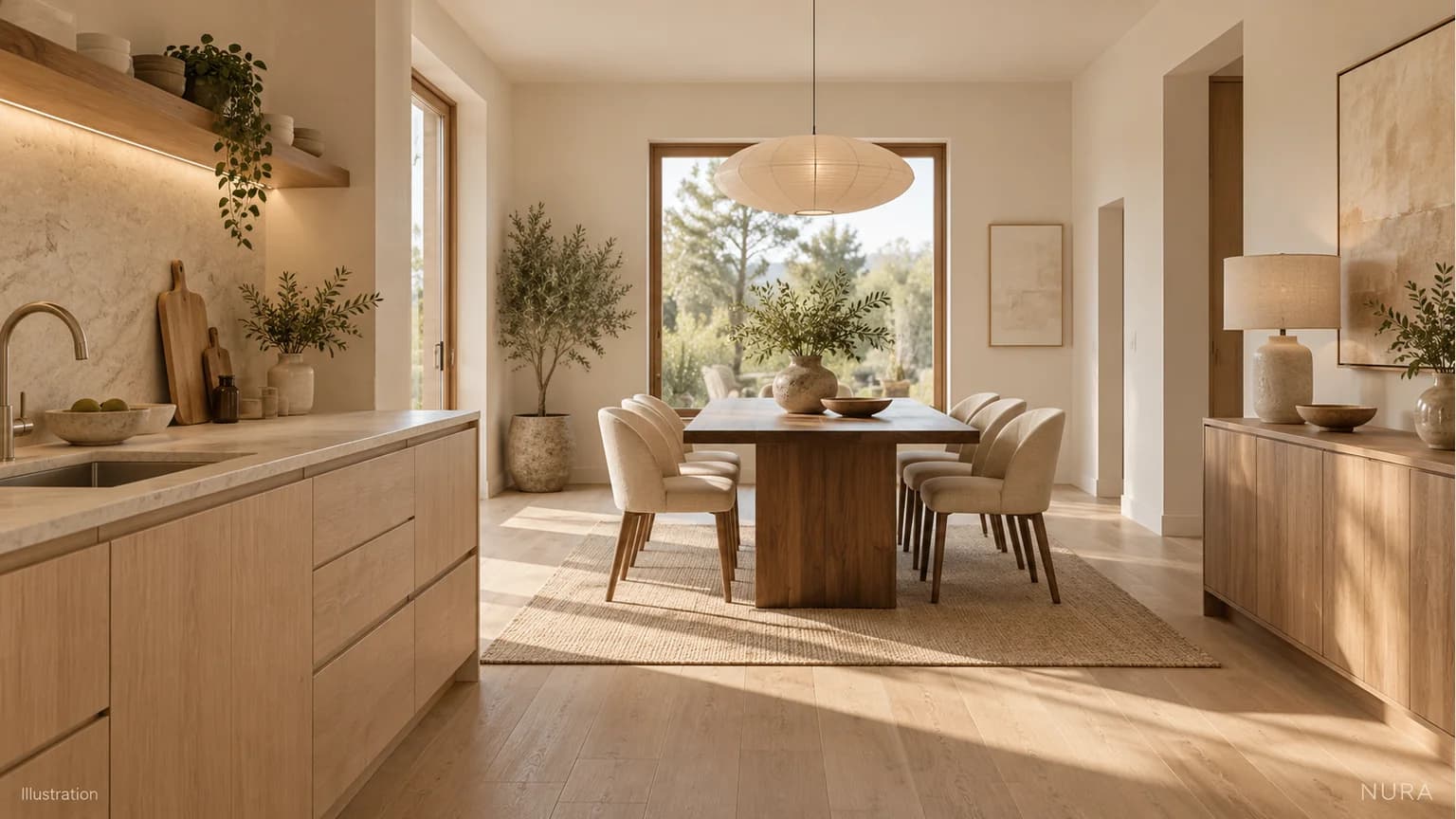
Choose the relationship you want
For a hypothetical walnut table and pale oak cabinet front, decide whether you enjoy the difference or want to explore a quieter combination. The table can remain the darker feature; an alternative cabinet finish might bring the surfaces closer visually. Neither approach is automatically better. Keep the floor and worktop in the comparison.
| Keep | Compare | Describe |
|---|---|---|
| Existing table or floor | Named cabinet-finish sample | Contrast you like or want to reduce |
| Room photographs | Worktop and adjoining furniture | Surfaces seen together |
For a Nura design consultation, bring room photographs, images of furniture you will keep and any available finish references. Ask which relevant samples can be viewed before visiting the Fulham showroom. These references help frame the discussion around a coordinated kitchen scheme. For the broader palette, read our kitchen colour-sample guide.