

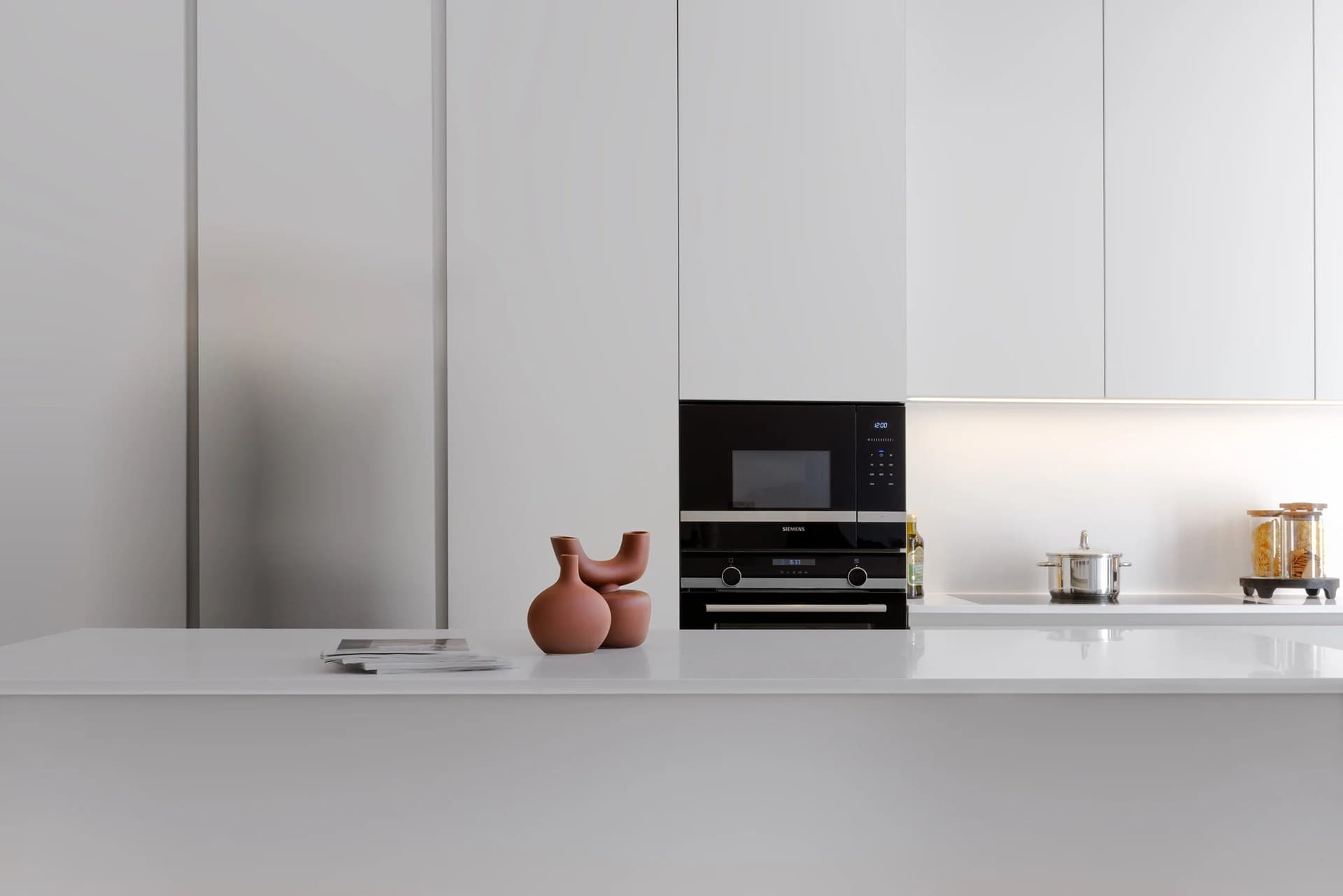
Choose a relationship, not a universal white
A white kitchen can include several different surface treatments and tones. The decision is not whether white is fashionable enough, but how the cabinet finish relates to the floor, worktop, walls and adjoining furniture. A colour name on its own does not define that relationship.
Begin with materials that will remain. Place possible cabinet finishes alongside them rather than comparing isolated swatches. If you prefer a warmer palette, explain which retained surfaces it needs to work with; do not assume a warm or cool label will produce the same result in every room.
Review the samples in the room
Daylight, artificial light and the finish itself can change the way a white appears. Dulux notes the importance of colour temperature, lighting and testing when choosing white paint. That is useful background for a sample discussion, not proof that a wall-paint sample represents a particular cabinet lacquer.
Ask which current cabinetry samples can be reviewed and inspect the actual offered finish where possible. Compare it with the proposed worktop and floor in the conditions relevant to your room. A screen image is a reference, not a final colour approval.
Separate colour from sheen, texture and care
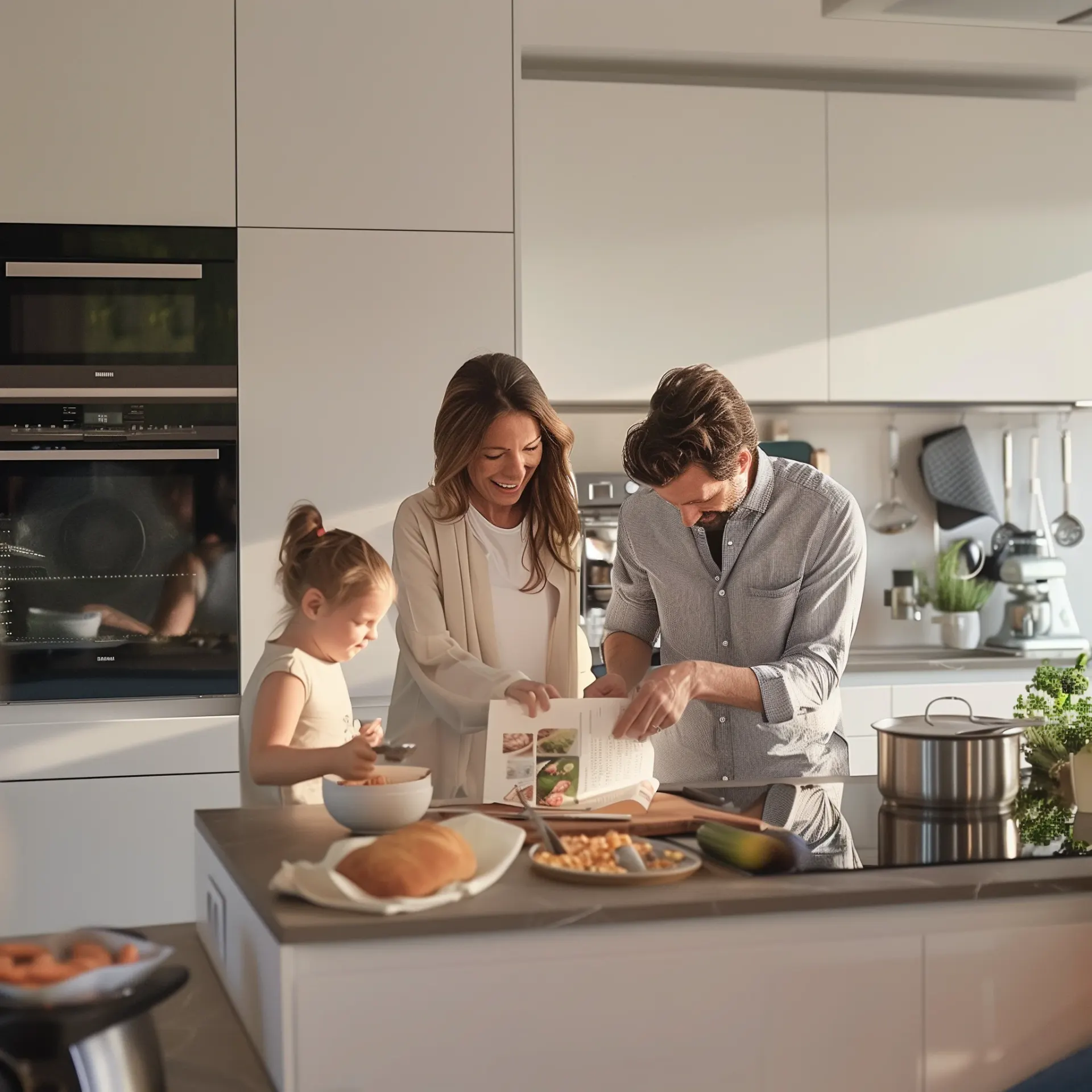
White does not automatically mean easy to clean, resistant to marks or less likely to show fingerprints. Appearance and care need to be discussed for the actual finish, surface texture and intended use. Ask for the relevant product guidance rather than accepting a blanket claim based on colour.
Compare how a door face, an edge and a frequently handled area are proposed to be finished. If two whites are to meet at a cabinet and wall junction, decide whether the difference is intentional. An apparent mismatch in a small sample may become more noticeable across a full elevation, so identify the relationship before approving the schedule.
Use a real project as a reference, not a recipe
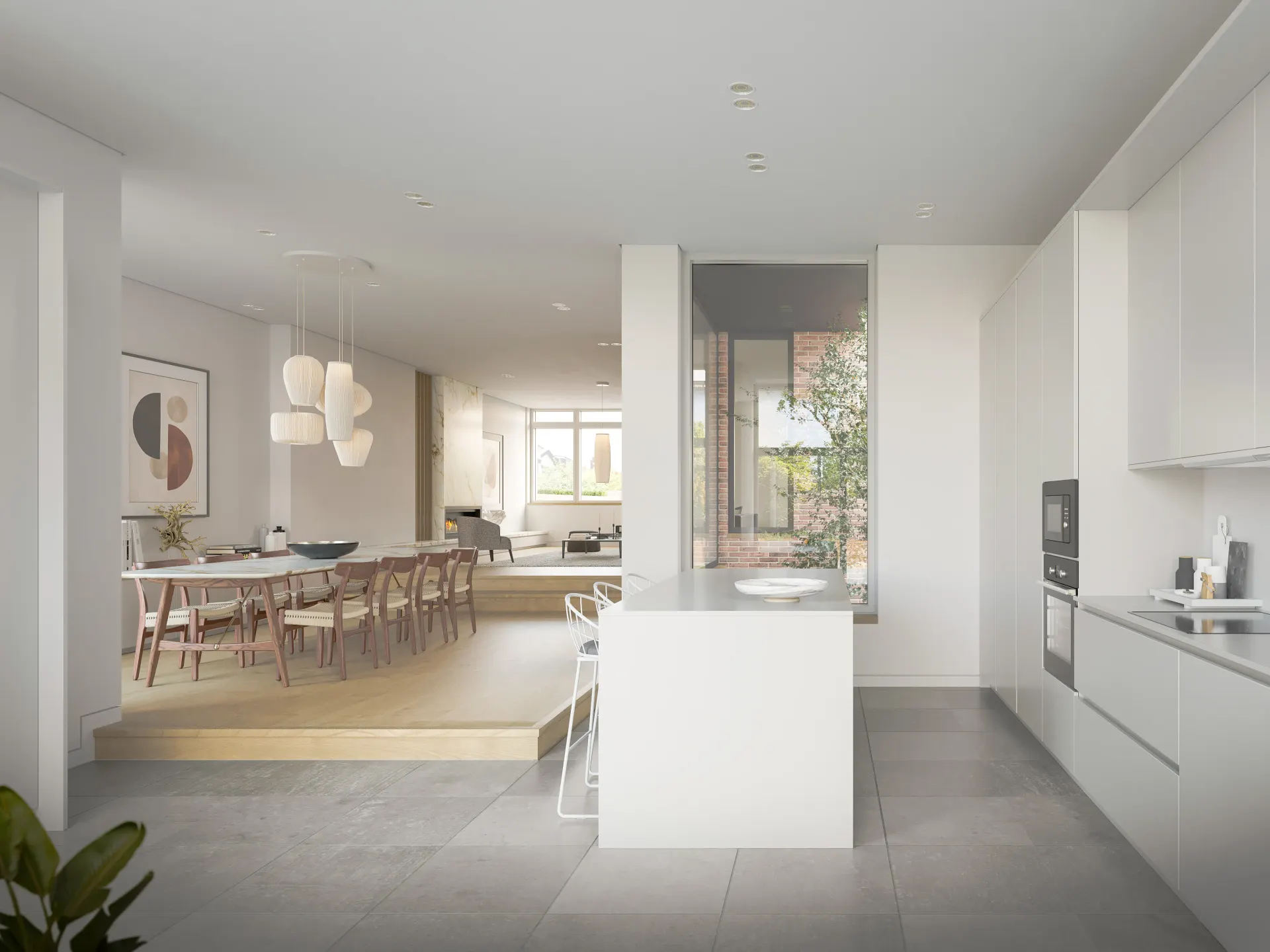
The Akehurst kitchen record specifies off-white matt-lacquered kitchen furniture with grey matt-lacquered joinery and smoked glass. Its account relates the room to oak flooring and panelling. These are useful references for discussing a connected palette, not a promise that every white kitchen needs the same products or adjoining materials.
Do not infer a named worktop, lacquer code or cleaning performance from the photographs. For your own project, identify where contrast should sit: at the island, between tall and base furniture, or against the retained floor. Then review the actual proposed finishes together.
Prepare a material brief with clear priorities
Bring photographs, available plans and samples or references for finishes that will remain. Note when you use the kitchen, which views into it matter and how much contrast you prefer. Ask the studio which samples are available and how the proposed finish will be recorded for approval.
A hypothetical choice between an off-white cabinet and a cooler worktop is best tested as a whole palette, not settled by the word white. Resolve colour, sheen, edges and care expectations alongside the storage and layout brief so the specification explains both the appearance and everyday use of the room.
References and next steps
Akehurst: off-white cabinetry and adjoining finishes
Plan your kitchen: layout, materials, scope and installation
Dulux guidance on choosing white
Discuss your kitchen material brief
London Bespoke Inspiration
Explore contemporary palettes, storage mechanisms, and architectural joinery.