
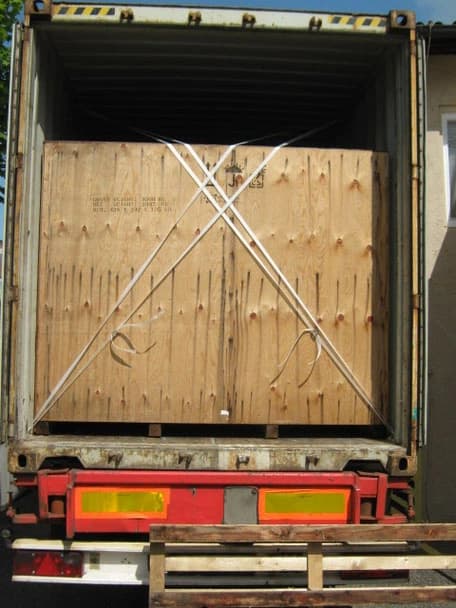

Commissioning a bespoke kitchen for an overseas property is entirely achievable, but the logistics between a London workshop and a villa in Andalucía or a house in Barbados require deliberate planning that begins well before fabrication is complete. The physical journey, packing, shipping, customs clearance, local receipt and installation, introduces variables that a domestic project simply does not face. Understanding those variables early, and building a clear operational plan around them, is what separates a smooth handover from an expensive scramble.
Start With the Critical Path, Not the Mood Board
For an overseas kitchen, the sequence of decisions matters more than it does domestically. The critical path runs roughly as follows: design sign-off, fabrication lead time, packing and crating, freight booking, estimated port arrival, customs clearance, local delivery to site, storage if needed, installation, and finally stone or worktop templating after cabinets are fixed and level. Each stage has a dependency on the one before it. Confirm the manufacturing window, its release conditions and any express option separately from the transport and receiving stages when working back from a target completion date.
Packing and Crating: The Foundation of a Safe Arrival
Bespoke cabinetry is not flat-pack furniture, and it should not be shipped as though it were. Doors, drawer fronts and tall panels are particularly vulnerable to racking and impact. Each crate should be built to contain specific components, with internal bracing that prevents movement during transit. Foam or blanket wrapping protects painted and veneered surfaces; corner protection matters on every exposed edge. The packing specification is worth discussing with your joinery team and freight partner together, what works for a short European road freight movement differs from what a container crossing the Atlantic requires.
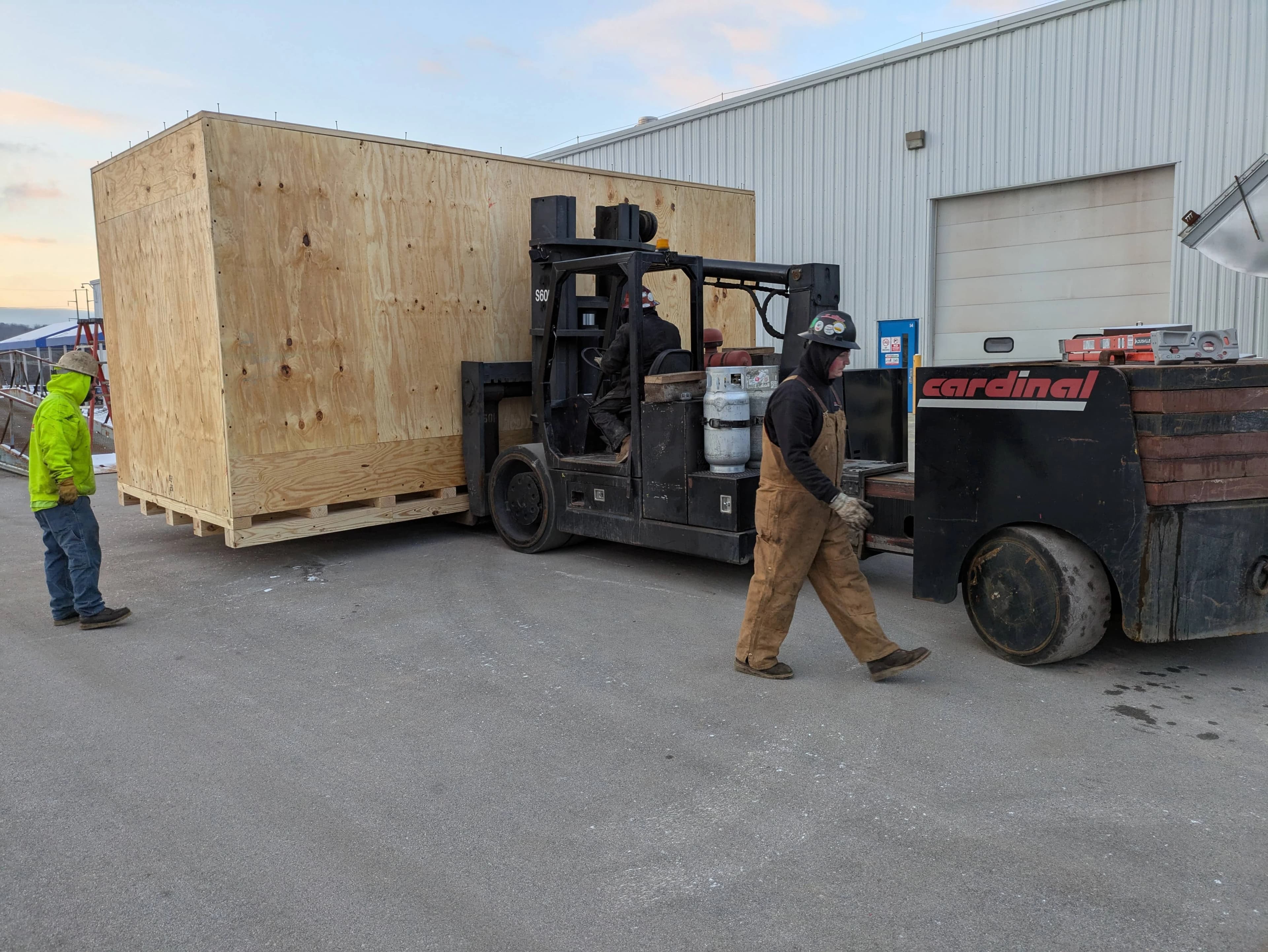
Crate IDs, Manifests and Sequencing
Every crate should carry a clear, weatherproof ID that corresponds to a detailed packing manifest. The manifest is not a formality; it is the document your receiving team, customs broker and installer will all rely on. It should list the contents of each crate, the installation sequence those contents belong to, and any components that are fragile or require particular handling. Sequencing matters: if the base units for one run arrive in crate seven and the worktop support components are in crate two, an installer working through the delivery in order will lose time. Pack and number crates in installation sequence where possible.
Customs and Import Questions: Ask Your Logistics Partner
Customs requirements, import duties and documentation vary between destinations and change over time. Spain, as an EU member state, operates under EU import rules; Barbados has its own customs framework. The right person to advise on current requirements, documentation and any applicable charges is a licensed customs broker or freight forwarder with experience in the destination country, not your kitchen designer. What your joinery team can provide is accurate documentation of the goods: a detailed commercial invoice, a packing list, and material descriptions that are precise enough for classification. Prepare these documents carefully; vague descriptions cause delays.
Identifying a Local Installer Before the Kitchen Ships
This is one of the most commonly underestimated steps. A bespoke kitchen installed by a team unfamiliar with the joinery system, the hardware, or the drawings can result in damage, misalignment or incomplete fitting that is very difficult to remedy remotely. Identify and brief your local installer before fabrication is complete, not after the kitchen arrives. Share the full drawing set, the hardware specifications and the installation sequence. If possible, arrange a video call between the London joinery team and the local installer to walk through the drawings together. Nura has experience supporting overseas projects and can assist with this coordination.
Site Readiness and Storage on Arrival
The kitchen should not arrive at a site that is not ready to receive it. Floors should be at finished level, walls plastered and dry, and the space conditioned if the climate demands it. If the site will not be ready when the shipment arrives, arrange secure, covered, off-site storage in advance, not an open garage or a building site compound. Confirm the access route from the delivery vehicle to the kitchen space: door widths, stairwells, and whether a crane or hoist will be needed for upper-floor installations. These are questions to answer on a site visit or through detailed photographs, not assumptions to make from a floor plan.
Photograph Everything on Receipt
When crates arrive, photograph them before opening, external condition, any visible damage to packaging, and the crate ID labels. Photograph the contents of each crate as it is opened, before anything is moved. If damage has occurred in transit, this photographic record can support the receiving report and any subsequent discussion with the freight or insurance provider and for identifying whether a component needs to be remade. Note any discrepancies between the manifest and the actual contents immediately, and report them to the freight partner promptly, following the agreed reporting procedure and deadlines. A damage record made three weeks after delivery carries far less weight than one made on receipt.
Spares, Fixings and What to Send Alongside
Discuss whether a project-specific spares pack would be useful, such as extra hinges, drawer runners, touch-latches, fixing screws, and a small quantity of touch-up paint or stain matched to the finish. Overseas sourcing of a specific Blum runner or a matched paint colour is disproportionately difficult and slow. A suitable spares pack has its own cost, but may help avoid a later procurement delay if a component is damaged or a fixing is lost on site. Include the hardware installation guides in the language of the local installer if possible, and ensure the drawing set travels with the shipment rather than existing only in a shared digital folder.
If you are planning a kitchen for a property in Spain, Barbados or elsewhere, our consultation process is designed to work across time zones, with meetings available in London and Dubai. You can also read more about how we work with design professionals on international projects, including how we structure drawing packages and installation support for remote sites.
Planning your next step
Use this guide as a starting point for your own brief. Compare the room, materials and practical requirements with the way you want the space to work.
Read the bespoke kitchen planning guide or explore Nura bespoke kitchen services before discussing your project.
Ready to discuss the brief? Contact the Nura studio to share your plans, questions and priorities.