
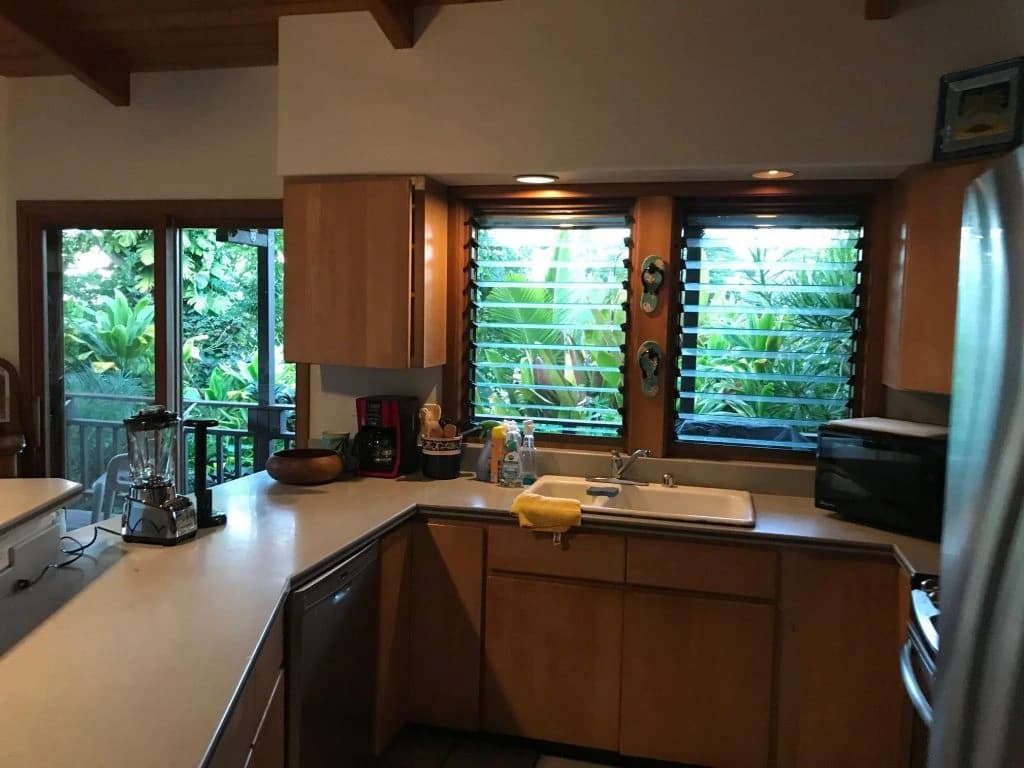

Humidity is one of the quieter forces acting on a fitted kitchen. It rarely announces itself dramatically; instead it works gradually through seasonal cycles, coastal air, inadequate ventilation or intermittent occupation. Specifying cabinetry well for a humid interior is less about choosing a single miracle material and more about layering sensible decisions, board choice, coating, edge treatment, hardware, and the conditions the kitchen will actually live in, so that each element reinforces the others.
Understanding the Environment Before You Specify
Before any material conversation begins, it is worth mapping the environment honestly. Is the humidity a year-round condition, or does it spike seasonally, a Mediterranean villa closed for winter, a Caribbean property left unoccupied between visits? Intermittent occupation often creates more stress on cabinetry than a consistently warm, humid climate, because moisture levels swing rather than stabilise. Note whether the kitchen faces prevailing wind, sits adjacent to a pool terrace, or receives direct steam from cooking without mechanical extraction. These details shape every subsequent decision.
Board Selection and What the Labels Actually Mean
Compare the actual board products and their documented suitability for the intended indoor conditions. A plywood, MFC or marine label is not a complete specification, and an 18mm dimension does not establish a grade. Ask which product will be supplied, how its surfaces and edges are protected and which conditions the maker expects it to operate in. Moisture resistance should be discussed for the complete assembly rather than inferred from a decorative face or a manufacturing country. Keep the product information with the final project records.
Edge Sealing: The Detail That Is Often Overlooked
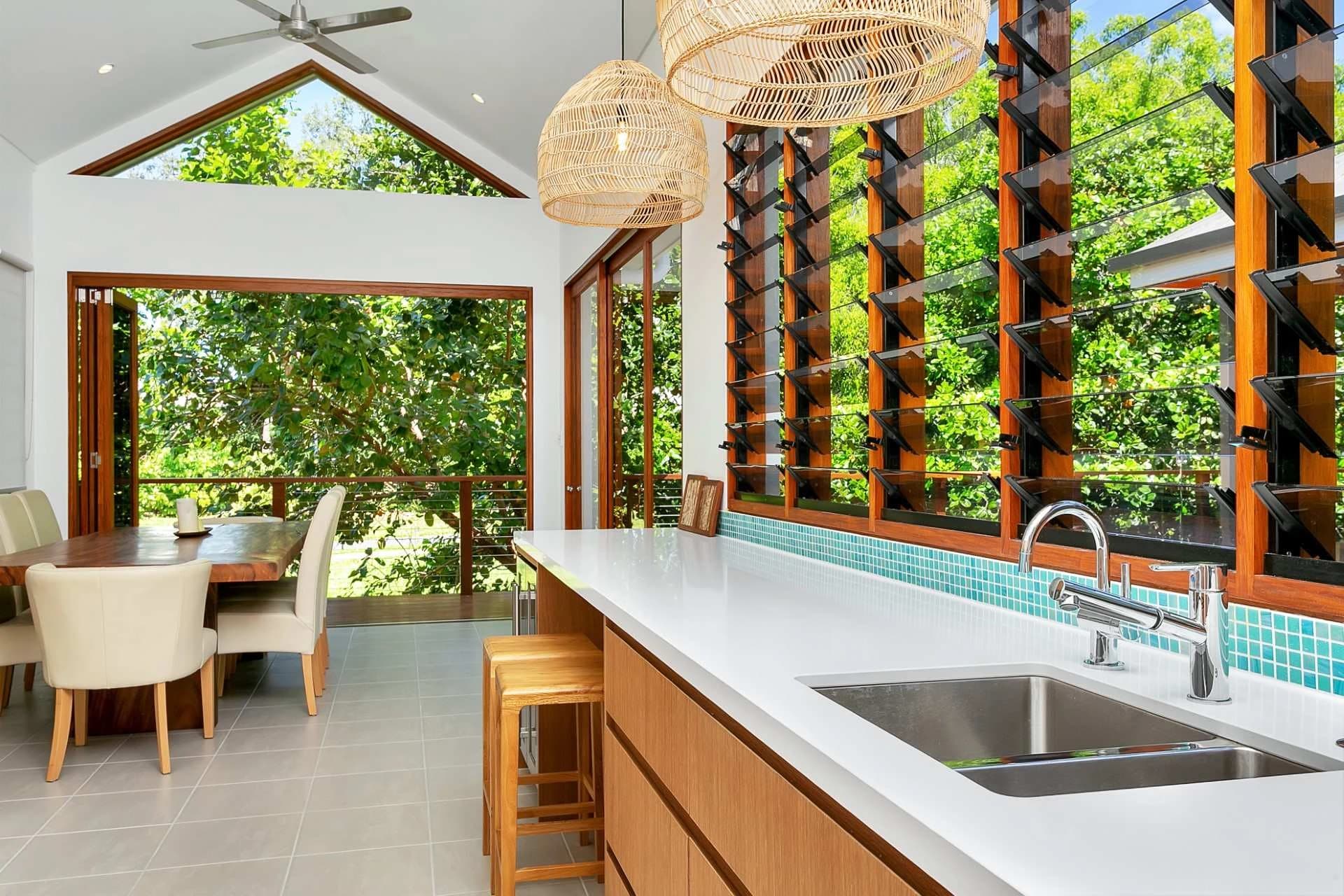
The exposed edges of any panel, the cut faces of shelves, the underside of carcass tops, the back edge of a base unit, are the most vulnerable points in humid conditions. A beautifully faced panel with an unsealed or poorly applied edge tape will absorb moisture at the core far faster than the face. Specify that all exposed edges receive a compatible sealant or edge-banding treatment, and confirm this extends to internal shelf edges and any site-cut panels made during installation. This is a conversation to have explicitly with your joinery team before fabrication begins.
Coatings, Finishes and Door Stability
Door stability in variable humidity depends significantly on how the substrate and finish interact. Solid timber doors will always move to some degree with seasonal change; this is normal behaviour, not a defect, and well-designed framing accommodates it. Painted MDF doors can be vulnerable to edge swelling if the coating is incomplete or damaged. Veneer doors on a stable substrate, such as moisture-resistant MDF or plywood, can perform well provided the veneer is properly sealed on all faces, including the back. Ask your maker to confirm that back faces receive the same coating attention as front faces; this is not always standard practice.
Ventilation as a Specification Requirement
No cabinetry specification substitutes for adequate ventilation. A mechanical extraction system sized appropriately for the cooking activity, and actually used, removes the primary source of airborne moisture in a kitchen. In coastal or tropical settings, background ventilation through the building fabric matters too. Where a property will be closed seasonally, consider whether passive ventilation or a dehumidifier will maintain acceptable conditions in the kitchen's absence. These are building-services questions, but they belong in the same early conversation as material selection.
Hardware Choices in Humid Conditions
Hardware should be selected for the documented conditions and application rather than through a generic material rule. Ask the supplier about the selected component’s finish, care requirements and suitability for the expected environment. A brand name, including Blum or HiGold, does not by itself establish a corrosion-resistance rating or an appropriate location. Compare the actual drawer boxes and mechanisms being offered, and agree how the receiving and installation team will protect them before the completed kitchen is in normal use.
Protected Storage, Receiving Teams and Site Conditions
Even the best-specified cabinetry can be compromised between delivery and installation. Panels and doors should be stored flat, off the ground, in a conditioned or at least covered space, not in an open garage or on a damp screed. If a property is overseas or managed remotely, identify a receiving team who understand these requirements before the shipment arrives. Confirm that the installation environment has reached its finished humidity level: newly plastered walls and freshly screeded floors release significant moisture for weeks after completion, and fitting cabinetry into an unconditioned space accelerates movement and joint stress.
Documentation and Ongoing Care
Request product documentation for every board, coating and hardware component specified, not for filing away, but because a future repair or replacement is far easier when you know exactly what was used. Note the cleaning products that are compatible with the finish; some surface coatings are damaged by the antibacterial sprays commonly used in kitchens. If the property has a caretaker or housekeeper, a brief written note on ventilation habits and cleaning products is a practical investment. Good specification is only half the story; informed ongoing care is what protects it over time.
If you are planning a kitchen for a property with particular environmental demands, an early consultation allows us to work through the specification in detail before any commitments are made. For architects and interior designers coordinating projects in challenging climates, our professionals page outlines how we support design teams from brief through to installation.
Planning your next step
Use this guide as a starting point for your own brief. Compare the room, materials and practical requirements with the way you want the space to work.
Read the bespoke kitchen planning guide or explore Nura bespoke kitchen services before discussing your project.
Ready to discuss the brief? Contact the Nura studio to share your plans, questions and priorities.