

Procuring bespoke joinery across multiple units or phases is a fundamentally different discipline from fitting out a single home. Schedules compress, decisions multiply, and the consequences of a late revision ripple across an entire batch. This guide is written for developers, project managers, and design-build teams who want the finish quality of bespoke cabinetry without sacrificing the programme certainty their sites demand.
Why Bespoke Joinery Belongs in a Development Programme
The instinct on larger schemes is to reach for a modular catalogue, predictable lead times, familiar pricing structures, known quantities. That logic is sound up to a point. But modular ranges are built around fixed module widths, and real rooms rarely cooperate. Fillers, reduced-depth runs, and corner compromises accumulate quickly, and the cumulative effect on a premium scheme can undermine the very specification that justified the land value. Bespoke joinery resolves each room on its own terms, which matters most when no two floor plans are identical.
The Sample Unit: Your Most Valuable Programme Tool
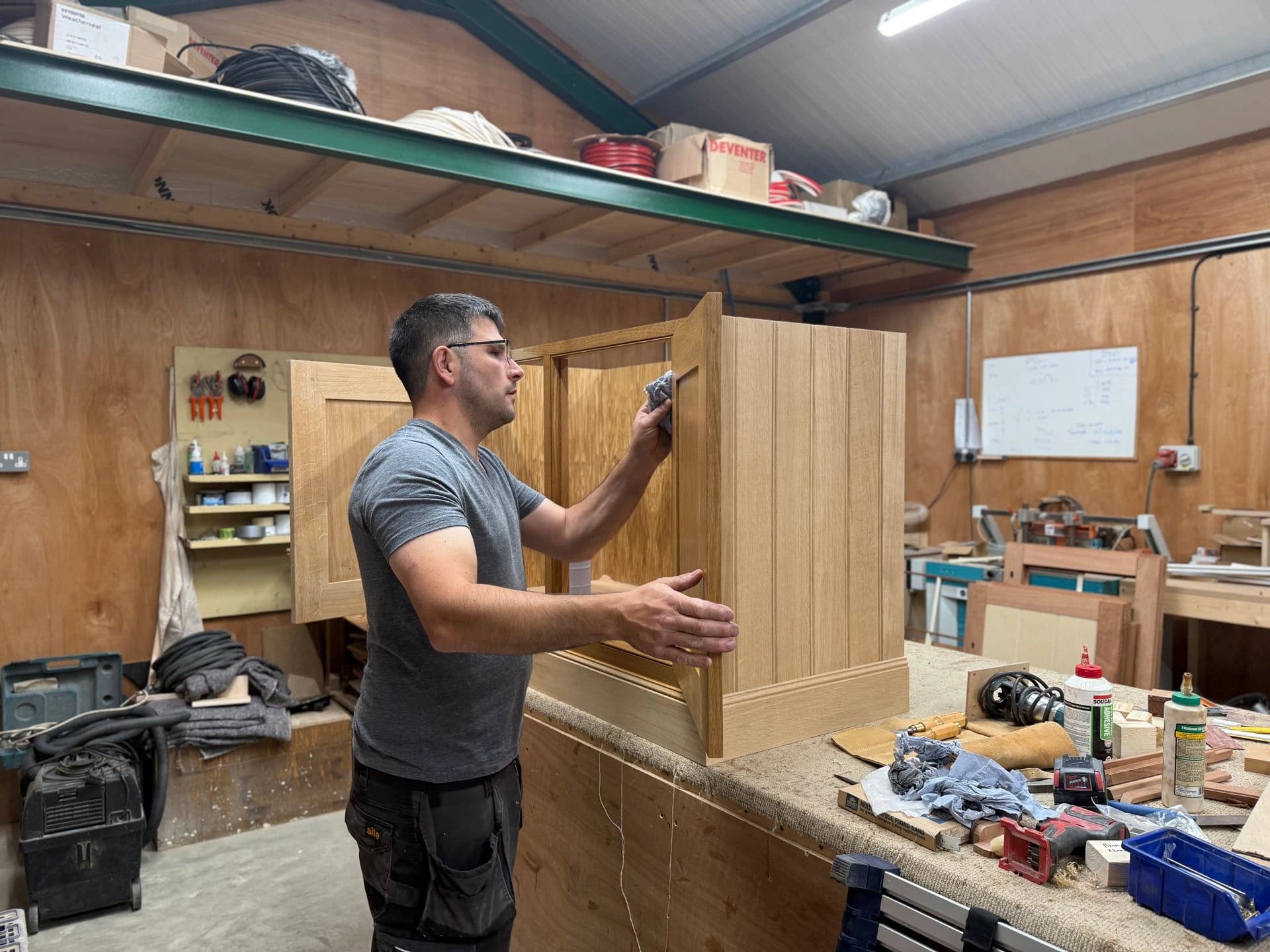
For any multi-unit commission, a physical sample unit, sometimes called a show unit or pilot fit-out, is the single most effective way to compress downstream risk. It forces every material, finish, and detail decision into one controlled moment before batch production begins. Colour matching, edge profiles, handle positions, and appliance integration are all resolved in three dimensions rather than on a drawing. Decisions made at sample stage are far cheaper to change than decisions discovered during a snagging round on unit twelve.
Revision Freezes and Why They Protect Everyone
A revision freeze is the contractual moment at which the design is locked for production. For developers, it can feel like a constraint; in practice it is a protection. Changes introduced after a freeze, even apparently minor ones such as a handle substitution or a plinth height adjustment, can invalidate cut lists, delay hardware orders, and push an entire batch out of sequence. Agreeing a clear freeze date, with a defined change-control process for anything that follows, is one of the most practical steps a procurement team can take before a single panel is cut.
Batch Release and Phased Delivery
Not every development needs all its joinery on site simultaneously. A phased batch-release structure, where cabinetry is manufactured and delivered in line with the construction programme, reduces on-site storage risk, limits damage from follow-on trades, and keeps the factory's production flow predictable. This requires close coordination between the joinery supplier's production schedule and the principal contractor's programme. The earlier that coordination begins, the more flexibility both parties retain. Discuss any proposed phased release with Nura early, so the suitability, responsibilities and programme can be agreed for the specific project.
Receiving, QA, and Access Responsibilities
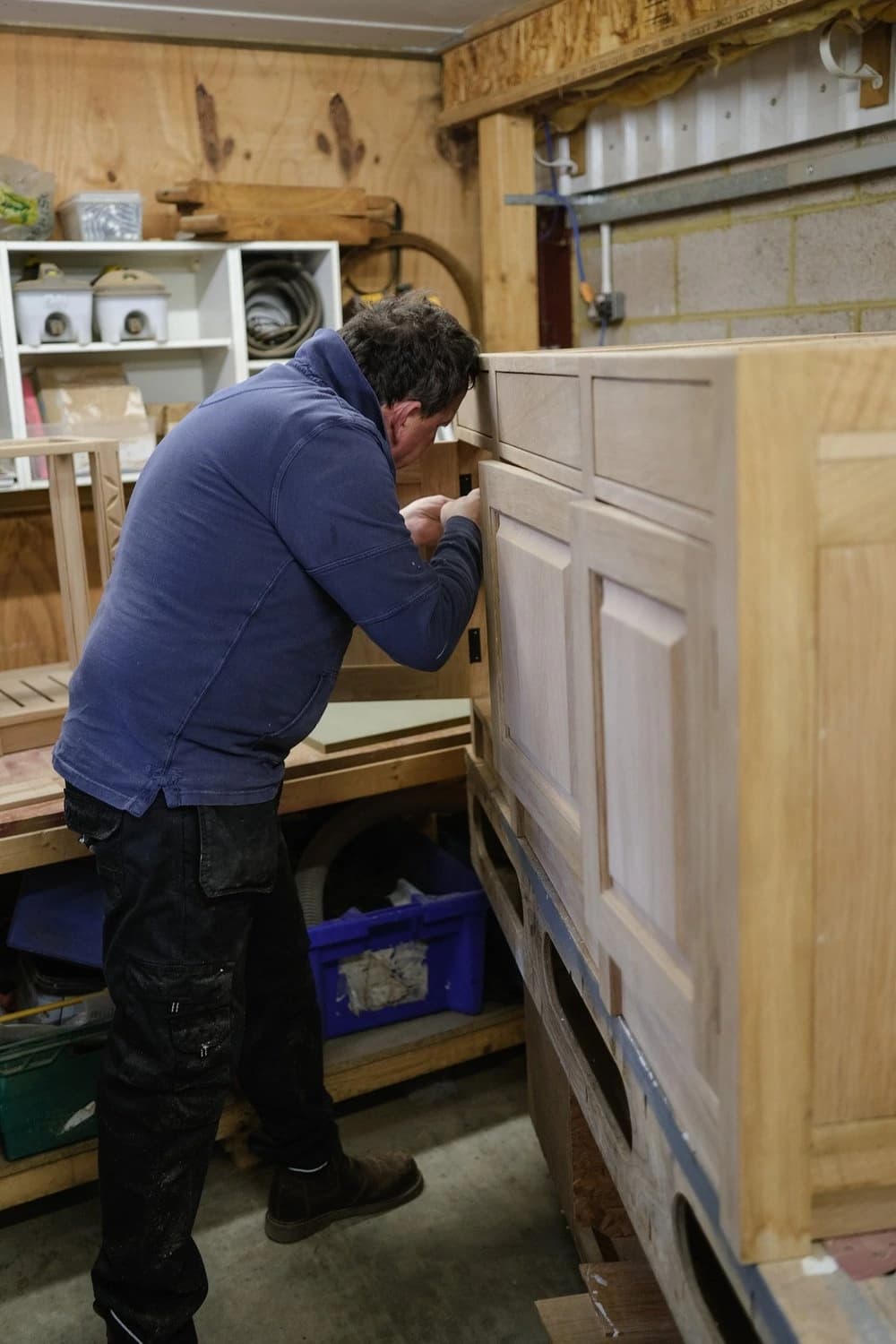
Bespoke joinery arrives on site in a finished or near-finished state. That means the receiving conditions matter enormously. Cabinetry delivered to a floor that is still wet, or stored in a space without climate control, can move, swell, or mark before installation begins. Defining who is responsible for receiving, inspecting, and storing each delivery, and what the acceptance criteria are, should be settled in the procurement documents, not resolved on the day of delivery. Similarly, access for installation and snagging needs to be programmed in advance; a joiner who arrives to find the floor layer still working has lost a day that cannot easily be recovered.
Snagging: Scope, Responsibility, and Sign-Off
Snagging on bespoke joinery is most efficient when the scope of each party's responsibility is clear before work begins. The joinery supplier is accountable for manufacturing defects and installation quality within their own scope. The principal contractor or developer is typically responsible for the substrate, services positions, and the sequencing of other trades. Conflating these responsibilities, or leaving them undefined, is the most common source of dispute on otherwise well-run schemes. A pre-start review is a useful place to record the agreed responsibilities and address gaps before work begins.
Design Professional Collaboration and Architect Intent
Developers working with an architect or interior designer have an additional coordination layer to manage: ensuring that the joinery supplier interprets the design intent accurately without requiring the design professional to re-draw every detail. A supplier who is experienced in reading architectural drawings, working within specified tolerances, and raising technical queries early, rather than making assumptions, is worth identifying at tender stage. Nura offers two complimentary initial consultations for trade and professional clients, which can be a useful way to test that working relationship before committing to a full programme. Learn more about how we support design professionals at collaboration for design professionals.
Long-Term Support Across a Development
A development scheme does not end at practical completion. Residents move in, minor adjustments are needed, and the developer's reputation is shaped by what happens in the months that follow handover. Choosing a joinery supplier who will remain accessible for post-handover queries, and who holds records of the finishes, hardware, and configurations used across the scheme, is a practical consideration that is easy to overlook during procurement and difficult to remedy afterwards. Discuss aftercare expectations openly at tender stage, and confirm the terms in writing before production begins.
If you are scoping a development programme and want to explore how bespoke joinery could work within your schedule and specification, book a consultation with the Nura team.
Planning your next step
Use this guide as a starting point for your own brief. Compare the room, materials and practical requirements with the way you want the space to work.
Read the bespoke kitchen planning guide or explore Nura bespoke kitchen services before discussing your project.
Ready to discuss the brief? Contact the Nura studio to share your plans, questions and priorities.