


To compare bespoke joinery quotes, first check that each supplier has priced the same items, drawing revision, specification and delivery scope. Mark anything provisional, excluded or not stated, then request written clarification. A lower total does not tell you whether two proposals cover the same work.
For architects, interior designers and main contractors, the useful outcome is a clear appointment decision: what will be supplied, what remains unresolved and which responsibilities sit with the wider project team. This guide uses an unpriced, hypothetical library and wardrobe package to show how to make that comparison.
Give every proposal the same reference
Make a short cover sheet naming the project, the rooms and the joinery items being compared. Record the drawing numbers, revision dates and specification issue sent to each supplier. If one has priced an earlier elevation or a different internal layout, resolve that difference before comparing totals.
Separate the appearance you want from the work needed to deliver it. An oak cabinet elevation does not, by itself, describe the cabinet interior, veneer arrangement, edge detail, hardware, lighting or installation. Record the material and finish references you have agreed, and identify the choices that are still open. Our bespoke joinery planning guide covers the wider brief.
Use four scope labels
- Confirmed: the proposal explicitly states the item and the relevant specification. Check it against the brief.
- Provisional: the proposal identifies an allowance or a choice that remains subject to confirmation. Record its stated basis.
- Excluded: the supplier expressly says the work is outside its price. Identify who will provide it.
- Not stated: the proposal does not answer the question. Ask; do not assume either inclusion or exclusion.
Keep these labels separate. An omitted drawer description is not the same as a written drawer exclusion. Likewise, a stated allowance is not a confirmed product selection. Ask whether the quoted amount is an estimate, an allowance-based proposal or a fixed price for a defined scope, and what would require it to change.
A library and wardrobe comparison
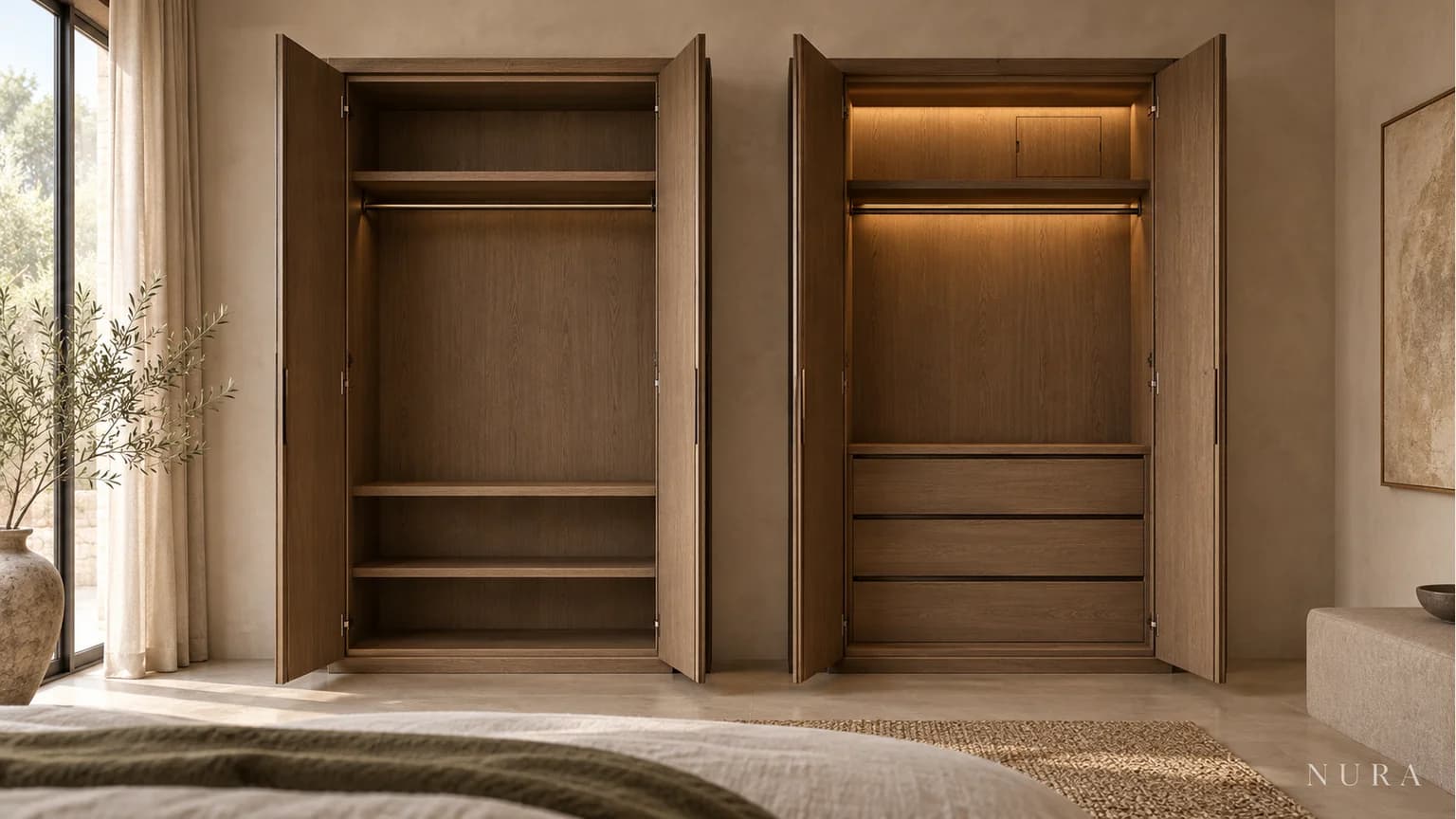
Imagine a project with J01, a living-room library cabinet, and J02, a bedroom wardrobe. Both suppliers receive the same elevations. Supplier A describes the cabinet shells and doors but leaves the wardrobe drawer specification unanswered. Supplier B identifies a provisional drawer allowance. Neither response yet establishes the same completed package.
| Compare | Supplier A | Supplier B | Clarify |
|---|---|---|---|
| J02 drawers | Not stated | Provisional allowance | Confirm quantity, internal layout, hardware and allowance basis. |
| J01 lighting | Housings only; lights excluded | Lights included; connection excluded | Identify supply, controls, access and connection responsibilities. |
| Installation | Excluded | Included; making good not stated | Define fitting, protection, making good and separate work. |
| Survey and drawings | Not stated | Not stated | Confirm deliverables, measurement responsibility and approval stages. |
| Delivery and access | Not stated | Not stated | Confirm delivery scope, route constraints and any separately priced handling. |
The table records hypothetical wording, not Nura quotations or a recommendation for either supplier. It cannot establish that B is better value: its total, allowance basis and unresolved work would still need review. A may offer a suitable scope if the project team intends to arrange the excluded work separately.
Ask for a revised comparison, not a guessed adjustment
Send each supplier the relevant questions and ask for a written response against the same item references. Record the reply date, any revised price reference and the drawing or specification revision it relates to. Keep the original proposal so the change remains traceable.
For the wardrobe, decide which drawer arrangement the client actually needs, then request that specification from both suppliers. For the library lighting, distinguish a recess or housing from the lights, controls and electrical connection. Ask the relevant specialists to confirm the technical requirements; this scope comparison does not approve an electrical design.
Do not insert an estimated sum of your own to make the totals appear comparable. Request a price for the agreed addition, or show the separate work as an unresolved cost. If a supplier proposes a different material or detail, keep that as a clearly labelled alternative rather than silently treating it as equivalent.
Review the commercial and programme conditions
Ask each proposal to state its tax treatment and whether the total includes the applicable VAT. Compare payment stages, quote validity, the basis of provisional amounts and the process for approving changes. Discuss unclear terms with the supplier and your appointed advisers before committing.
Check the dependencies behind the programme: survey information, client decisions, sample and drawing approvals, site readiness and access. A proposed delivery date is not the same as an agreed installation scope. Ask what aftercare or guarantee documentation applies to the actual appointment and what its conditions are.
For a kitchen-only commission, use our bespoke kitchen quote comparison. Here the comparison is across a multiroom joinery package, where a wardrobe allowance and a library lighting exclusion can sit within one total.
Take a clear scope into the supplier conversation
- Which drawing revision and item schedule have you priced, and what have you assumed where information is missing?
- Can you confirm the listed fittings and separate the included, provisional and excluded work for each item?
- Who supplies, coordinates and approves the interfaces, and can the revised proposal record those responsibilities?
Bring the drawings, room and item list, finish references, unanswered questions and programme priorities to a Nura professional project conversation. Include the project location, current stage and budget parameters. Nura works across design development, technical detailing, manufacturing and installation; the responsibilities for your project need to be confirmed in the appointment.
Explore the documented Westover Road joinery for relevant built-in furniture, then discuss your project scope. The aim is a decision based on the agreed work and remaining dependencies, with a written record the project team can use.