
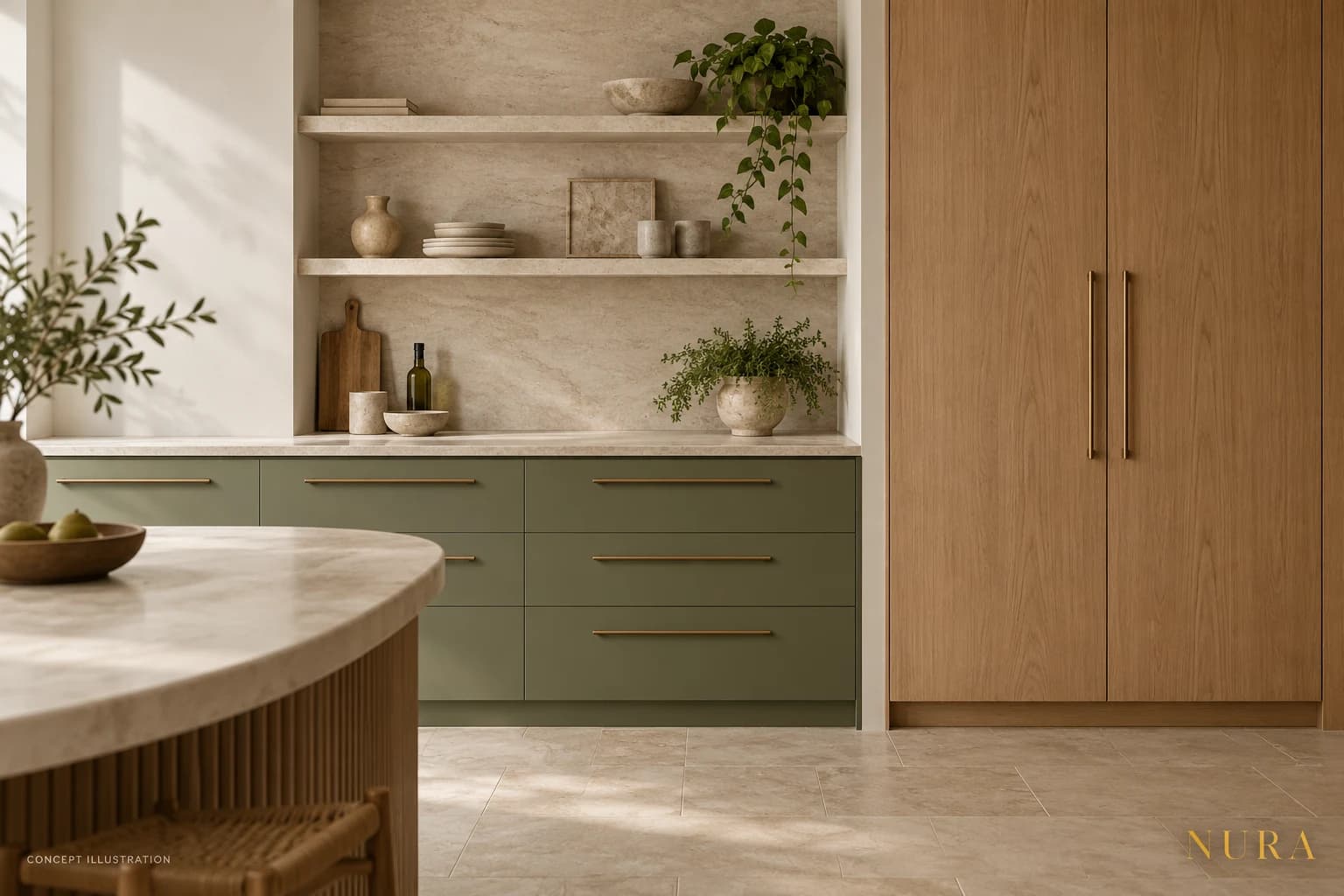

To choose kitchen handles, try a physical sample on a representative cabinet front before approving the order. Look beyond the finish: check how the grip feels, whether it suits the door profile and which fixing details the supplier needs to confirm.
Try the movement, not just the appearance
Use a showroom demonstration or a supplier-approved sample arrangement. Hold the pull or knob as you would during everyday use. Notice whether your fingers fit comfortably behind it and whether the edges feel awkward in your hand. There is no single grip that suits everybody, so involve the people who will use the kitchen.
Check the proposed position on the actual style of door or drawer front. A loose handle held against a photograph cannot show how it meets a recessed panel or neighbouring cabinet. Do not drill a finished door simply to experiment: agree a temporary or demonstration arrangement with your designer or supplier.
For an integrated appliance, confirm the appliance and cabinetry requirements before choosing its handle. Do not force an unfamiliar display door or assume that hardware suitable for a small drawer is suitable elsewhere.
Agree what the cup handles should align with
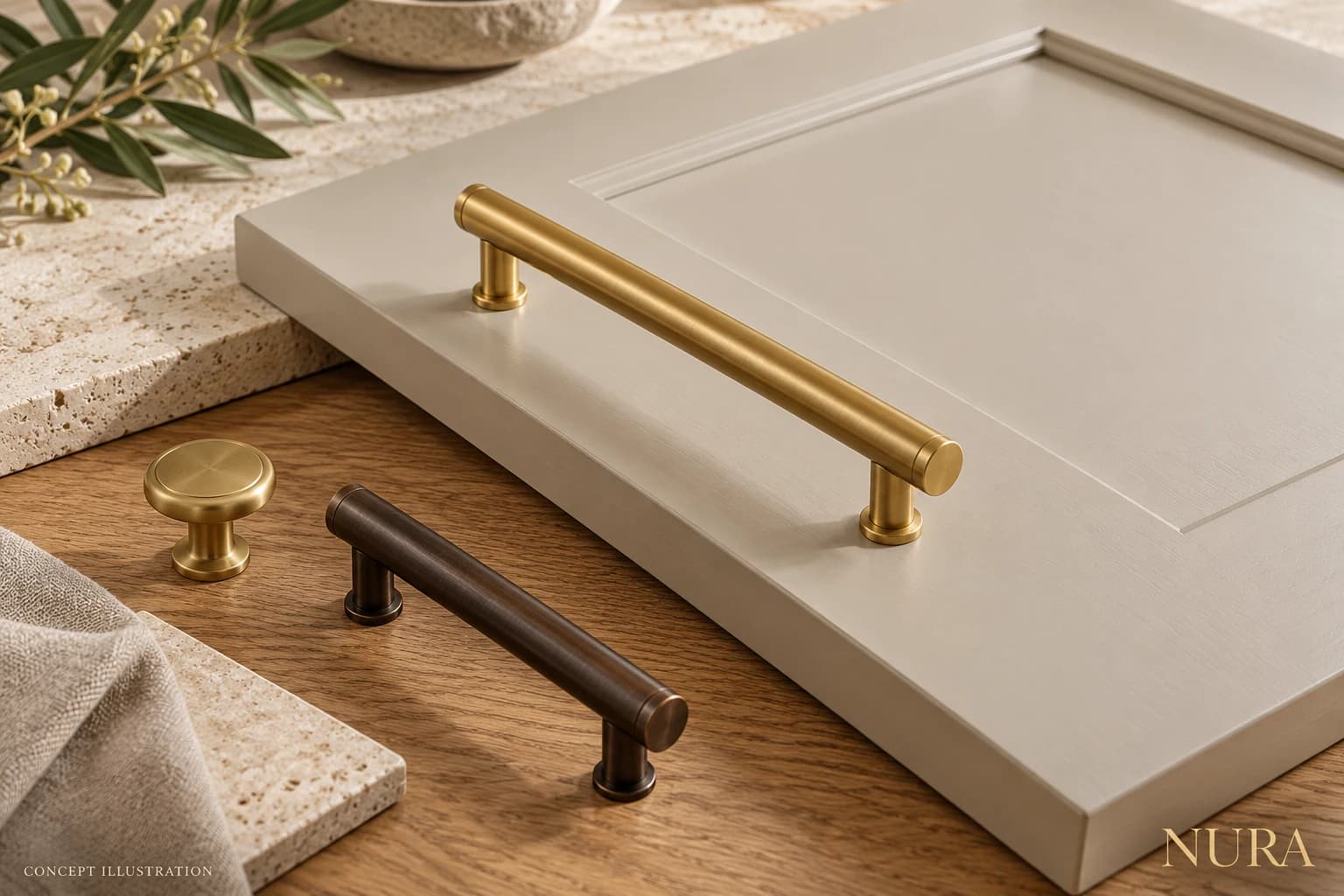
For cup handles, the visible outline and the fixing centres describe different things. The centres identify part of the selected product's fixing information; they do not by themselves express where you want its curved edge to sit on a drawer front. Ask the elevation to identify the visual reference you mean, rather than leaving a general instruction to align the handles open to interpretation.
Imagine a drawer stack with a shallow upper front and deeper fronts below. The household has selected one cup-handle model and wants a deliberate repeated relationship across the stack. Compare that actual handle against each proposed front, including any frame, recess or other division. Is the intended reference the top of the cup, another visible edge or its relationship with a particular part of the front? Different-height drawers need not be treated as scaled copies of one another. This is a hypothetical appearance discussion, not a fixing layout or a rule that one position is correct.
Ask the designer or supplier how to represent the chosen product at actual scale. Supplier-approved, non-damaging paper outlines may help compare the appearance on an appropriate sample arrangement; do not attach them to finished surfaces without agreement or use them as drilling templates. Review the whole elevation from the room as well as close up. Keep the handle model and finish constant so that another product or colour does not quietly decide the position comparison.
Record the preferred visual relationship on an annotated elevation with the current front and handle references. Then have the supplier confirm the applicable fixing information and whether the proposed combination permits that position. If an alternative is needed, ask what changes in the visible result before accepting it. A written appearance preference and a supplier-confirmed product detail should remain connected, without treating one as a substitute for the other.
Record three checks before ordering
| Check | What to record |
|---|---|
| Comfort | Which sample feels comfortable to hold and use? |
| Fit | Supplier-confirmed fixing centres, compatible front thickness and required fixings. |
| Care | The manufacturer's instructions for the exact finish. |
Keep the product reference, finish name and agreed position with your cabinet drawings. For replacement handles, have the existing fixing arrangement checked before ordering. Avoid assuming that a similar-looking product will cover the old holes.
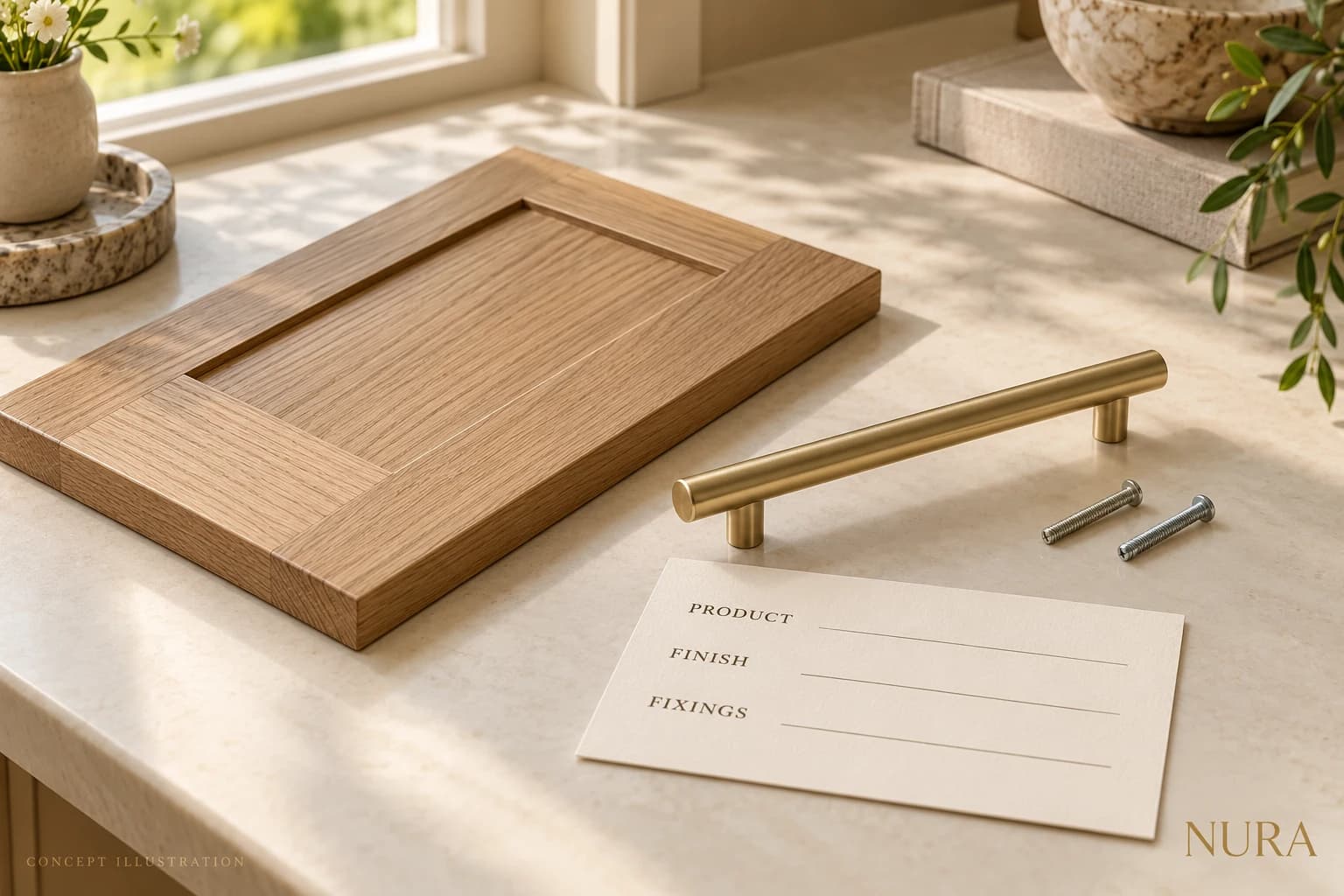
Bring the handle sample together with your cabinet finish and worktop. Our kitchen colour sample guide explains how to compare the palette at home. For the wider brief, explore bespoke kitchen services or discuss your project with Nura.
See a documented Nura palette
The published Ancona kitchen combines matt black lacquered cabinetry, terrazzo, ribbed glass and brass handles. It is an example of hardware within a coordinated palette, rather than evidence of a particular grip test. The hero and sample images do not document a Nura project or establish product compatibility.
Further reading
For manufacturer guidance on handle types, finishes and placement, see Armac Martin’s cabinet hardware guide. Confirm compatibility and care against the exact product documentation supplied for your order.