
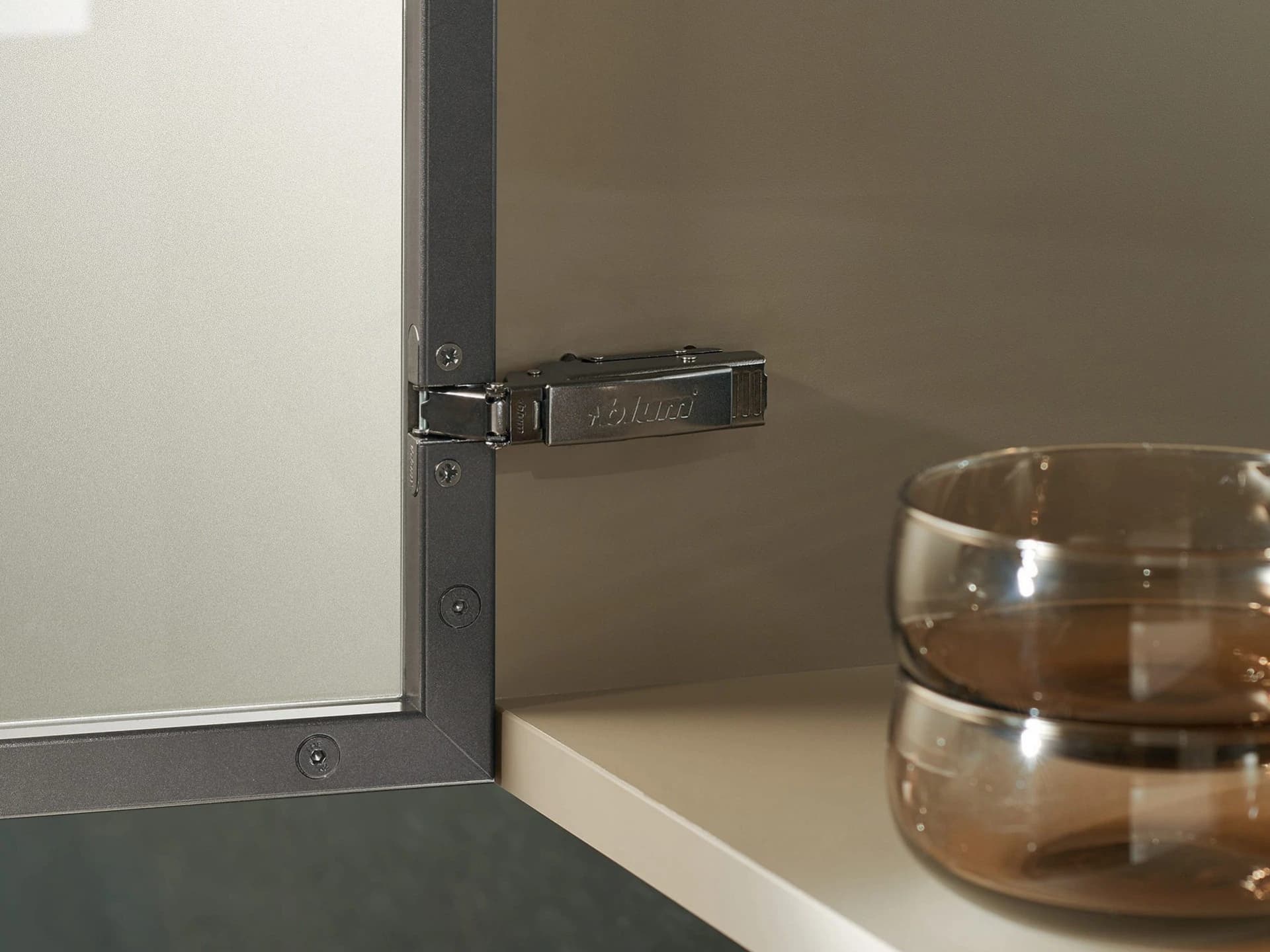

Kitchen hardware is one of those categories where the gap between a well-specified fitting and a poorly matched one becomes apparent within the first year of daily use. Hinges that close unevenly, drawer runners that lose their soft-close action, or pull-out systems that flex under a full load of pots, these are not abstract concerns. Two brands that appear consistently in well-specified British kitchens are Blum, an Austrian manufacturer with a long-established UK presence, and HiGold, a Chinese manufacturer whose product range has grown considerably in specification and availability. Nura Interiors offers both, and the choice is made by function and application rather than by brand preference alone.
How Hinge Systems Actually Work
A concealed cabinet hinge does three things: it holds the door to the carcass, it allows the door to open through a defined arc, and, in a soft-close variant, it controls the speed of closing through a hydraulic or mechanical damping mechanism. The overlay of the door relative to the carcass face, the thickness of the door, and the opening angle required all determine which hinge variant is appropriate. Getting any of these variables wrong means a hinge that either cannot be adjusted into alignment or one that physically conflicts with an adjacent door or drawer front.
Blum Clip Top Blumotion Onyx: Application Variants
Blum's Clip Top Blumotion Onyx is a face-frame and frameless concealed hinge with integrated soft-close damping built into the hinge body rather than added as a separate clip. The Blum programme page for this hinge sets out the range of opening angles, typically 95°, 110° and 155° variants, and the different overlay configurations available. The 155° variant is relevant where a door needs to open fully clear of an adjacent tall unit or appliance housing; the 95° variant suits standard overlay doors in a run of base or wall cabinets. Selecting the correct opening angle is a functional decision, not an aesthetic one, and it should be confirmed against the actual cabinet layout before ordering.
Blum Tandem and Legrabox Runner Systems
A drawer specification should identify the selected box or runner system, its required cabinet dimensions and the supported motion functions. Blum offers several systems, so it is more useful to compare the exact product references than to treat every branded drawer as identical. Ask which parts form the drawer box, which support its movement and which provide closing or opening assistance. Those choices can affect appearance, internal space and the way the cabinetry is constructed. The maker’s current planning information should determine the application; a brand name alone does not establish compatibility.
HiGold: Where It Sits in the Market
HiGold has developed a range of concealed hinges, drawer runners and pull-out systems that are specified in kitchens across a range of price points. The brand's product terminology and model designations are not independently verified in this article, specific model names and numbers should be confirmed directly with your supplier or designer before specification. In general terms, HiGold offers soft-close hinge and runner systems that function on similar mechanical principles to their European counterparts. The practical question for any project is whether the specific HiGold component being specified has been tested in the context of the cabinet construction being used, and whether replacement parts are readily available in the UK if a component requires attention after installation.
Pull-Out Systems: Function Before Brand
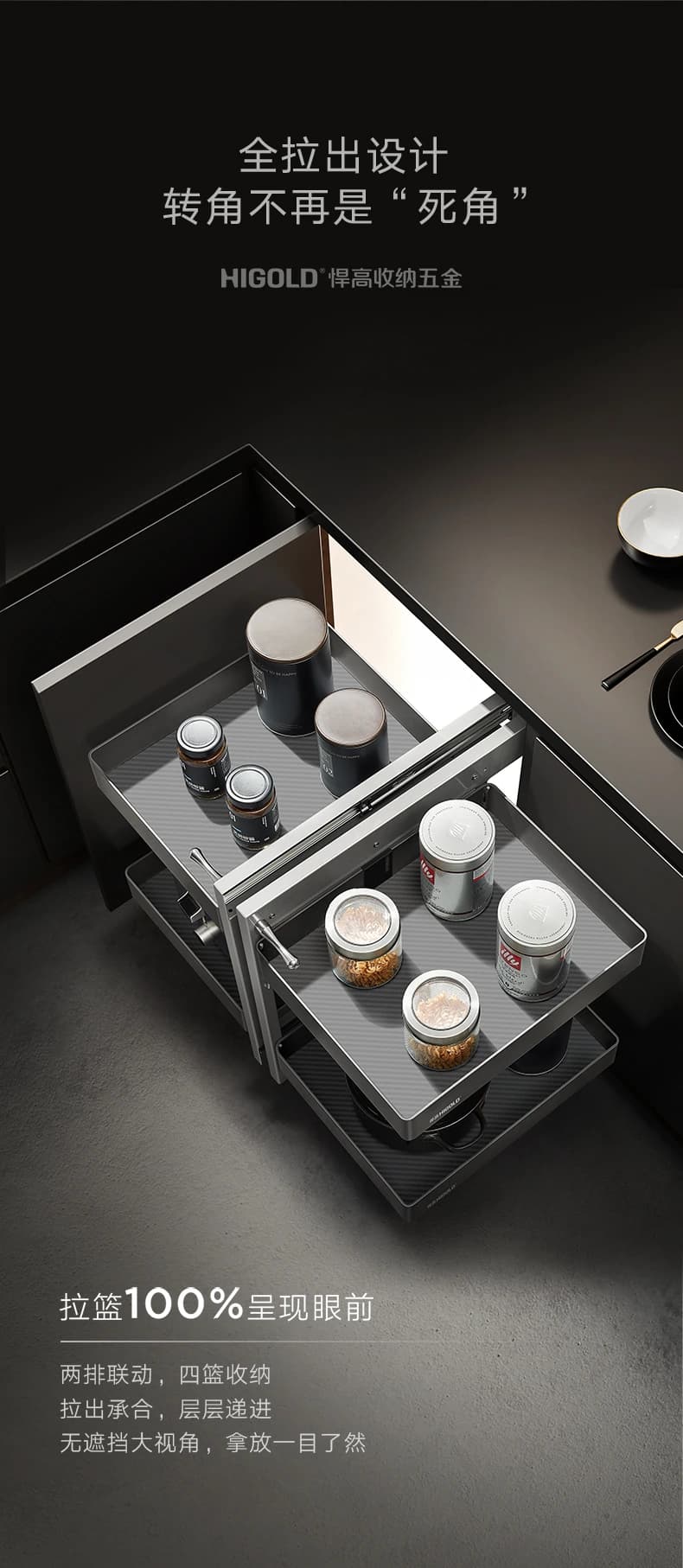
Internal pull-out systems, larder frames, pan drawers, corner solutions, are where hardware specification becomes most consequential for daily use. A pull-out that does not extend fully, or one whose runners deflect under the weight of cast iron cookware, will frustrate a client every time they use it. The relevant specification questions are: what is the intended contents weight, what is the internal cabinet width, and what extension travel is required? These questions should be answered before a brand or model is selected, not after. Both Blum and HiGold offer pull-out solutions across a range of widths and configurations; the right choice depends on the answers to those functional questions in the context of the specific cabinet.
Hinge Adjustment and Long-Term Alignment
One of the practical advantages of a quality concealed hinge, regardless of brand, is the ability to adjust door alignment after installation. Most contemporary concealed hinges offer three-axis adjustment: height, depth and lateral position. This matters because even a carefully fitted kitchen will see minor seasonal movement in timber components, and the ability to re-align a door without removing it from the carcass is a genuine maintenance benefit. The range of adjustment available varies by hinge model, and it is worth confirming with your installer that the hinges specified offer sufficient adjustment travel for the door weight and overlay in question.
Specifying Hardware Within a Bespoke Project
In a bespoke kitchen project, hardware specification is typically resolved during the detailed design phase, once cabinet dimensions, door weights and internal configurations are confirmed. At Nura Interiors, both Blum and HiGold are available as hardware options, and the selection is made in the context of the specific project rather than as a blanket default. If you are a design professional working on a project that involves kitchen hardware specification, the Nura for professionals page sets out how collaboration works, including the scope and availability of initial trade consultations. For a broader understanding of how carcass construction and hardware interact, the Nura guide to plywood versus MFC carcasses is a useful companion read. To discuss hardware specification for your own project, arrange a consultation with the Nura team.
Planning your next step
Use this guide as a starting point for your own brief. Compare the room, materials and practical requirements with the way you want the space to work.
Read the bespoke kitchen planning guide or explore Nura bespoke kitchen services before discussing your project.
Ready to discuss the brief? Contact the Nura studio to share your plans, questions and priorities.