
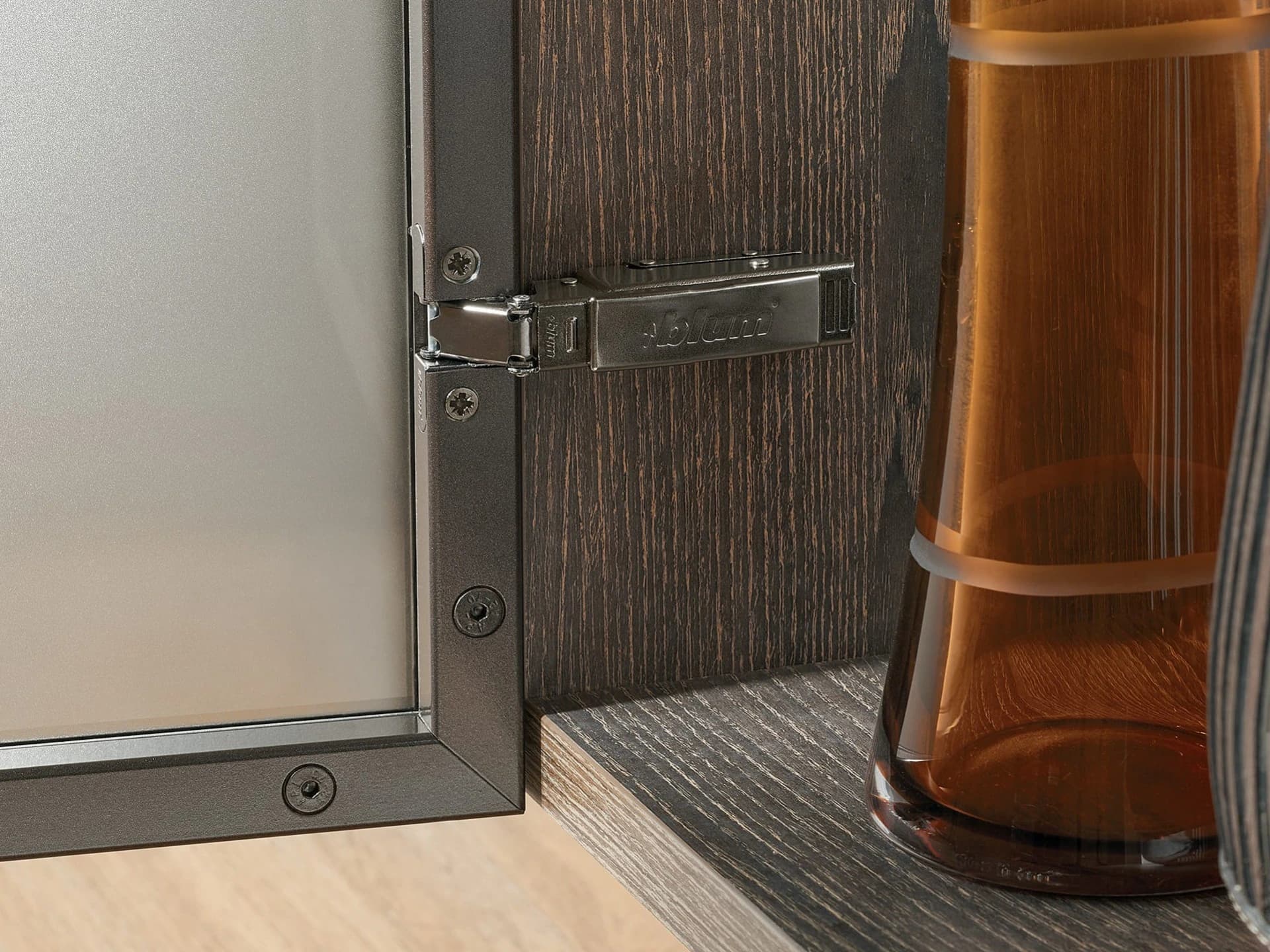

A heavy kitchen door places demands on more than the hinge itself. Its dimensions, construction, fixings and opening route all contribute to how it moves. A familiar hardware name is useful information, but it does not establish whether the selected fitting is appropriate for that particular door.
The design team should resolve the application using the manufacturer's current planning information. For a homeowner, the most valuable questions are practical: what has been specified, how was it selected and who will adjust or service it if needed?
Record the complete door specification
Begin with the finished door rather than an approximate panel weight. Its height, width, thickness and construction should be established, together with any handles, glass or applied details that form part of the finished assembly. A broad description such as tall timber door leaves too much unresolved for hardware selection.
Give the supplier accurate information about the intended use as well. A frequently opened food cupboard and an occasional access panel may ask different things of the design. The appropriate solution needs to account for both the physical door and the way it will be used.
Check the opening route on the plan
Draw the door open beside adjacent cabinets, walls, handles and appliances. Ask what opening movement is needed for access to the interior, including any drawers or pull-outs behind the door. A fitting that allows the door to move is not necessarily sufficient for everything inside to operate comfortably.
The required hinge application should follow those checks. Avoid choosing a generic opening angle and assuming it works everywhere. A corner, an inset front or a particular appliance arrangement can require a different solution, which the manufacturer or experienced installer should identify for the actual detail.
Select compatible components together
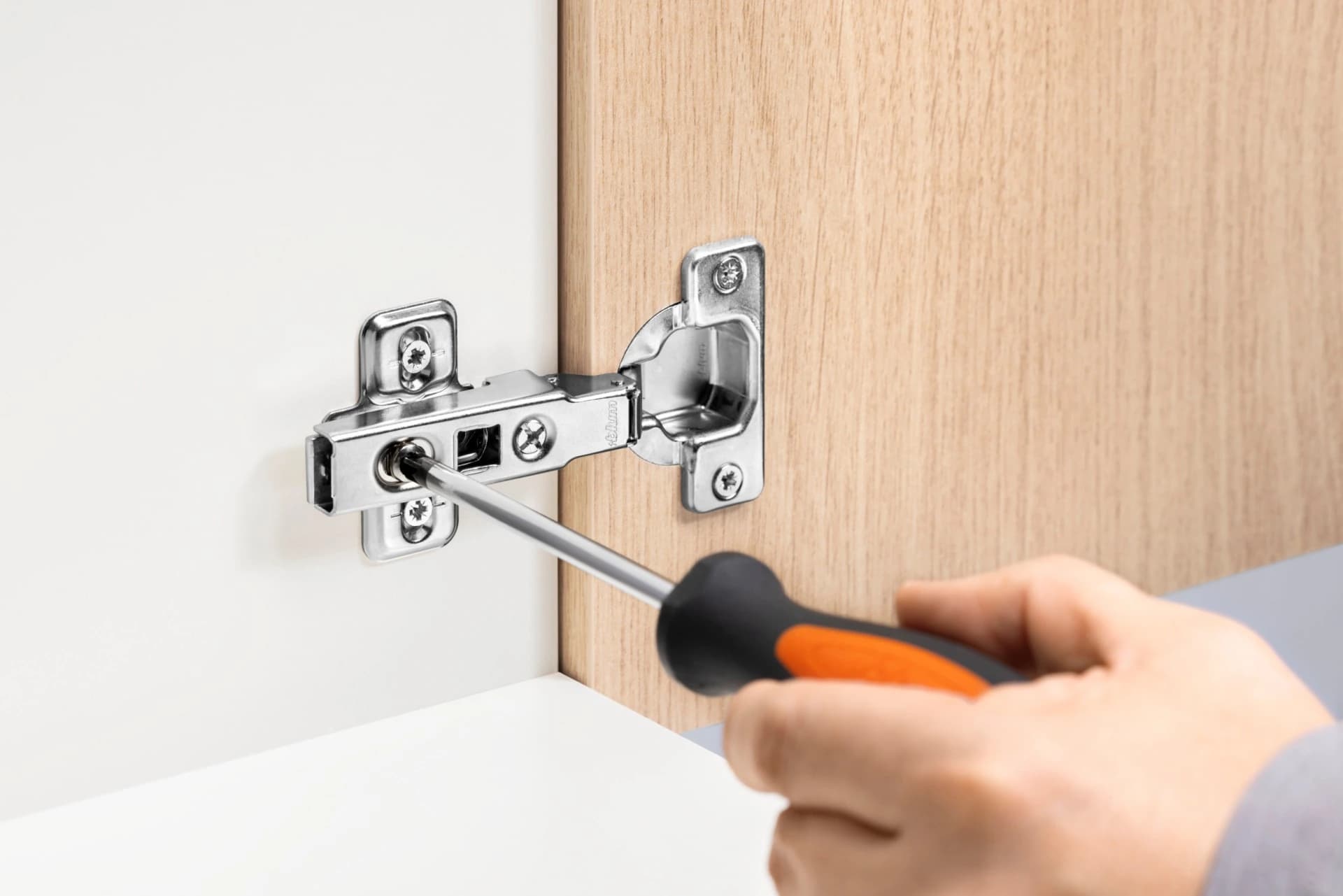
The hinge, mounting arrangement and related components need to form a supported combination. Ask the maker to confirm the exact references and the relevant planning detail. Similar-looking parts are not necessarily interchangeable, and a soft-close description does not explain the complete application.
Also establish which functions are included. Closing assistance, opening assistance and removability for servicing are separate questions that should be answered for the selected system. Compare the specified components rather than relying on a general expectation associated with the brand or the appearance of a showroom display.
Consider the substrate and fixing method
The connection between the hardware and the cabinetry matters as much as the moving component. Identify the door construction, the cabinet side and the fixing arrangement recommended for them. The design should follow the relevant product guidance rather than assuming that a screw used in another material is appropriate here.
This is also a reason to read the whole cabinet specification. A plywood or MFC label alone does not describe the complete connection. Our carcass comparison guide explains why grade, detailing and workmanship need to be considered together.
Use the manufacturer's planning information
Ask how hinge quantity and position have been determined for the finished door. The relevant manufacturer information should guide the selection; a generic rule about a set number of hinges for every tall door is not a substitute.
Blum's hinge-planning guidance is one resource for its own systems. Check the current information for the exact product and application. Do not transfer a recommendation between unrelated manufacturers or assume that adding a fitting without a considered layout automatically improves the result.
Review the assembled door in use
Where possible, try an appropriate display or sample and ask how it relates to your proposed door. Observe the opening movement, access to the cupboard and closing behaviour. This is a useful practical review, although it is not a substitute for the technical selection or a long-term performance test.
A hypothetical wide pantry door may look suitable when closed but obstruct the internal drawer when opened beside a wall return. Resolving that conflict could involve the door arrangement, the internal fittings or a different supported hinge application. It should be addressed in the drawings before manufacture.
Agree adjustment and aftercare responsibilities
Good alignment is part of installation and handover. Ask who checks the doors and how an issue should be reported later. Different fittings have different adjustment and servicing procedures, so any work should follow the applicable instructions and be carried out by someone competent to assess the problem.
Keep the product references with the project records. A door that starts to bind may need a diagnosis of the fitting, fixings or surrounding cabinetry, rather than an improvised adjustment. Written warranty and service terms should be confirmed for the components and workmanship supplied.
Make hardware part of the design discussion
Nura can discuss hinge and storage choices within the broader kitchen design process. Exact products and responsibilities should be recorded as the design develops, especially where the door proportions or finish create a demanding application.
Share your drawings and door preferences with the studio. We can identify the technical information needed from the hardware supplier and consider the opening movement alongside the rest of the room.
Planning your next step
Use this guide as a starting point for your own brief. Compare the room, materials and practical requirements with the way you want the space to work.
Read the bespoke kitchen planning guide or explore Nura bespoke kitchen services before discussing your project.
Ready to discuss the brief? Contact the Nura studio to share your plans, questions and priorities.