
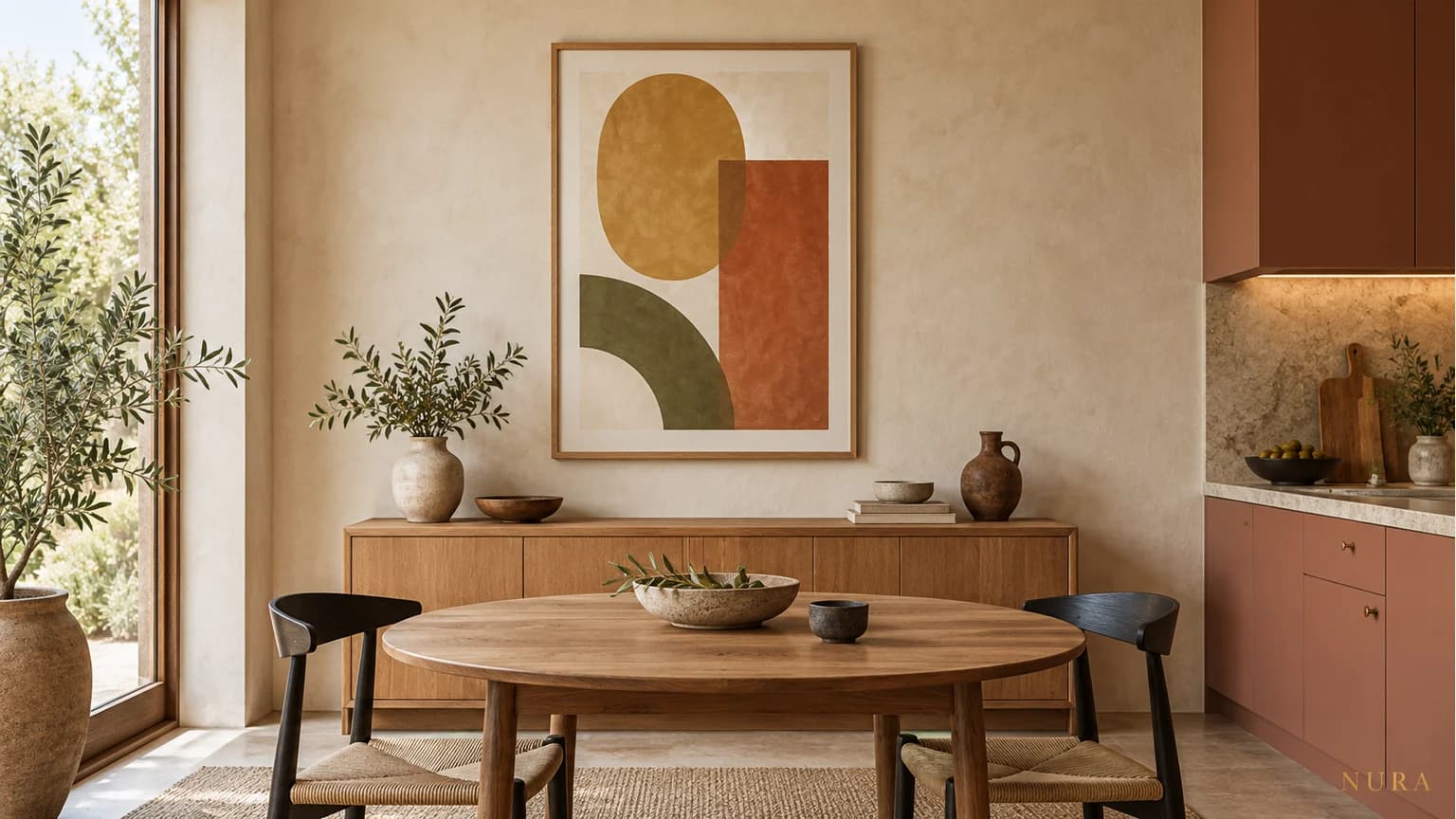

For kitchen wall art ideas that work in your room, compare the outside frame size before choosing a print. A paper outline can help you judge the shape from the dining table and the kitchen entrance. It is a visual planning aid, not confirmation that a wall or fixing can support the finished piece.
1. Compare the whole frame, not just the print
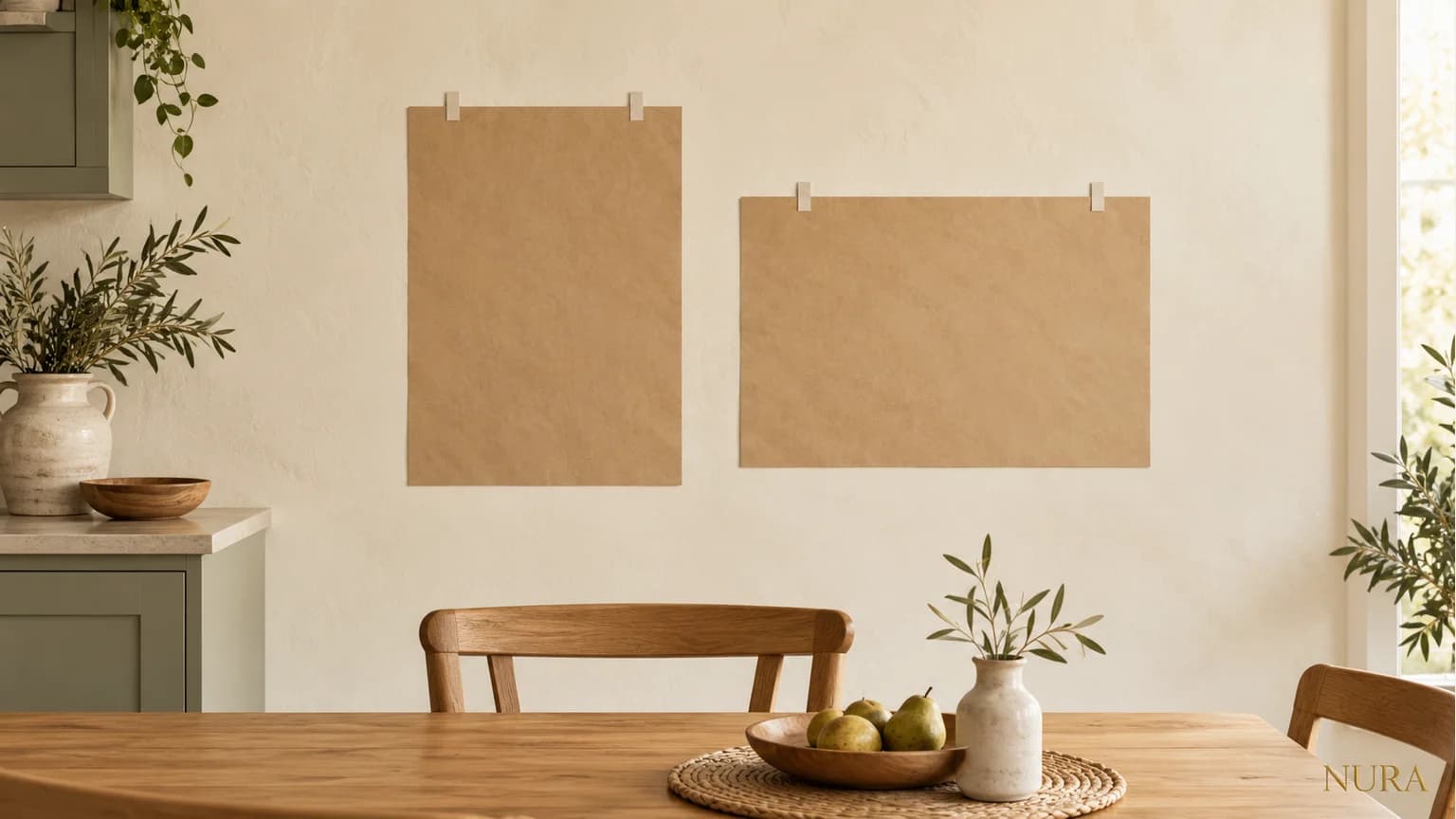
Check the proposed frame’s outside dimensions, including any mount and moulding. Make a paper outline for one option, then compare another shape in the same wall area. A portrait frame and a landscape frame can give very different impressions even when both suit the image. Use a temporary method appropriate to your wall finish and test it in an inconspicuous place first; do not attach anything to the artwork itself.
2. Look from the places you actually use
View each option while seated at the table, then from the entrance or usual standing position. Notice whether the frame feels crowded by a cabinet edge or disappears behind furniture. Consider nearby cupboard doors and the depth of the eventual frame. A flat paper outline cannot prove that a projecting frame clears an opening, so ask the installer to check the finished arrangement before fixing it.
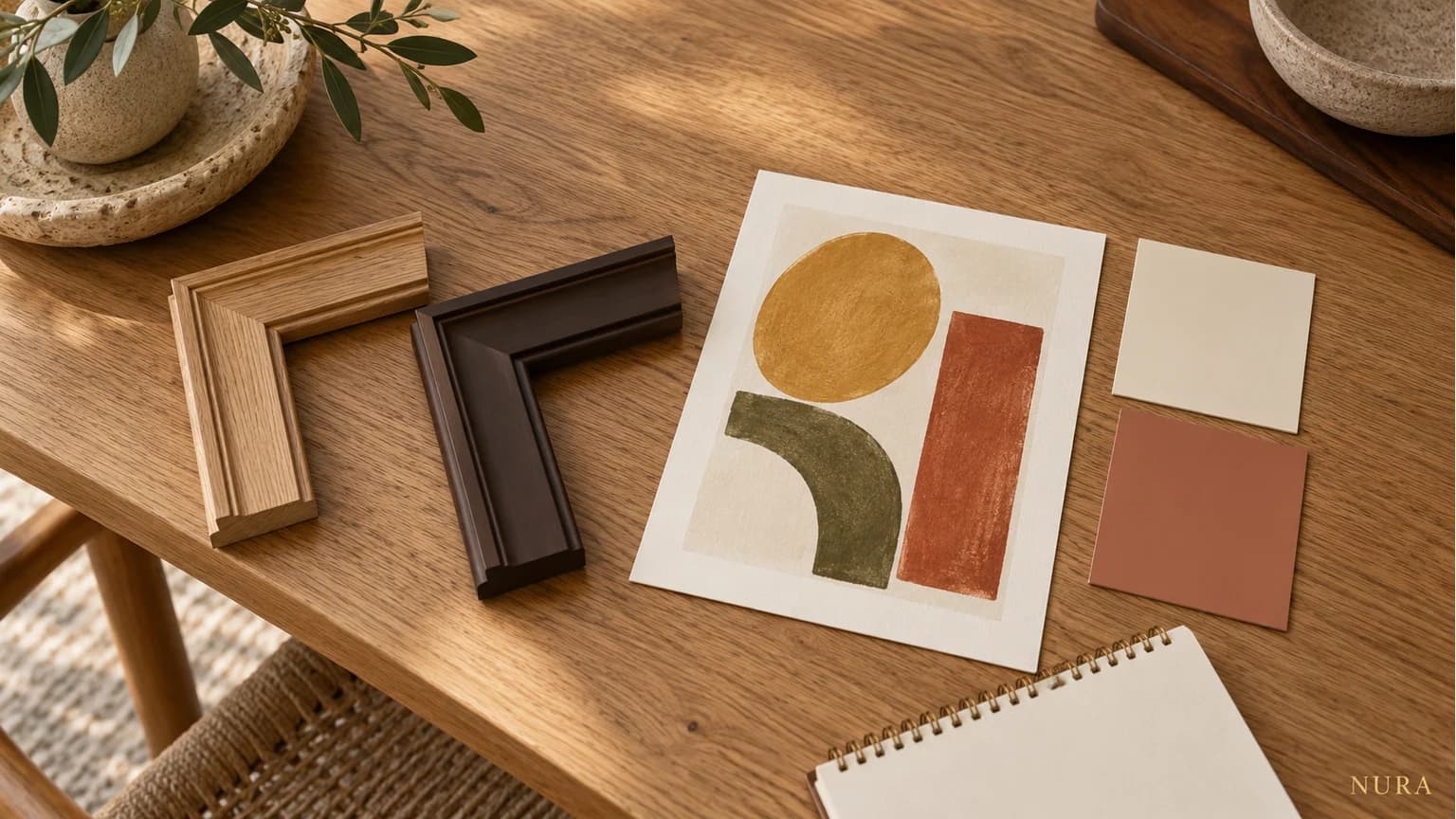
Keep the palette simple while comparing sizes. One frame finish might echo an existing timber detail; another might repeat a dark handle or chair. Neither needs to match every finish. Compare a real frame sample if available, rather than relying entirely on colours shown on a screen.
3. Choose a location with the artwork’s care in mind
The Canadian Conservation Institute’s guidance for works of art on paper explains that light can fade colours and that heat and humidity can damage paper. Choose a position away from direct sunlight and consider cooking steam, splashes and heat sources. A dining-area wall may be worth comparing with a busy preparation wall, but the actual conditions matter. Ask about the specific artwork and framing materials; a frame does not make a paper print waterproof.
A quick comparison to keep
For a hypothetical dining corner, a portrait outline may be easy to see from the entrance but feel cramped beside a wall cabinet. A wider, lower shape might look calmer from the table. Record both views before deciding. This example is a visual comparison, not a measured installation or a universal hanging rule.
| Check | What to note |
|---|---|
| Outside size | Print, mount and frame considered together |
| Everyday views | Seated and standing impressions; nearby openings to verify |
| Location and care | Light, heat, moisture and artwork-specific advice |
Make it part of the wider room
For related styling, see our open-shelf guide. If you are planning a wider room change, explore Nura bespoke kitchens and bring your preferred artwork and frame details to a design consultation. Before installation, have the wall, fixings and concealed services assessed by a suitable professional. These illustrations show planning ideas, not a completed Nura project.