
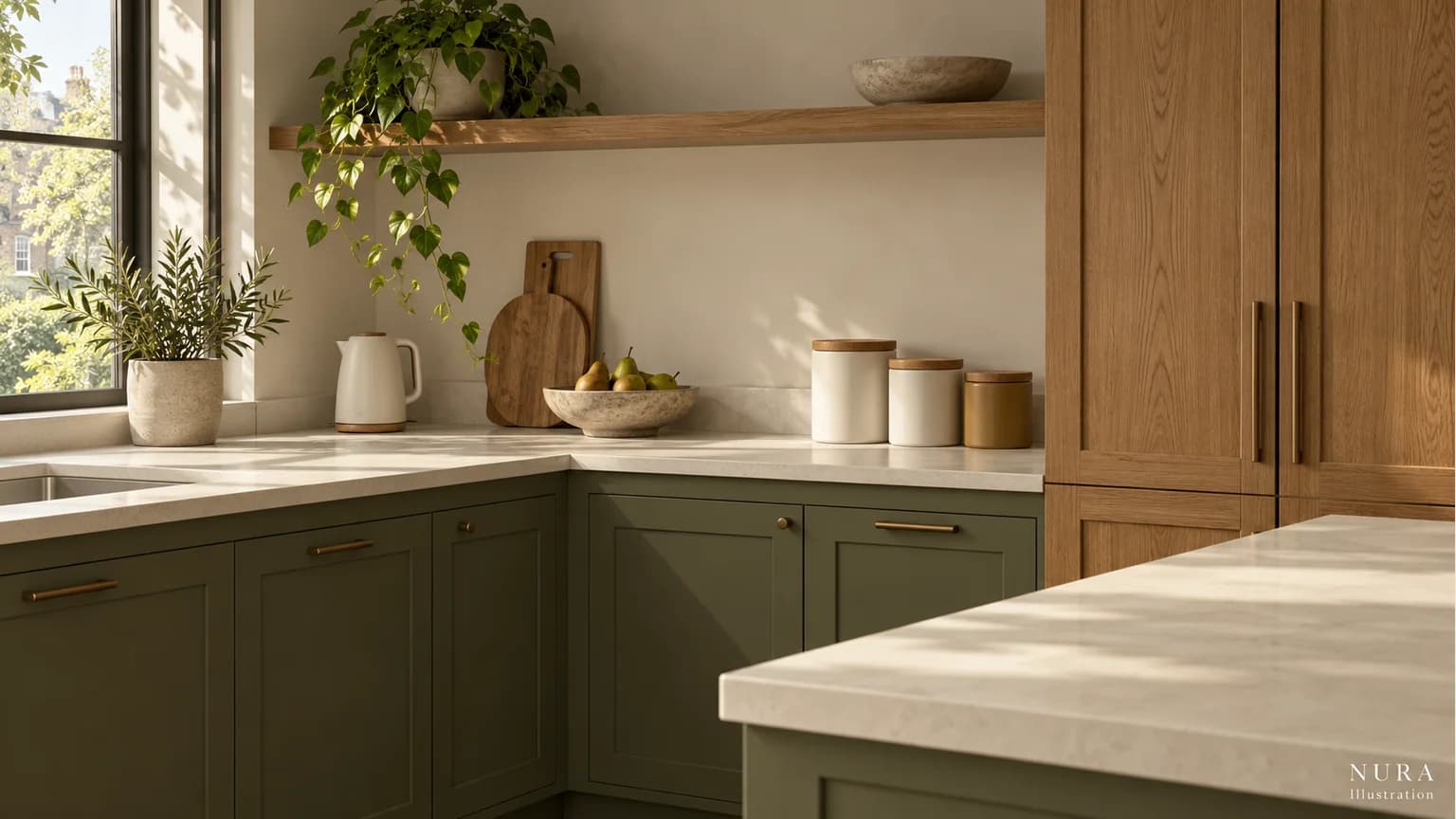

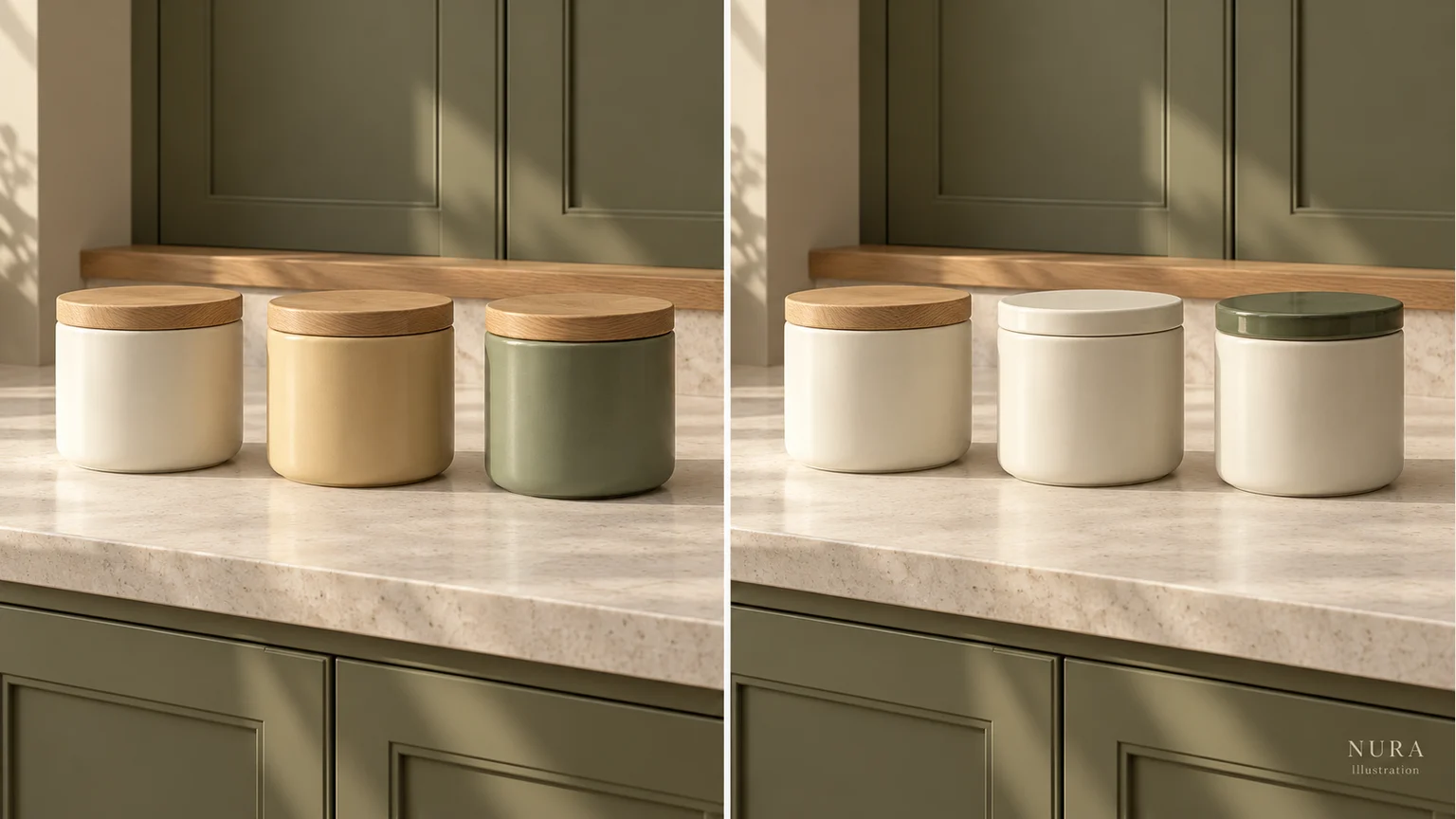
For kitchen canister styling, you can repeat the lid finish while varying the pots, or repeat the body colour while allowing different lids. Start with the part you want to connect to your existing kitchen, rather than buying a complete matching set by default. A small comparison can leave room for the containers that actually suit your routine.
Give the lids or the bodies the leading role
Look at the cupboard fronts, worktop and timber visible beside the jars. Oak lids might pick up an existing wood detail while the bodies introduce a quieter colour or an accent. Alternatively, similar ivory bodies could sit against a pale worktop while their lids vary. Neither relationship requires every finish to match exactly.
Compare the whole arrangement from your usual doorway or dining seat, then from the counter. You may see mostly bodies from one position and more of the lids from another. Keep the viewpoint that matters to you in the decision. For a broader timber palette, use our guide to mixing wood tones in the kitchen.
Keep a place for the lid when the pot is open
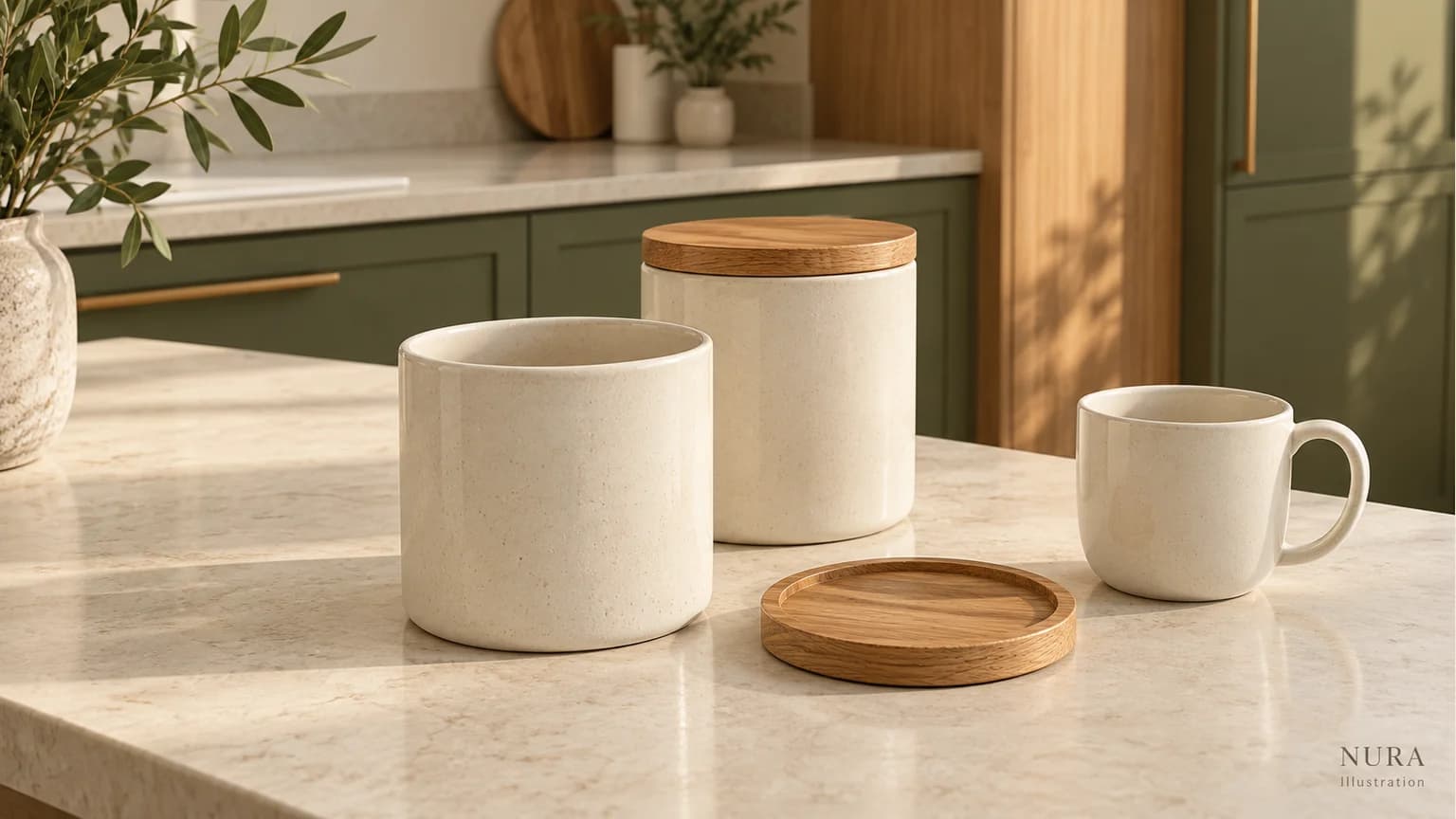
With an empty container you already own, open it in the proposed position, put its own lid down, then replace it. Is the landing place where you normally set a mug? Would reaching the rear jar mean moving the front one? Try fewer visible pots if the arrangement gets in your way. You do not need a tea, coffee and sugar trio if only two earn a place in your routine.
Compare product photographs or finish references for the appearance; keep each real lid with its intended container. Do not swap fitted lids merely to achieve a colour combination. If a tray is part of the plan, our worktop tray guide covers its footprint and removal separately.
Choose the appearance without assuming the performance
A decorative pot is not automatically suitable for storing food. Check the intended use, closure and care information for the exact product. Lid and body instructions can differ: the Le Creuset Signature Storage Jar guidance, for example, specifies a handwash-only wooden lid removed before dishwasher cleaning. That is a product-specific example, not a rule for all wooden lids or ceramic pots.
| Repeat | Compare with your kitchen |
|---|---|
| Lid finish | Retained wood or another small finish you want to connect |
| Body colour | Cupboard fronts, worktop and the neighbouring mugs |
For a hypothetical household keeping an oak breakfast table and olive cupboards, ivory and ochre pots with similar oak lids are one option. Matching ivory bodies with different lids are another. Choose the relationship you prefer, then keep only the pots whose opening and storage requirements work for you.
If this small choice raises a wider question about the kitchen palette, bring room photographs, retained timber references and a list of your everyday drinks ingredients to a Nura design conversation. Use them to explain what should stay visible and what could live behind a cupboard door. Elm Park Road offers a documented kitchen to explore for the relationship between cabinetry and the wider room.