
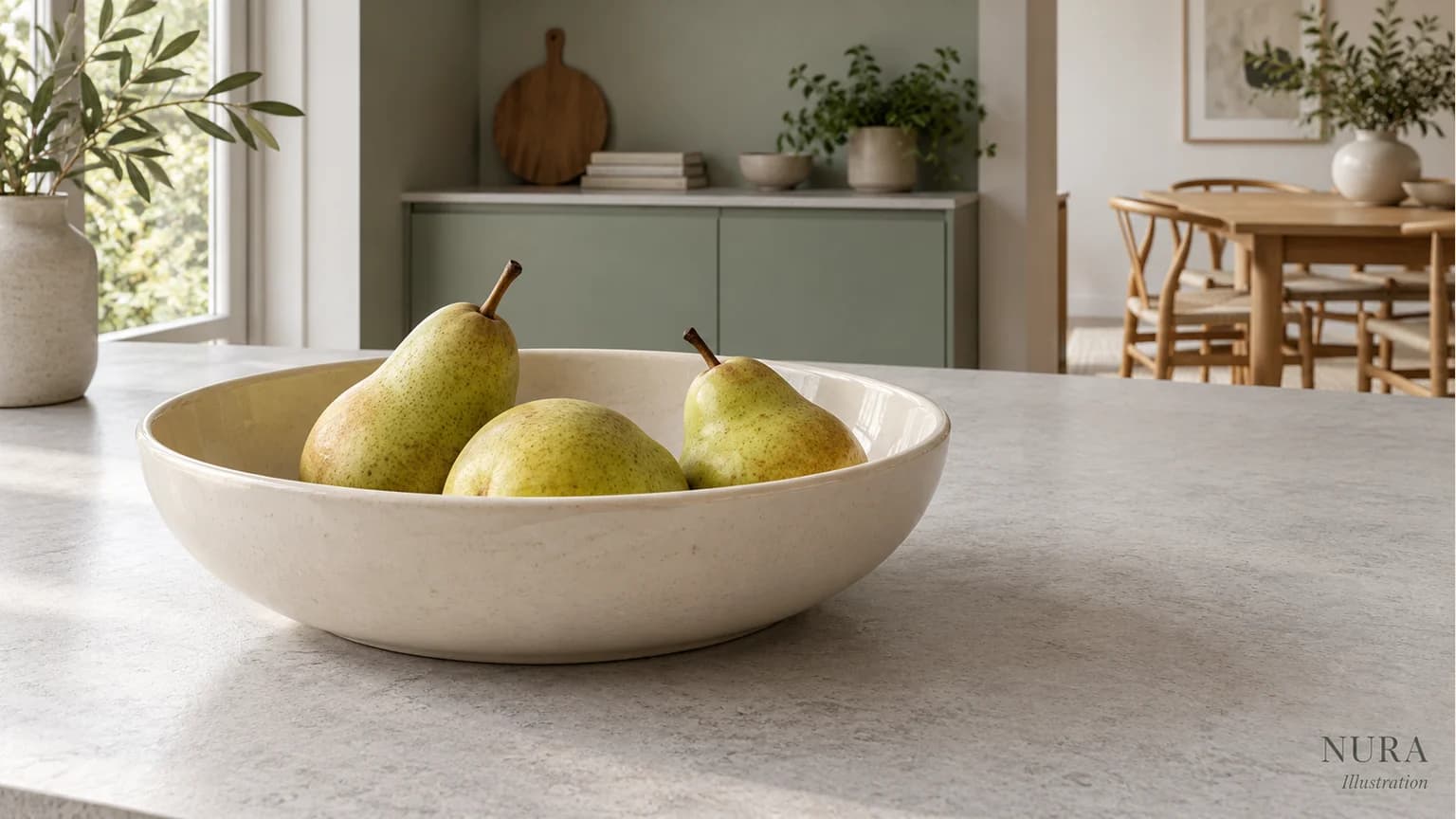

For kitchen fruit bowl styling, choose a vessel you like when the fruit has almost gone. Its interior, rim and outline become more visible as you use it, so compare those details with your cabinetry and worktop as well as the colours of the fruit you normally eat.
Decide what carries the colour
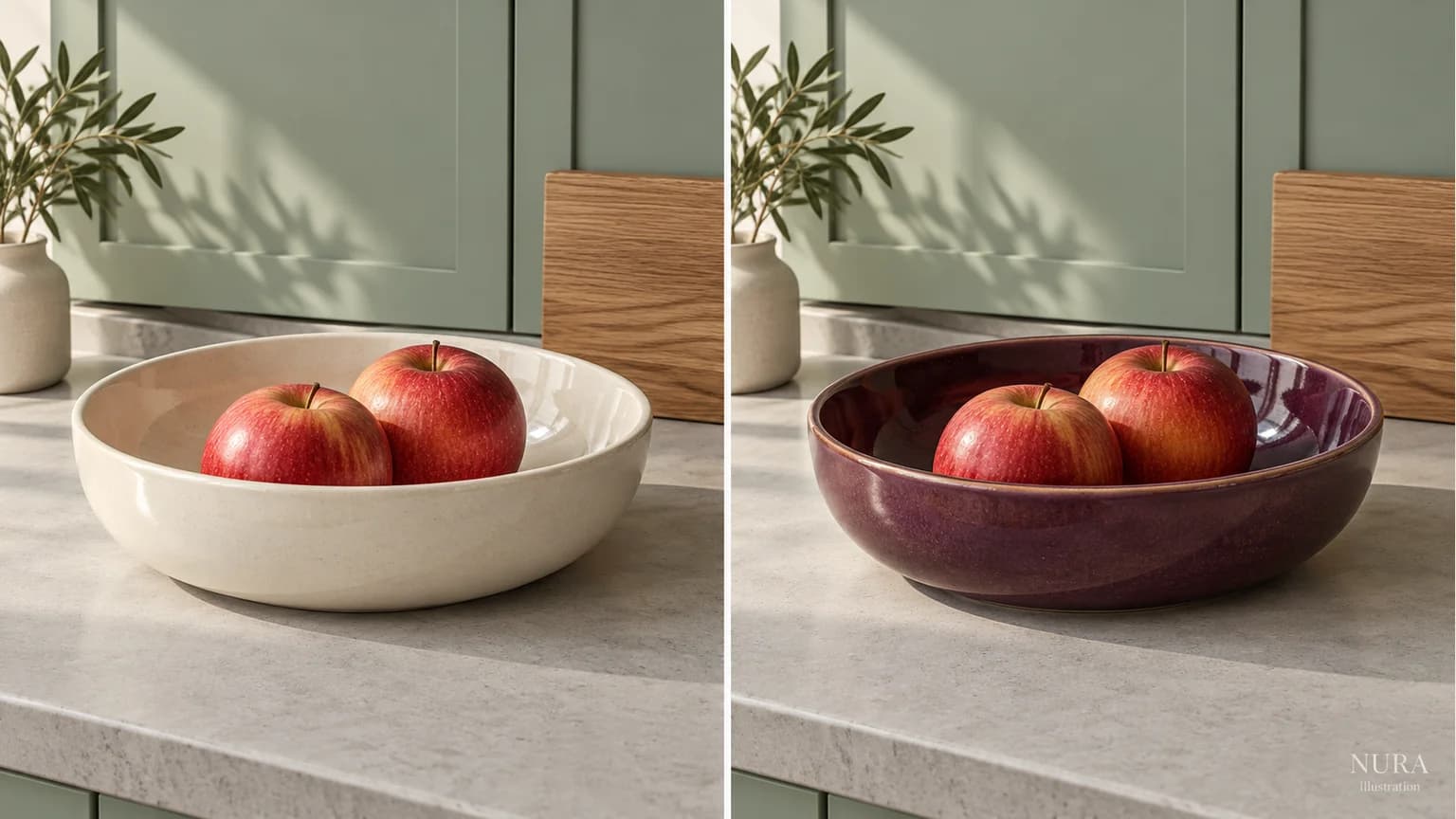
A quiet ivory bowl can let changing fruit provide the accent. A plum-coloured bowl can keep that accent present between shops. Neither needs to match every finish: decide whether you want the bowl to sit quietly beside the worktop or stand out against it.
In a hypothetical green-and-oak kitchen, one household might favour a pale bowl because their fruit changes throughout the week. Another might prefer a plum bowl that repeats a colour in the adjoining dining room. The second choice introduces a stronger permanent detail, so look at it alongside the cabinet fronts rather than judging it on a product page alone.
Look at the interior, not just the outside
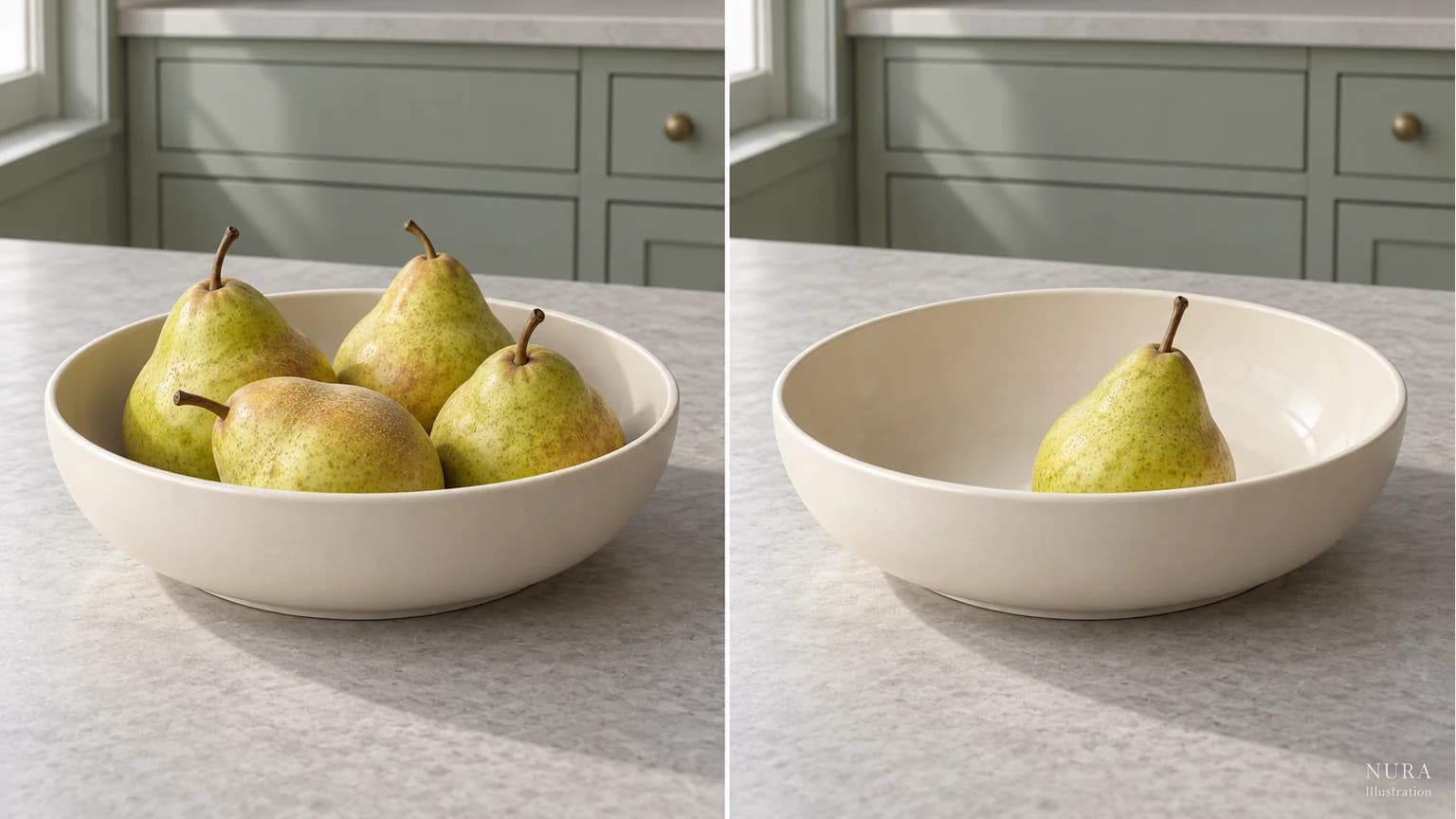
Try an existing bowl in the intended place first. View it empty, with an ordinary serving of your usual fruit, and with just one piece left. From the doorway you may mainly see the outer shape; from a nearby dining seat, the rim and interior can become the prominent details. A contrasting interior deserves as much attention as the outside glaze.
Keep your normal preparation space and access to appliances available. If the bowl needs moving every time you prepare food, consider the dining table or another suitable surface rather than choosing a taller display to squeeze it in. Check the vessel's own food-contact suitability and care instructions; a decorative bowl is not automatically intended for food. Follow the storage guidance for the produce you buy instead of treating a styling illustration as a storage plan.
Keep a small comparison record
| Bowl state | Look at | Question to answer |
|---|---|---|
| Empty | Glaze and outline | Do I like this beside the cabinet and worktop? |
| Usual serving | Fruit, rim and visible interior | Is the bowl or the fruit my main accent? |
| Nearly empty | Exposed interior and one remaining colour | Does it still belong in this part of the room? |
Keep the bowl, viewpoint and lighting the same when taking your comparison photographs. These are notes about your preferences, not a measured colour test. There is no need to buy extra fruit to maintain a display; an empty bowl or a clear worktop can be the arrangement you prefer.
Bring an object into the kitchen brief
If a bowl you already love is staying, include it with the other retained objects in your kitchen design brief. Our guide to mixing wood tones explores the same starting point with existing furniture. For a documented room-wide material relationship, explore Elm Park Road.
Bring photographs of the bowl empty and in everyday use, plus your cabinet, worktop and dining-area references, to a conversation with Nura. Those inputs can help clarify whether the new kitchen should frame a familiar object or introduce a different accent. Ask the studio which relevant finish samples are available.