
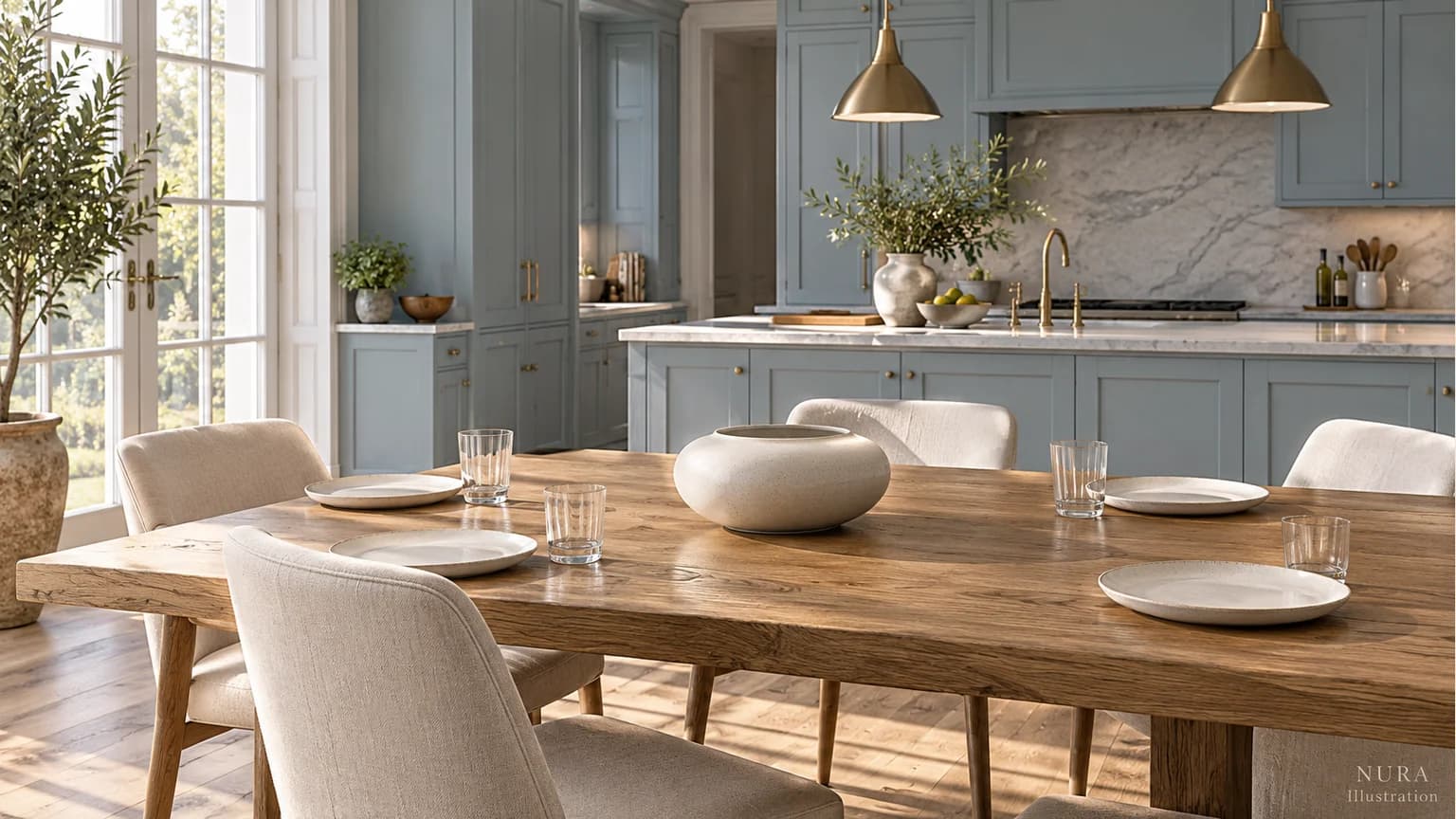

A kitchen table centrepiece should work with the meal, not just the empty table. Start with your usual place settings and serving dishes, then try one object you already own. Decide whether it can stay while you eat or needs a clear place elsewhere. Either answer can lead to a table you enjoy using.
Set the table before choosing the decoration
Begin without a centrepiece. Put out the plates, glasses and empty serving dishes you use for an ordinary meal, in their usual positions. Notice which part of the middle you actually use. A display for a table where food is served from the kitchen can be different from one where everyone shares dishes at the table.
Try a single stable, dry, empty vase in the remaining space. Keep the whole base supported and follow the care guidance for your table and the object. You are rehearsing your own arrangement, not following a universal rule about how much of the tabletop to fill.
Look from the chair as well as the doorway
Sit in the seats you normally use and compare the view across the table with the view from the kitchen entrance. Notice whether the object interrupts a view you want to keep, or makes reaching your place setting awkward. TLC Interiors' dining-table guide also considers the seated view; your own table and chairs provide the useful comparison here.
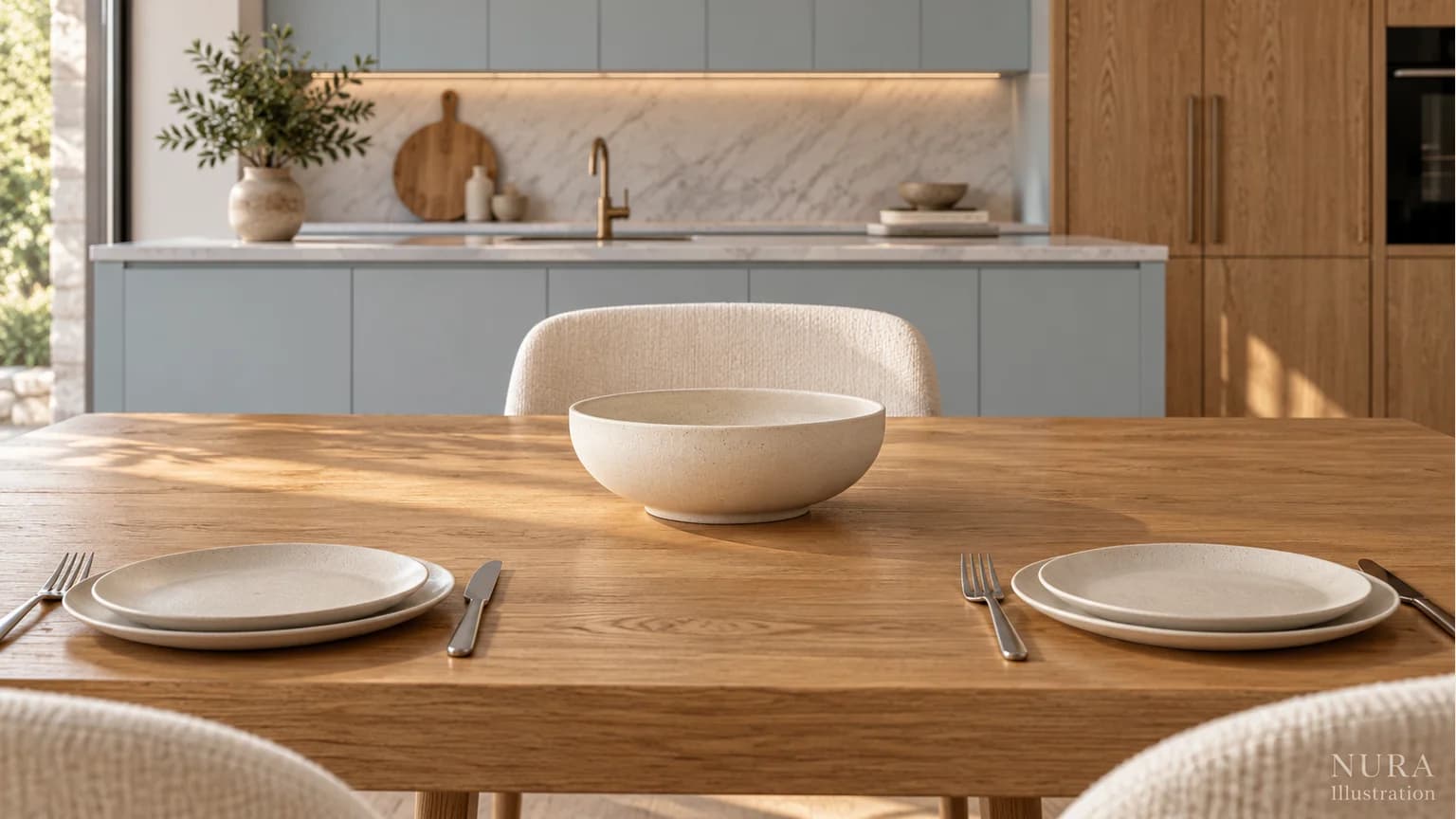
There is no need to add stems immediately. Choose the vessel first; if you later add flowers or foliage, compare the complete arrangement again. Its outline will have changed.
Choose a stay-or-move arrangement
If the centrepiece competes with the serving dishes, try a smaller arrangement or remove it for meals. Identify a clear, stable place where it can stand, with its base fully supported. An occupied worktop or the floor is not a useful default destination.
| Your usual meal | A decision to record |
|---|---|
| Plates arrive already served | Can the object stay without interrupting the seated view or everyday reach? |
| Shared dishes use the middle | Does a smaller piece work, or will the decoration move before the table is set? |
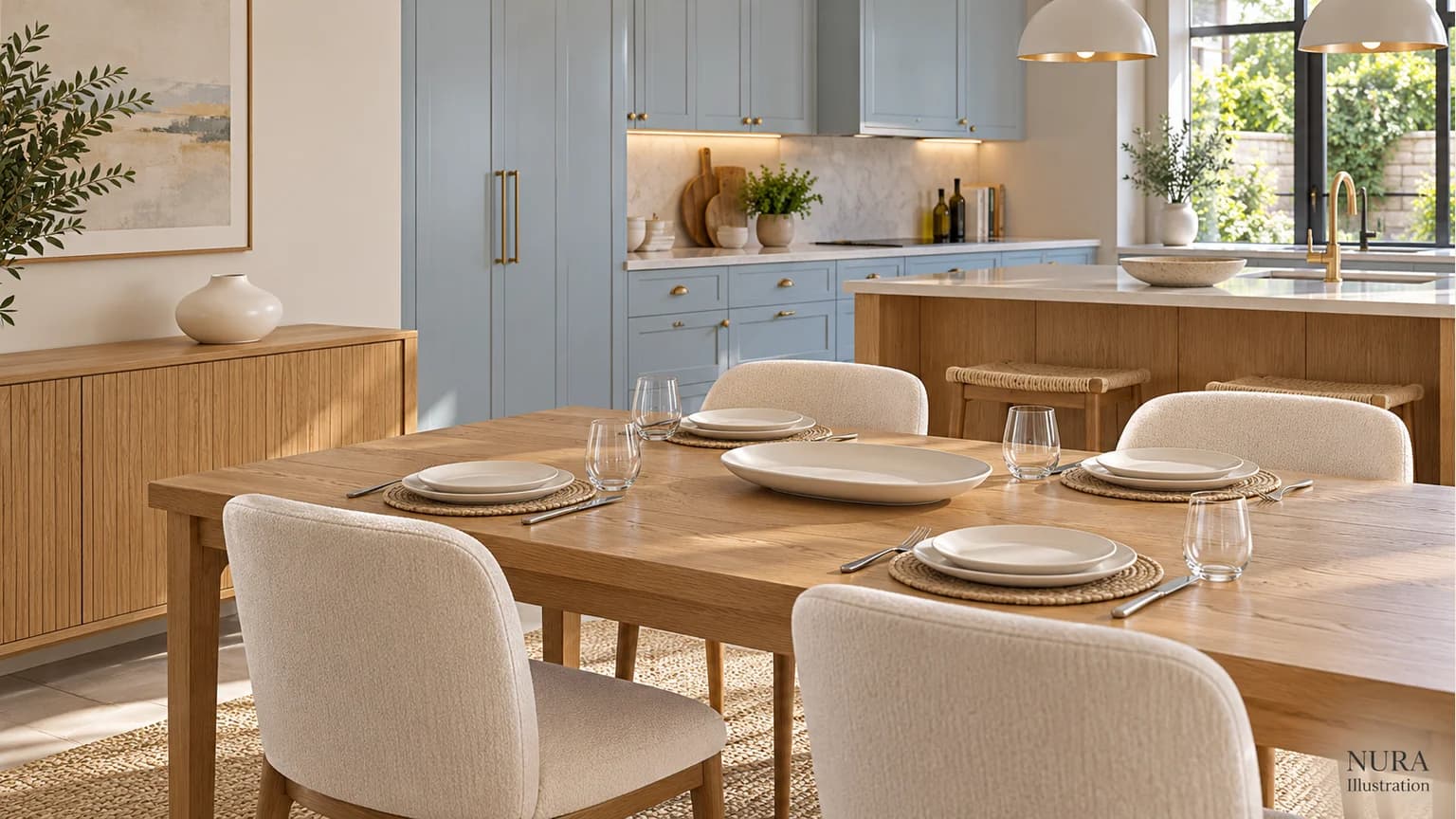
For a hypothetical household, a low ivory vase might suit blue cabinetry and an oak table, yet still occupy the spot used by a serving platter. Keeping the vase on a nearby sideboard during dinner preserves the colour relationship without asking the meal to fit around it. Leaving the table clear is also a deliberate choice.
Connect the table with the kitchen brief
Photograph the table both set and clear, and note what stays or moves. Compare the object with retained chairs, timber and cabinet-colour references rather than buying a whole new collection. Our wood-tone guide considers retained furniture, while the fruit-bowl tip addresses the bowl's changing contents.
Planning the wider kitchen and dining area? Bring table photographs, your meal-setting notes and material references to a Nura consultation. They help explain the relationship you want between cabinetry and the furniture you keep. Explore a documented kitchen for context, and ask which relevant material examples are available before a Fulham showroom visit.