
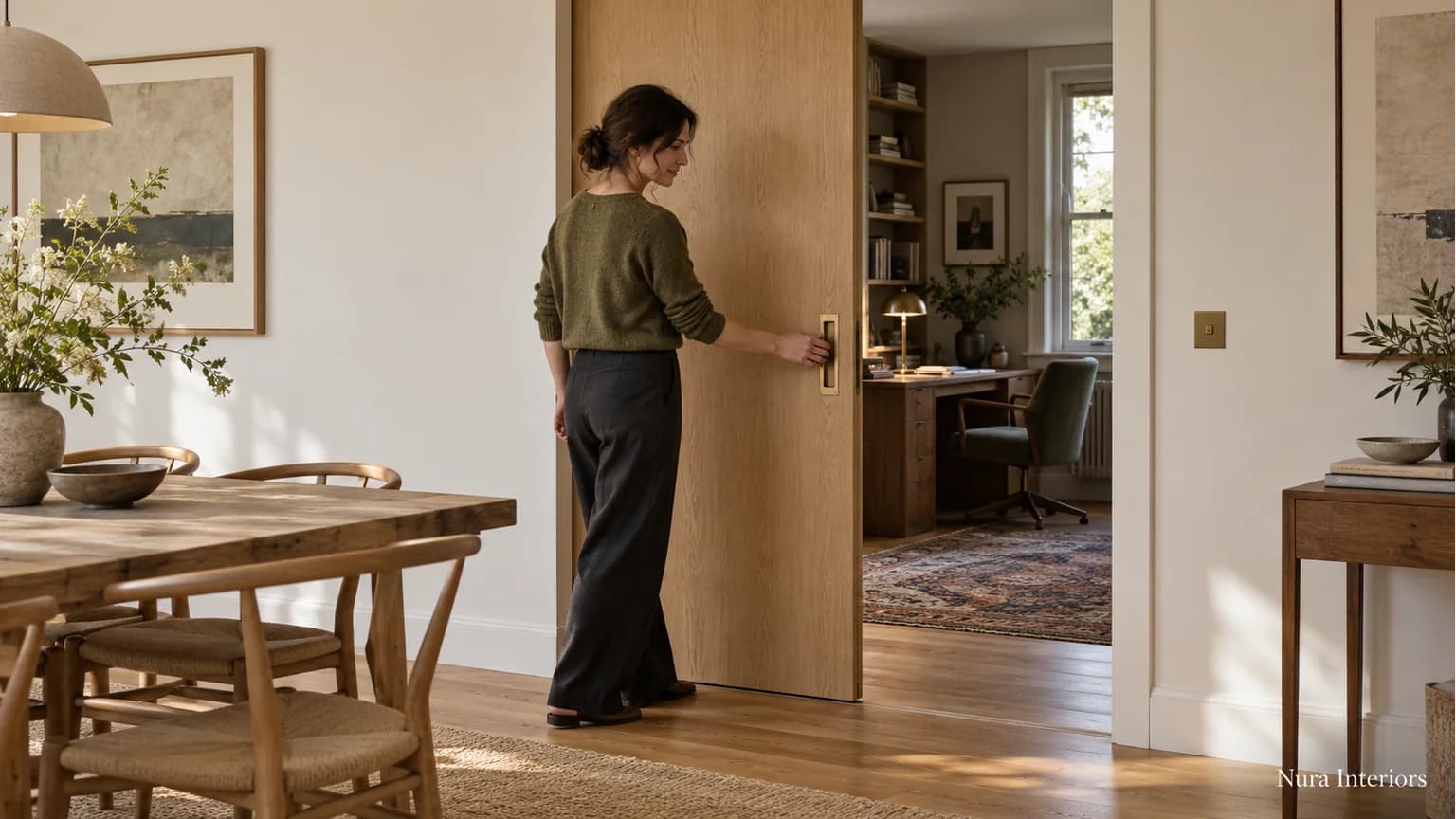

Pocket door handles need to work through the door's whole journey, not only look discreet when it is closed. Identify how you will move the leaf from either room and how you will retrieve it from its agreed parked position. A face pull and an edge-retrieval fitting can have different jobs within that proposal.
This guide concerns an architectural passage door that slides into a wall pocket. A kitchen cupboard front that retracts beside cabinetry is a different arrangement. Keep the actual door system, leaf and proposed furniture identified rather than choosing hardware from the word pocket alone.
Separate appearance from the action
A face pull provides a contact point on the broad face of the door. Its shape, finish and relationship with the leaf matter visually, but a product photograph cannot show how it feels to use in your doorway. Ask to compare a relevant working example where one is available.
Retrieving the door when it is parked creates another question. Establish where the selected system is intended to stop and which part of the leaf or fitting remains available. Do not assume that every door disappears completely into the wall or that every arrangement needs the same edge fitting.
Eclisse's Door Edge Finger Pull Lever page notes that flush pulls are available separately. That is a useful distinction between components and supply scope within its offering. It is not evidence that this fitting suits every door, performs better for every user or is supplied by Nura.
Follow the passage from both rooms
Imagine a single pocket door between a dining room and a study. The household likes a quiet finish on both faces and expects to leave the passage open during the day, then close it for some evening activities. This is a hypothetical brief, not a Nura project or a confirmed product arrangement.
Begin with the door closed. From the dining side, identify the proposed contact point and the action used to start opening it. Repeat the question from the study. Matching finishes on both faces do not necessarily establish the same usable action, so ask what is actually included on each side.
Next consider a partly open position. How would someone continue moving the door or bring it back towards closed? Identify where their hand goes in the selected arrangement. Do not treat an attractive close-up of a recessed pull as evidence for every point along the movement.
Finally show the agreed parked position. Which fitting or part of the leaf is available to begin its return? Ask the supplier to demonstrate or explain that action for the proposed combination. A drawing that merely labels the door “open” leaves an important part of daily use undescribed.
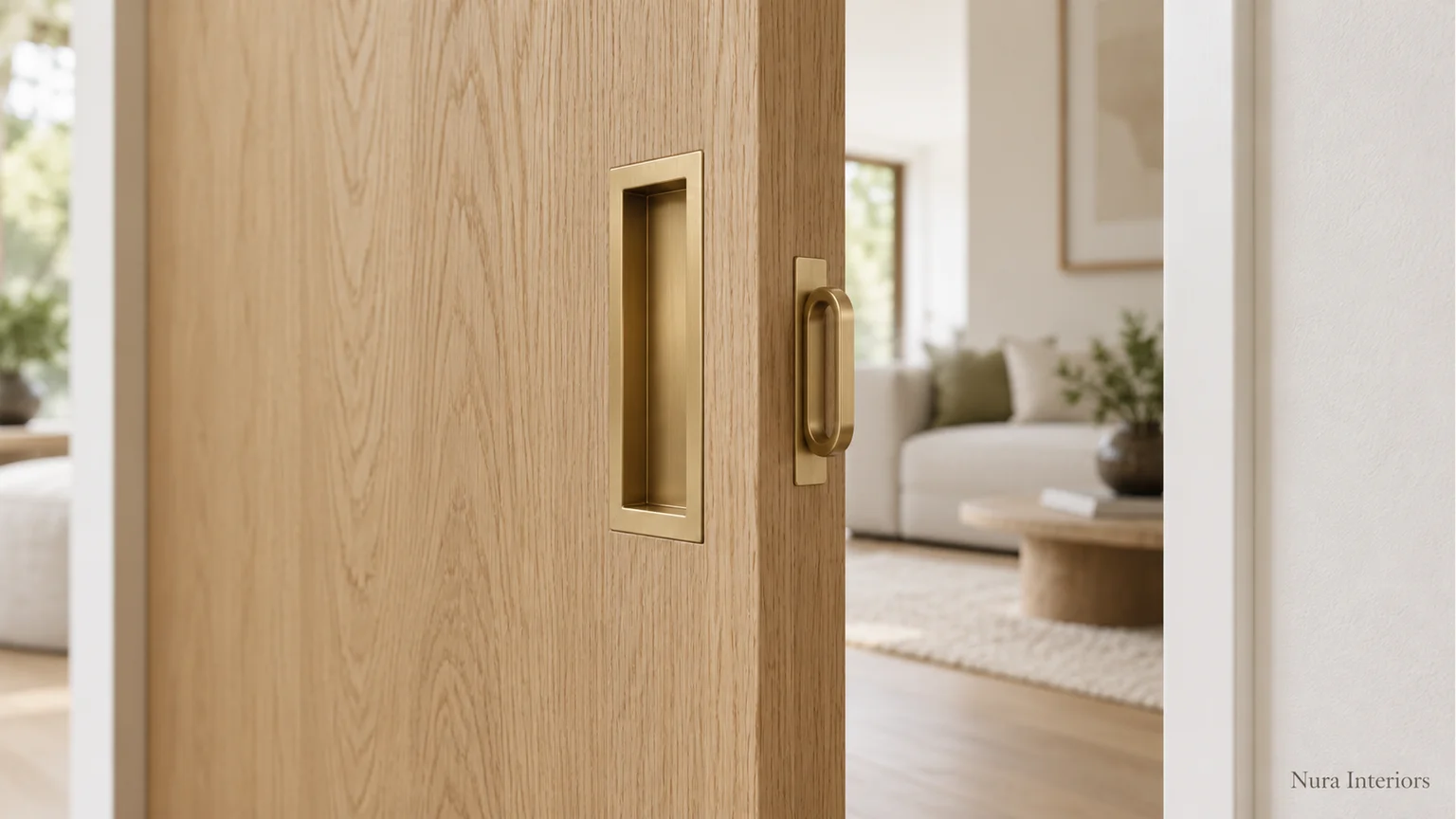
Review the return, not just the opening
In the dining-and-study example, one person might open the door from the dining room while another later closes it from the study. Keep both actions in the brief. The relevant comparison is the complete sequence with the intended users, not a claim that one handle style is universally easier.
Record any differences between a display and your proposal, including the leaf, hardware and parked position. Ask the supplier which differences affect its advice. A trial can help communicate a preference; it does not certify the final installation or establish suitability for everyone.
Do not try to solve an unresolved retrieval question by altering stops, cutting the leaf or adding a fitting from a generic guide. Have the selected door and hardware reviewed together by the appropriate parties. Our internal-door guide explains why the leaf, surrounding arrangement and hardware belong in one proposal.
Make the quotation describe the complete arrangement
Request product references and identify the components supplied, rather than assuming a photographed pull represents a complete set. Note the finish and intended location of each relevant part. If a component changes, ask whether the rest of the proposal still applies.
| Door state | Record the intended action | Confirm with the supplier |
|---|---|---|
| Closed | Opening from each room | Selected face fittings and their actual operation |
| Partly open | Continuing or reversing the movement | Available contact point in the proposed arrangement |
| Parked | Starting the return towards closed | Agreed stop position and retrieval provision |
If privacy is needed, describe that requirement separately. Ask the appropriate professionals and suppliers to establish the suitable complete proposal. A flush appearance or a product labelled privacy does not itself resolve every building, user or operating requirement. This guide does not prescribe locking or release hardware.
For the broader room decision, the pocket-door overview introduces the space and layout conversation. Keep those general benefits separate from confirming the actual handle arrangement.
Frequently asked questions
Is a flush pull the same as an edge pull?
They describe different fitting roles. Ask the supplier to identify what each selected component does and whether it is included in the proposal.
Does every pocket door need a separate edge-retrieval fitting?
Do not assume so. Establish the actual parked position and how the selected arrangement is intended to return from it.
Can I choose the handle before choosing the door system?
You can record an appearance preference, but have compatibility and operation confirmed for the actual leaf, system and fittings before ordering.
Explore Nura architectural joinery, then bring the doorway information and your preferred opening-and-return sequence to a project conversation. Ask whether the proposed item falls within the agreed scope, who would confirm the door and ironmongery details and which relevant working examples are available to discuss.