
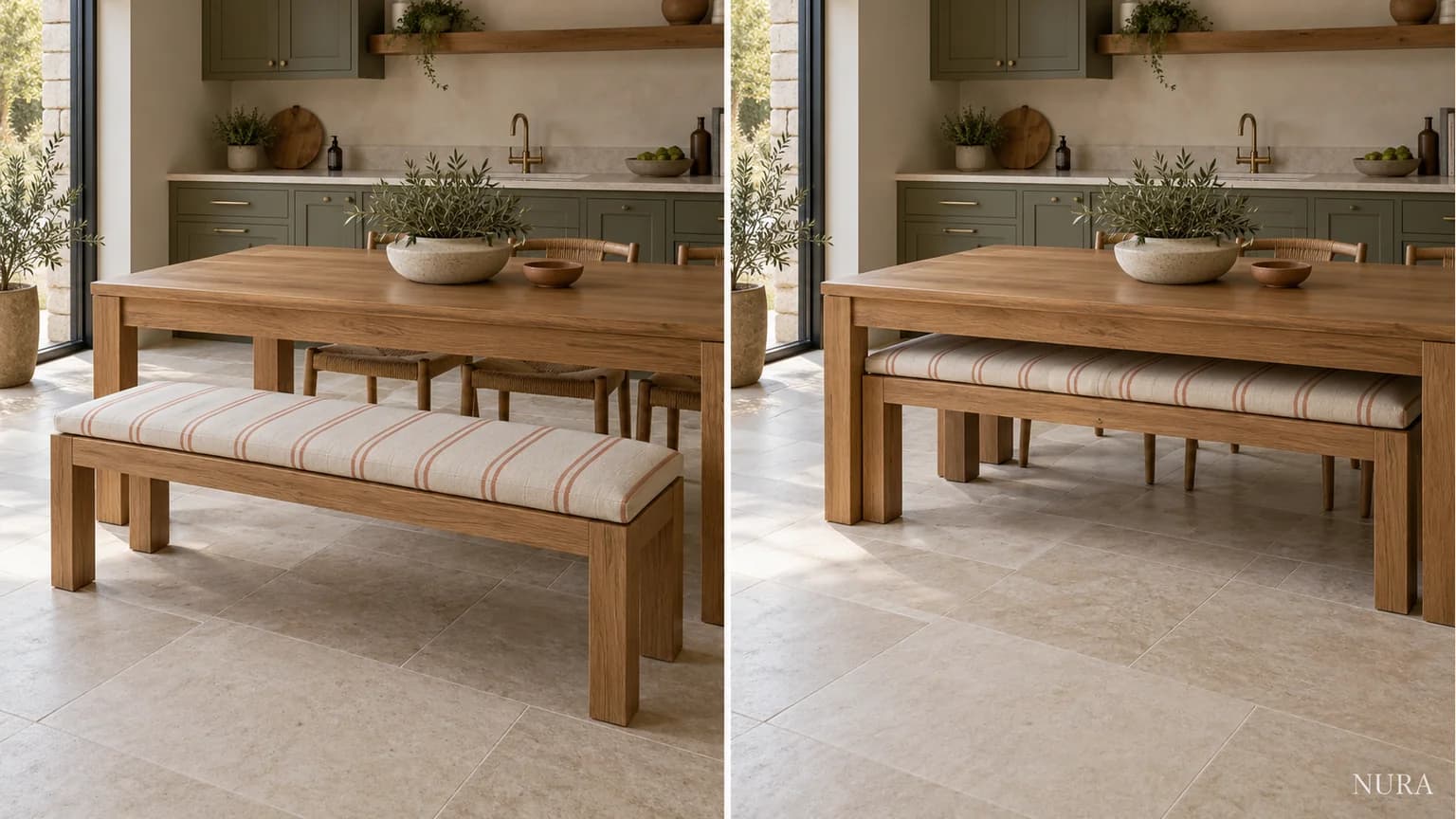

Dining bench cushions need to work with the table as well as the bench. Start with the usable seat dimensions, then compare the colour and pattern with the bench in its usual position. A pad that looks appealing on its own may show only a narrow strip once it is tucked under the tabletop.
An oak bench with a striped pad, pulled out at left and tucked beneath the table at right. Room concept, not a measured fit test or documented NURA project. Nura Interiors. .
Measure the seat before choosing the fabric
Record the usable length and depth of the bench top, including any shaped ends or obstructions. Compare those measurements with the exact cushion, rather than the overall length of the furniture. Ask the supplier how it defines finished dimensions, thickness and any allowed fit tolerance. Do not assume a pad made for another bench will fit yours.
Thickness also belongs in the decision. With a correctly fitted cushion secured as its maker directs, sit at the actual table and check the room for your legs beneath its top and apron. Check the bench can return to its normal position without the cushion catching or bunching. POLYWOOD's dining bench cushion guidance also connects pad thickness with table clearance; it does not establish a universal measurement for your room. If the seating layout itself is undecided, start with our dining bench or chairs guide.
Compare the pattern in two positions
Place a fabric sample on the bench and look from the kitchen doorway, first with the bench pulled out and then returned beneath the table. A small swatch helps compare colour, but cannot prove how a full pattern repeat will look. Ask to see the repeat size and which way the fabric will run on the finished pad.
For a hypothetical kitchen with olive cabinets and an oak table, compare a plain cream fabric with a cream-and-rust stripe. The cream may let the timber remain the focus; the stripe may bring a colour you enjoy into the dining area. Look at the part that stays visible under the apron. If it becomes a distracting fragment, try a different stripe direction or a plain fabric. Neither choice needs to match every other textile.
| Look at | Record before ordering |
|---|---|
| Bench pulled out | Full pattern, direction and visible timber border |
| Bench beneath the table | The strip of fabric you will usually see |
| Seat in use | Fit, fastening and room beneath the tabletop |
| Cushion removed | Cleaning instructions and somewhere dry to put it |
Check fixing and care separately
Find out whether the pad has ties, a fitted fastening or no attachment, and whether that arrangement suits the bench construction and finish. Follow the maker's instructions rather than adding an adhesive backing or assuming custom sizing prevents movement.
A removable cover is not automatically machine washable. For example, Dunelm's Emily outdoor bench pad has a zip and removable cover, but its care specification says wipe clean only. Read the instructions for the exact cover and filling before ordering. Think through lifting the pad to clear crumbs and returning it after cleaning, following both the bench and cushion care guidance.
Bring the dining corner into the kitchen brief
Photograph the bench both pulled out and beneath the table. Keep its seat measurements, a note of the table apron and your fabric shortlist together. These inputs can help a kitchen design conversation connect the dining area with cabinetry, flooring and the colours you are keeping. Contact NURA to discuss the wider room, and ask what relevant material references can be considered.