


Choosing a 50/50 or 70/30 fridge freezer starts with how you divide chilled and frozen storage. It should finish with two separate answers: what the actual compartments provide, and whether the appliance works with the proposed cabinet fronts.
Use the split label to begin a shortlist, then compare the manufacturer's stated volumes and the internal arrangement. For an integrated replacement, a familiar ratio is not confirmation that the existing doors can stay.
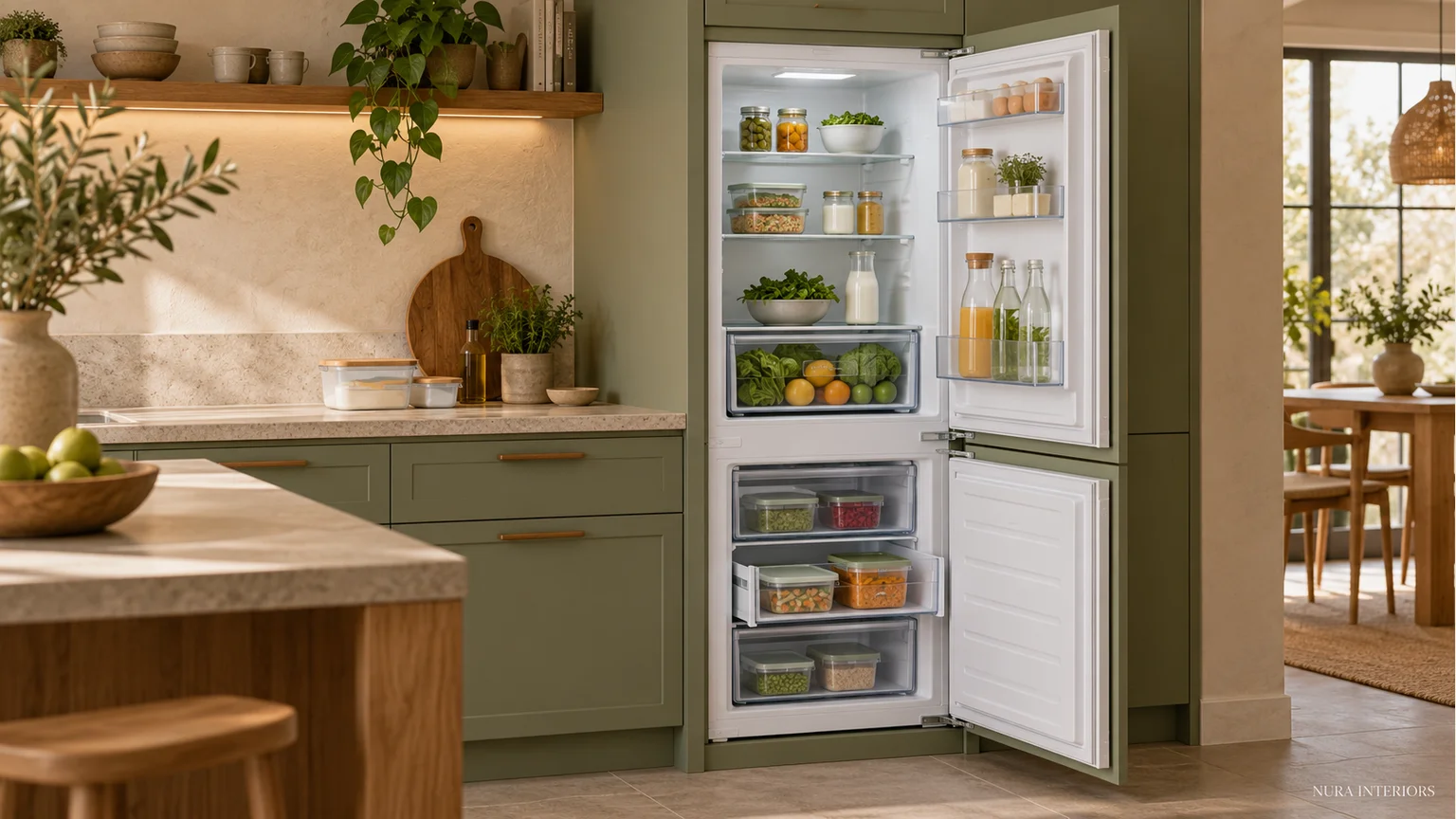
Chilled shelves and frozen drawers in a generic fridge-freezer concept. Compartment proportions and contents are not a named model, capacity measurement or fitting specification. Compare the actual chilled and frozen capacities separately. Nura Interiors. View the full-size room concept.
Look beyond the category label
Bosch's UK split-ratio guide introduces the common splits and links to its integrated ranges. Its 50/50 integrated range link includes KIN85NSE0G. The KIN85NSE0G technical overview lists a sum of volume of chill compartments of 150 litres and a sum of volume of frozen compartments of 99 litres.
Those are the figures for that particular model, not equal litre amounts inferred from the 50/50 label. The example is not a recommendation to buy it. It shows why you need the separate compartment data for each appliance you are considering, rather than treating the category as your storage specification.
Compare the internal arrangement too. Litres do not tell you whether your retained containers suit the available shelves, door storage or freezer drawers. Ask for the exact model's compartment information and identify anything that remains unclear.
Describe a meal routine that needs both compartments
Imagine a household that shops frequently for fresh ingredients and also batch cooks meals for later. Frequent shopping does not cancel its need for frozen storage. Nor does batch cooking establish which split it should choose.
List what normally occupies each compartment at the same time, including the containers the household wants to retain. If there is a separate freezer staying elsewhere in the home, state which stock it will continue to hold. If there is not, do not base the shortlist on storage the household does not have.
Compare two actual proposals against that brief. One may provide a chilled arrangement the household prefers while leaving a question about its frozen meal containers. Keep that uncertainty visible instead of deciding from the total litre figure alone.
| Decision | Compare | Keep unresolved until confirmed |
|---|---|---|
| Chilled storage | Manufacturer-stated chilled volume and internal arrangement | How the ordinary stock and retained containers relate to it |
| Frozen storage | Manufacturer-stated frozen volume and compartments | What belongs here versus any separate freezer |
| Integrated front | Exact appliance and proposed furniture-door division | Whether the intended cabinet and front arrangement is compatible |
Keep storage allocation separate from the cabinet front
For an integrated replacement, record the existing appliance reference and front arrangement alongside the proposed model. Bosch's guide advises matching the split when replacing an integrated model, but the ratio words alone do not establish every part of compatibility. Ask the relevant suppliers to confirm the exact appliance, cabinet and furniture-front proposal using the current documents.
Our integrated fridge hinge guide covers the separate attachment question. The fridge placement guide considers shopping routes, open doors and everyday access.
For a Nura kitchen discussion, bring your chilled and frozen storage priorities, actual model documents and any fronts or separate freezer you want to retain. Ask what relevant examples are available to discuss within the wider cabinetry brief.