

An integrated fridge with fixed, or door-on-door, hinges has its furniture front attached directly to the appliance door. With a sliding system, the furniture front is hinged to the cupboard and linked to the fridge door by sliding rails. The useful choice is the arrangement supported by your proposed appliance and cabinetry, especially when you want to keep an existing front.
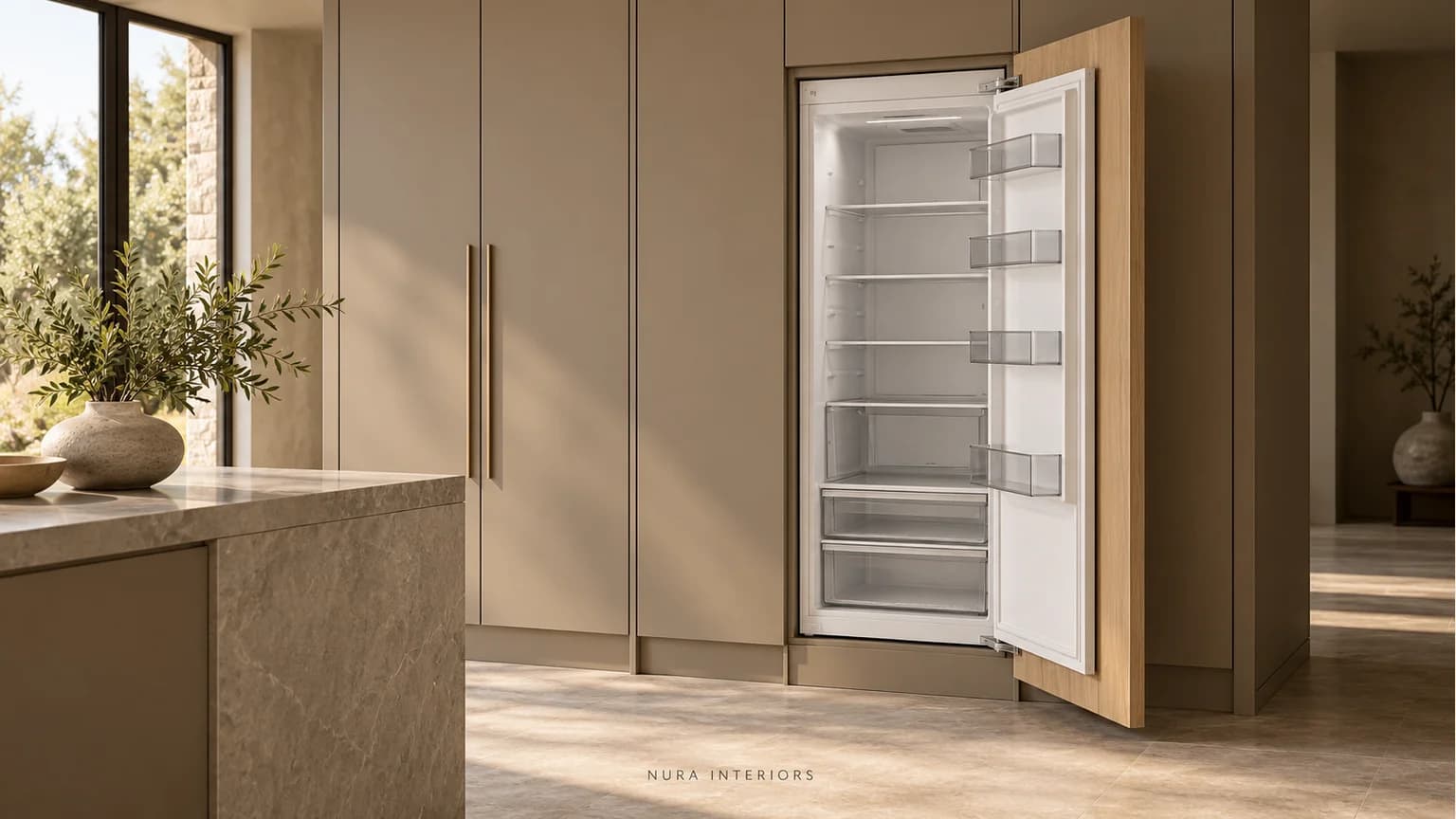
Open integrated fridge with a pale oak furniture front in clay-coloured tall cabinetry. Generic concept arrangement, not a model-specific fitting or installation drawing. Nura Interiors. .
Identify the connection behind the front
Liebherr's UK explanation distinguishes the two arrangements. In door-on-door installation, the fridge door carries the furniture front. In a sliding installation, the furniture door has its own cupboard hinges and connects to the appliance through the rail system.
Record the existing model and fitting type, supported by photographs and its documents. If the connection is unclear, ask the appliance supplier to identify it. A closed oak front or a product photograph cannot establish which attachment is behind it. Avoid choosing from a general claim that one type is always better: the proposed combination needs checking.
Separate modification from replacement
Changing the mechanism of the fridge you already own is a different question from selecting another fridge for the same kitchen.
AEG's support guidance, published in German, says its existing appliance's attachment technology is determined by construction; moving from sliding to fixed requires a suitable new appliance. Bosch's installation FAQ discusses changing from sliding to its all-in-one system when the appliance is changed. Neither establishes that a particular replacement will work with your retained cabinet and front.
Ask which question the supplier is answering. Keep the proposed model's installation requirements alongside the cabinet information, rather than treating the words “fixed hinge” as approval to order.
Keep an existing front in the brief
Imagine replacing a fridge behind retained oak fronts. The household wants to preserve the timber and the horizontal front lines beside the pantry. That is a useful design brief, but it does not establish compatibility with a replacement appliance.
Give the appliance and cabinet suppliers the same information. Ask them to identify any changes the proposal would require and who will confirm them. Record the agreed model and drawing revision before ordering.
| Record | Bring | Ask to confirm |
|---|---|---|
| Existing appliance | Model reference, current fitting photographs and available documents | Which attachment is installed |
| Proposed appliance and front | Exact candidate model and retained front details | Whether the intended attachment and front meet that model's requirements |
| Housing and open questions | Cabinet drawing, neighbouring fronts and unresolved points | Required changes, responsible confirmer and agreed revision |
Keep ventilation separate from the hinge match
A confirmed hinge arrangement does not settle the complete housing proposal. Return to the hypothetical retained oak fronts: the household also wants any ventilation detail to remain out of sight. Keep that appearance preference explicit, without assuming the existing cabinet already provides what the replacement appliance needs. AEG's integrated-fridge ventilation guidance identifies ventilation as a requirement. Use the exact proposed model's installation instructions to establish the applicable arrangement, rather than borrowing a provision from another appliance.
Ask the appliance supplier and cabinetry team to identify the required airflow path on the current cabinet drawing and explain which parts, if any, would be visible. The household can then consider that response alongside its wish to retain the front and surrounding lines. If the preferred concealed appearance is not yet supported by a confirmed proposal, leave the relevant design change open before ordering. Matching the attachment does not approve an invisible ventilation solution; the selected model and complete furniture arrangement still need their own response.
Connect the hinge to the wider kitchen
Attachment is only part of the decision. Our fridge placement guide covers the open door and access around it. Filler-panel planning addresses neighbouring junctions, while handleless doors connects the opening action with the cabinetry. Keep these questions with the selected model's installation documents.
The Elm Park Road kitchen offers broader context for oak veneer and handleless cabinetry, without establishing a fridge mechanism for your project. Bring photographs, model references, documents and your retained-front priorities into a bespoke kitchen brief. Discuss your project with Nura and ask what support is available for the cabinetry decisions you need to resolve.