
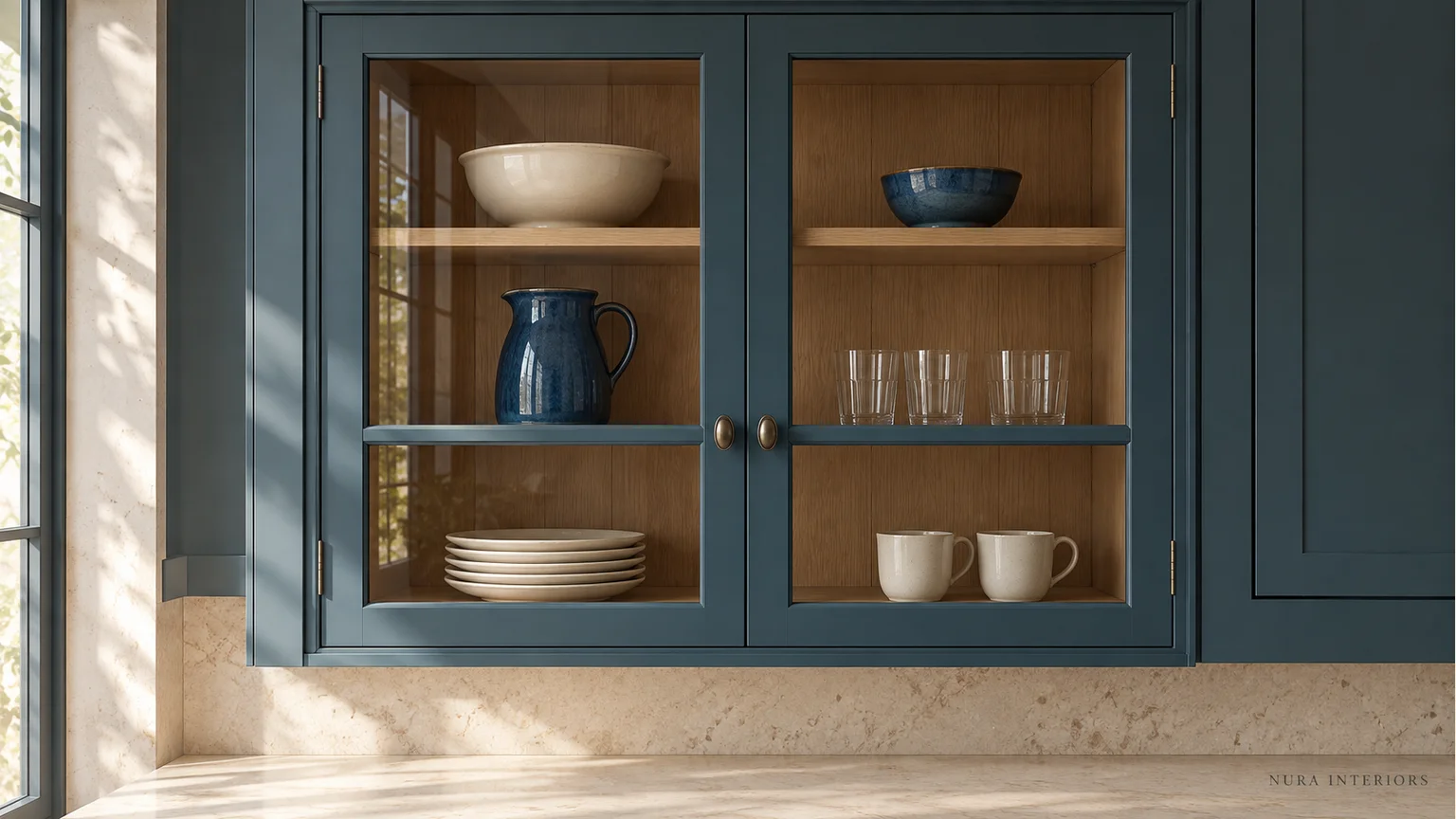

Start styling glass kitchen cabinets by looking through the closed doors, not just arranging objects on an open shelf. The door frame is part of the display. Put the pieces you want to keep there in place, close the doors and look from a normal position in the room. Then open them again to check that the arrangement works for daily use.
Notice what the frame hides
A jug can look well placed on an open shelf but sit partly behind a horizontal door rail when the cabinet is closed. Before adding another object to fill the apparent gap, try the jug in another suitable existing position. Keep it stable and easy to retrieve; the view is only one part of the decision.
Look at the shelf lines too. Do they sit behind the door rails, or create a second set of lines across the glass? Neither arrangement needs a universal verdict. Note which view you prefer with your actual contents, rather than judging the empty cabinet alone. A photograph taken straight on can help you explain that preference.
| Notice | Try | Keep |
|---|---|---|
| A frame divides a favourite object | Reposition the object in a suitable existing space | Its stability and everyday access |
| Several shelf and rail lines compete | Compare a simpler grouping from the same viewpoint | The cabinet's fixed structure |
| The display changes when dishes are in use | Look at the cabinet during an ordinary meal | Storage should serve the household |
Open the doors for the practical check
Can you take out and return the things you use without shifting the display each time? Keep useful pieces in positions that work for their users. Our plate-display tip considers what happens when daily plates leave the shelf; open-shelf styling covers the separate question of objects displayed without a door frame.
This is an arrangement exercise, not permission to alter the cabinet. Follow its product instructions. Ask the supplier to confirm any proposed shelf-position or fitting change rather than adjusting supports or glazing to suit a photograph.
Bring the closed-door view into the brief
For new cabinetry, keep a contents list and mark the preferred view on the cabinet elevation. Include the door divisions and proposed shelf positions. If you are considering different glazing, look through the actual samples with representative objects behind them; do not choose from a picture of an empty door alone.
Bring those references to a Nura kitchen design conversation alongside your cabinet colours and adjacent worktop materials. They make the storage and display wishes concrete. Ask which relevant samples or examples are available before visiting the showroom.