
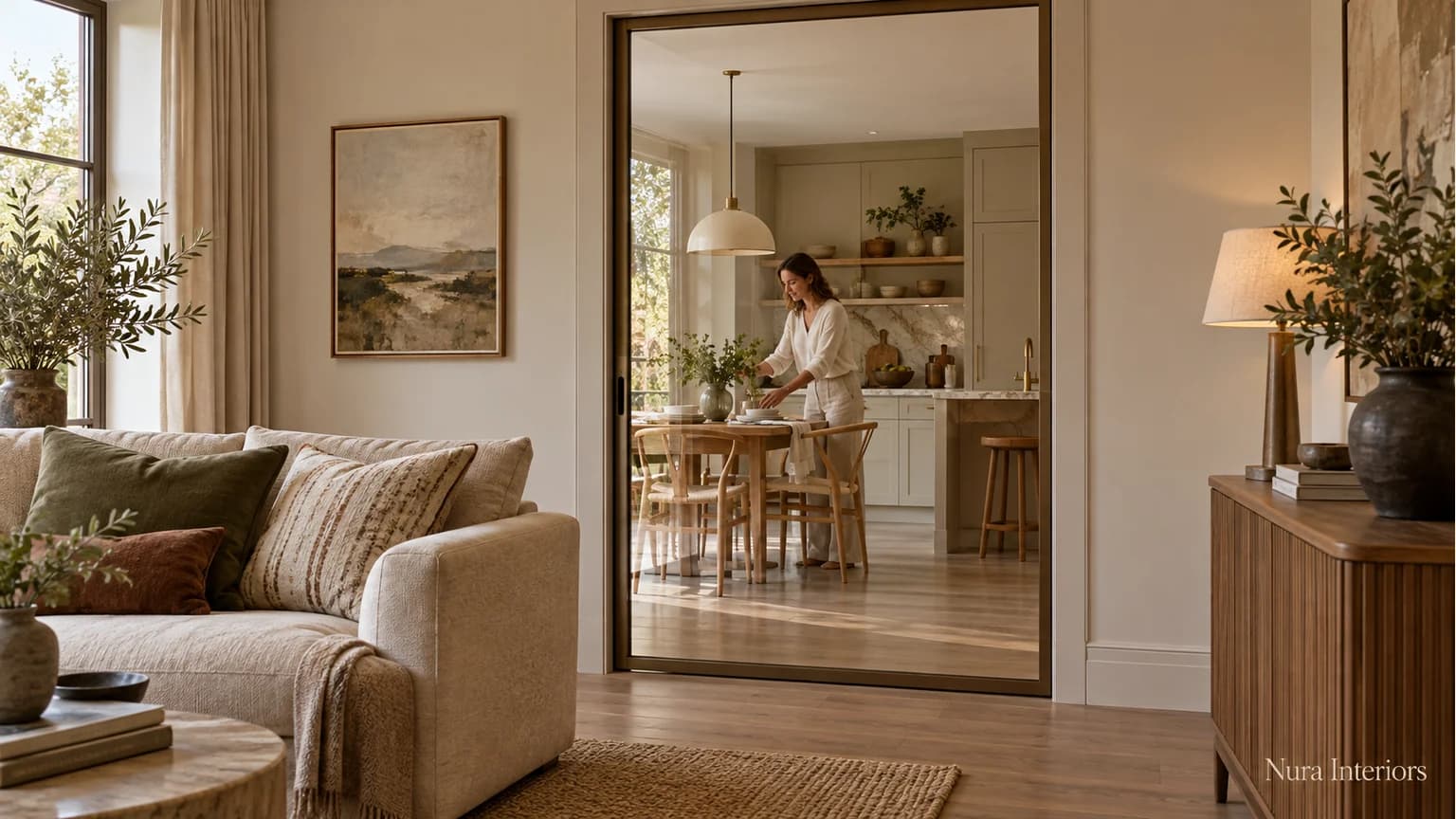

Glass pocket doors create a room-view decision as well as an opening decision. Before choosing a clear, textured or satin-looking pane, describe what you want to see between the rooms when the door is closed. Review that preference from the places people actually sit or approach, then identify the exact glass and complete door proposal.
A door can divide an opening while retaining a view through it. That does not establish visual privacy, sound separation or any other performance requirement. Keep those questions separate instead of expecting a decorative glass description to answer them all.
Start with the closed-room view
Think about why you want the rooms connected and why you sometimes want the doorway closed. You might enjoy seeing activity in the kitchen from the sitting room, while preferring a quieter background when relaxing. Someone else may want to recognise that another person is nearby without seeing every object beyond the door.
These are different preferences. Write yours as a specific view: “From the sofa, I want to see the kitchen's broad colours but would rather not focus on the preparation area.” That is a useful question for comparing real options. It is not a promise that a particular finish can deliver the result.
Include the frame and divisions in that comparison. A glazed door's outline and any visible bars are part of the room composition, not merely a border around the glass. Ask how the proposed arrangement appears beside retained furniture and neighbouring openings.
Follow a kitchen and sitting-room example
Imagine a household considering a single glass pocket door between its kitchen and sitting room. From the sofa, the view through the doorway includes part of the kitchen worktop. From the kitchen approach, the door frames a chair and the sitting-room wall. This is a hypothetical brief, not a Nura project or a tested glazing comparison.
The household likes a connection between the rooms, but wants to understand how much of the kitchen remains apparent when the door is closed. Ask the supplier how the proposed glass can be reviewed against a representative background. Use the same background for each option rather than making one look preferable by changing the scene behind it.
Compare from the sofa viewpoint and from the usual approach to the opening. Then ask to review the relevant daylight and different room-lighting conditions. What happens when the kitchen lights are on and the sitting room is more subdued? What view matters when both rooms are in evening use? These are requests for an appropriate comparison, not results established by this article.
Record what the household accepts seeing: recognisable objects, broad outlines, colours or movement. If an option does not provide the desired relationship, reconsider the proposed glass or the room-division brief instead of assuming a different marketing name will solve it.
Identify the actual glass option
Eclisse's glass-door offering distinguishes satin and plain or patterned glass options. That illustrates the need to identify a particular product and appearance. These descriptions do not provide one universal privacy rating, establish how another supplier's glass looks or show that Nura supplies the same systems.
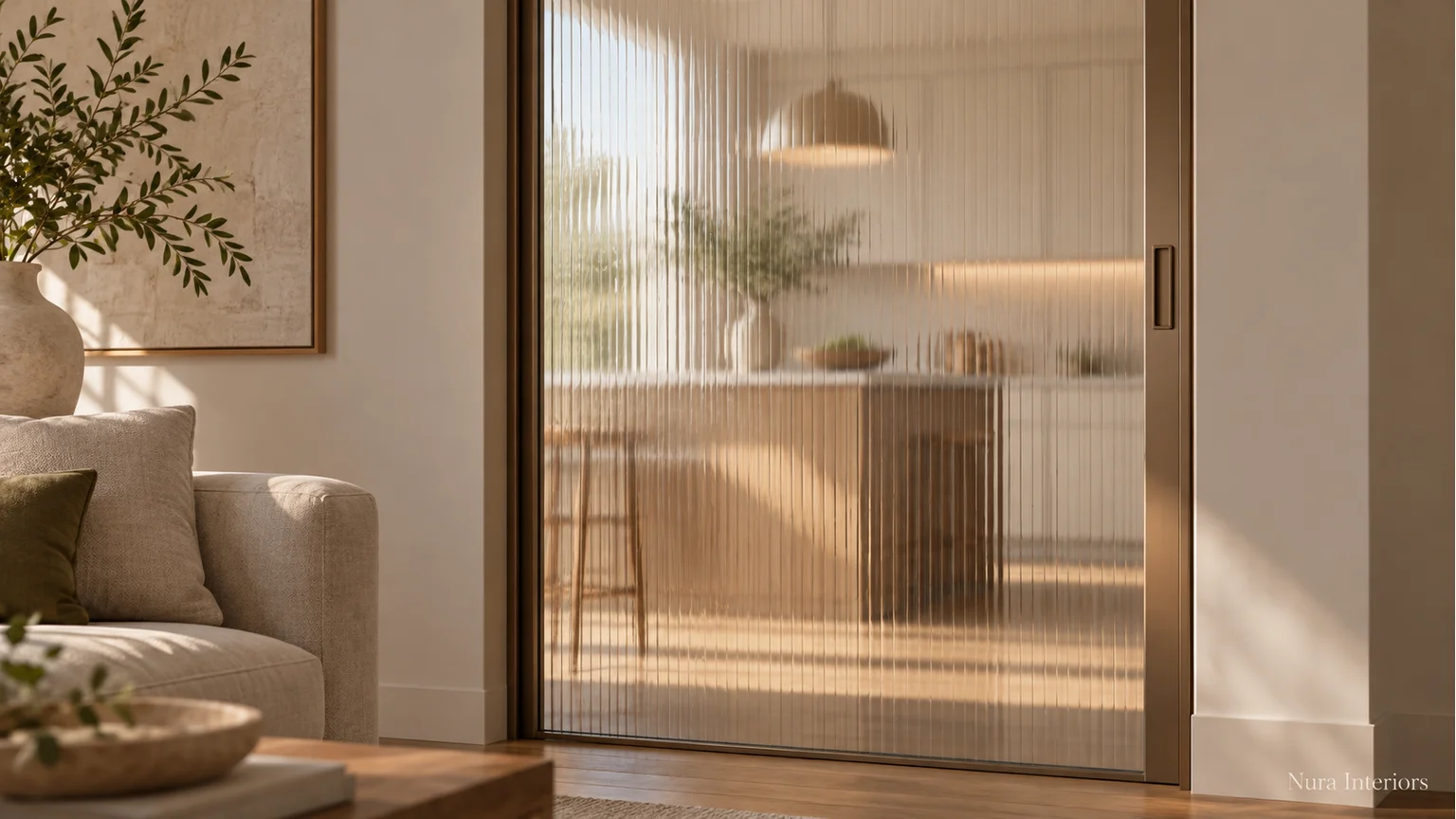
Keep the product reference, pattern or finish and intended orientation with the door proposal. Ask what the sample represents and how it differs from a complete installed pane. A close-up image may show surface character without explaining the view across the room.
Do not treat a render as proof of the selected glass. It can communicate an intention, but the supplier still needs to identify the actual product and explain what evidence is available for the proposed arrangement.
Separate appearance from performance
Visual obscuration is not the same as acoustic separation, and a pane that looks less transparent does not establish fire, smoke, security or other performance. Have the relevant requirements identified by the appropriate professionals for the actual building and doorway. Ask for evidence applicable to the complete selected proposal rather than inferring it from glass thickness, pattern or a product-family name.
Our internal-door guide puts the leaf, surrounding arrangement and hardware into one brief. Keep those technical responses connected to the visual choice without allowing acceptance of a finish to stand in for them.
| Decision | Evidence to request | Record before ordering |
|---|---|---|
| Closed view | Relevant viewpoints and an appropriate comparison | What the household accepts seeing |
| Selected glass | Product, finish or pattern reference and sample scope | Which appearance is actually proposed |
| Complete arrangement | Door-system details and relevant professional responses | Requirements still unresolved and who confirms them |
Handle operation is another separate decision. Our pocket-door handle guide follows the grip and return from the agreed parked position. A preferred glazed appearance does not establish that operating sequence.
Frequently asked questions
Will patterned glass make the room private?
Do not assume a universal result. Identify what should remain visible and ask how the actual option can be compared under the conditions that matter to your household.
Can I judge the glass from a catalogue photograph?
Use it to shortlist appearances, then confirm the product and relevant sample or viewing evidence. The photographed background and lighting may differ from your room.
Does visual obscuration also mean sound separation?
No performance should be inferred from appearance. Have any acoustic or other requirements established and evidenced for the complete proposed arrangement.
Explore Nura architectural joinery, then bring room photographs, viewpoint notes and your glass preferences to a project conversation. Ask whether the doorway belongs within the agreed scope, who would confirm the complete specification and which relevant examples are available to discuss.