
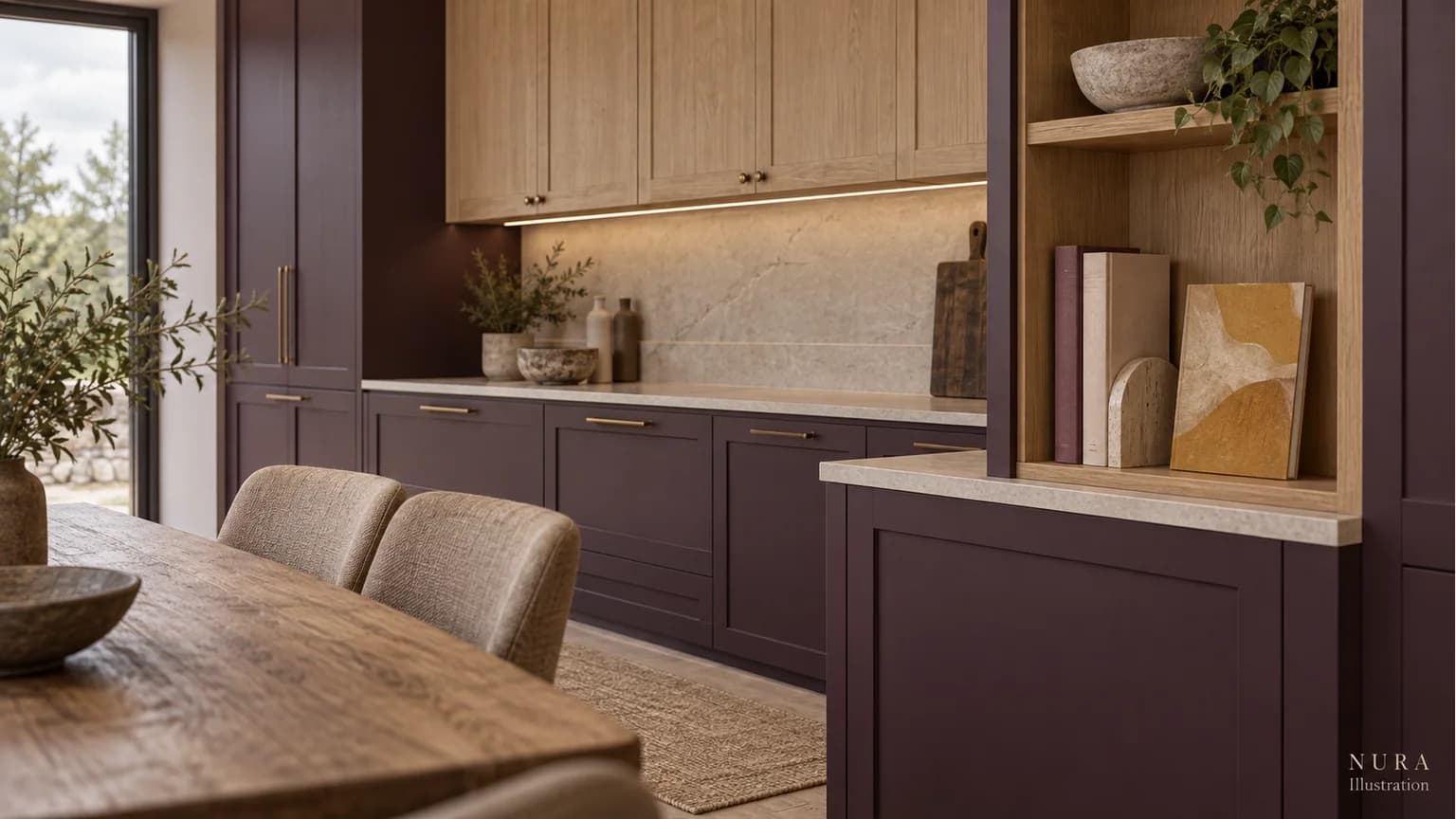

A kitchen cookbook display needs two places: somewhere for the closed collection and somewhere to read the book you are using. Begin with your actual books, rather than buying a stand to complete a photograph. A cover facing the room and a recipe open on the counter take up different amounts of space.
Decide what the display should show
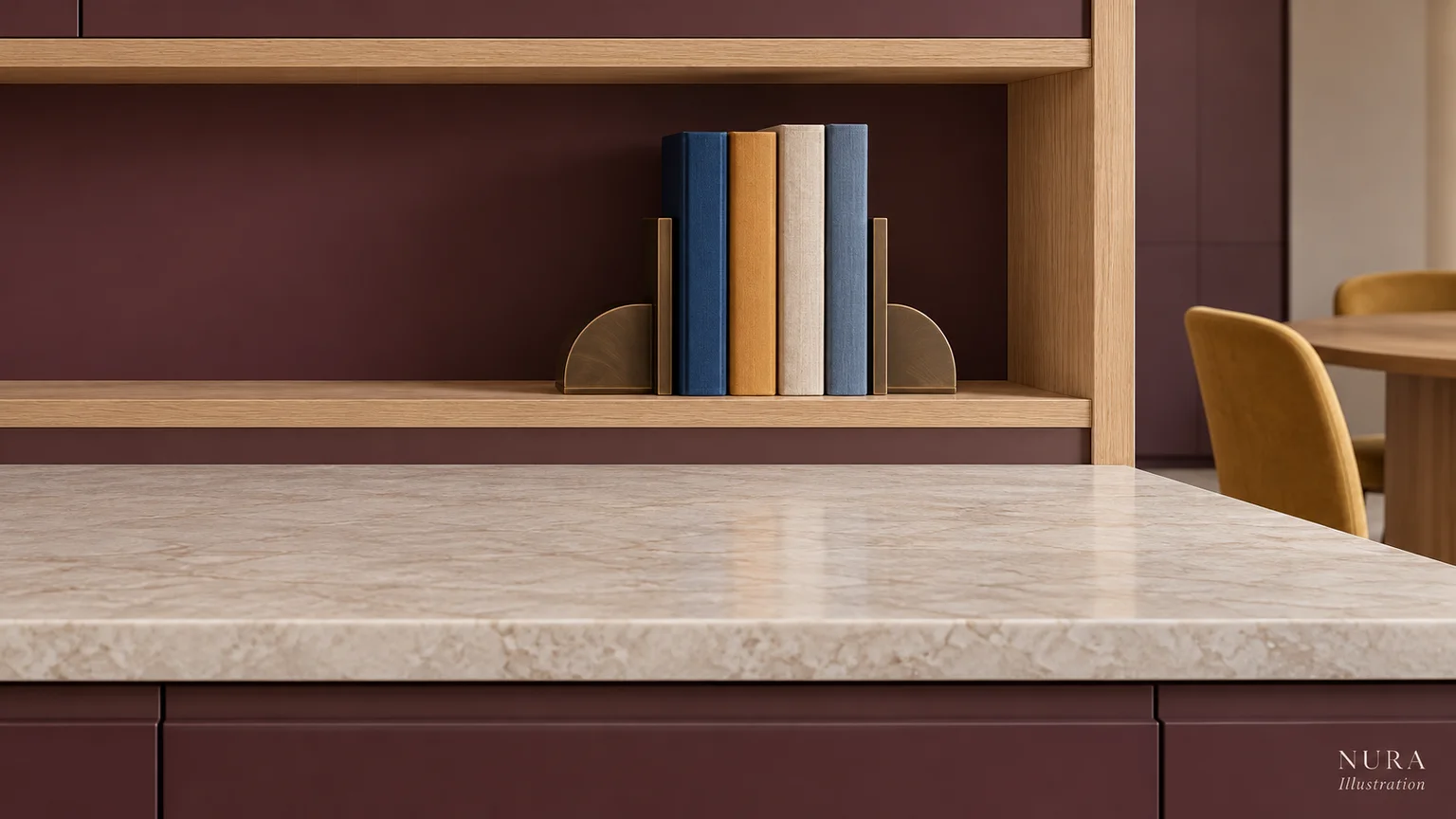
Set out a small group you genuinely want to keep nearby. Spines make titles visible in a row; a front-facing cover gives one book more visual attention while concealing what is behind it. Choose the arrangement around how you find a recipe as well as how it looks from the dining area.
In a hypothetical plum kitchen with an oak shelf, one ochre cover could connect with an ochre dining chair. The remaining books might stay spine-out, including a blue volume that introduces another colour. This is a palette idea, not a rule to colour-sort a collection or buy books as props. Keep the titles you reach for easy to identify.
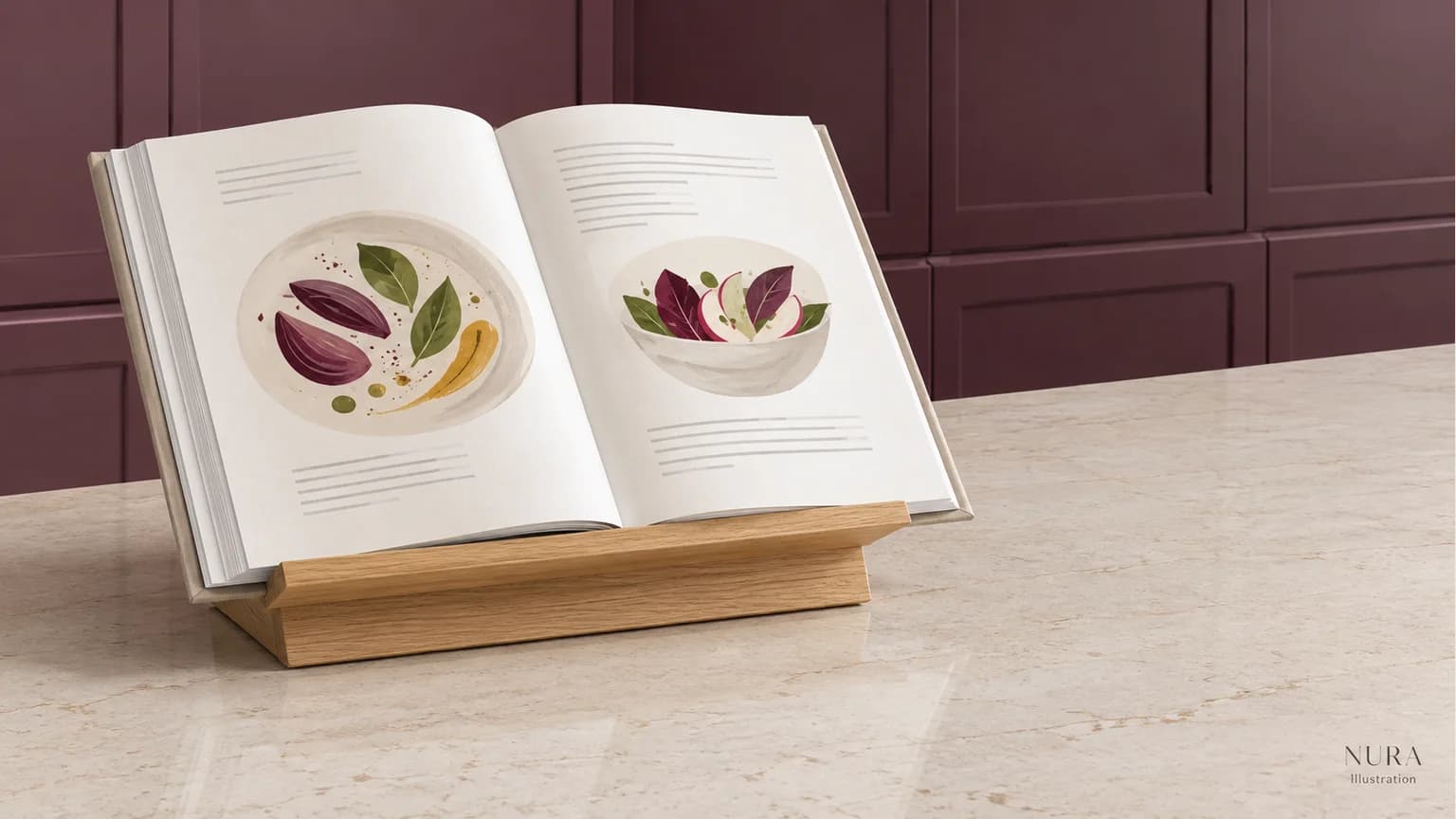
Try the book open, not just the stand empty
Use your usual cookbook and, where available, the actual stand. Check the base, the open pages and the room to turn them. Do not assume the book occupies only the stand's footprint. Leave the preparation area you need available rather than filling the counter with a permanent display.
| Display | What to try with your own books |
|---|---|
| Spines facing out | Identify and remove one book without disturbing the whole group |
| One cover facing out | Decide where any books behind it will go |
| Open book on a stand | Check page support, page turning and the counter area remaining |
Follow the stand supplier's instructions and avoid forcing a binding open. The Institute of Conservation's book-care guidance recommends supported upright storage without tightly packing shelves, and protection from direct heat, moisture and direct light. A kitchen display is not suitable for every book; keep fragile or valuable volumes in appropriate conditions and seek conservation advice where needed.
Connect the small display to the bigger kitchen
Use the collection to inform an open-shelf styling brief, while keeping the shelf's capacity and fixings a separate specification to confirm. Browse the documented Elm Park Road kitchen for wider cabinetry context; these illustrations do not depict that project.
For a kitchen design conversation, bring book sizes, a photograph of the proposed position and a room plan. Explain which books you use and which you want to see from the table. Ask what relevant joinery examples are available, so the display can be considered alongside cabinetry and usable worktop.