
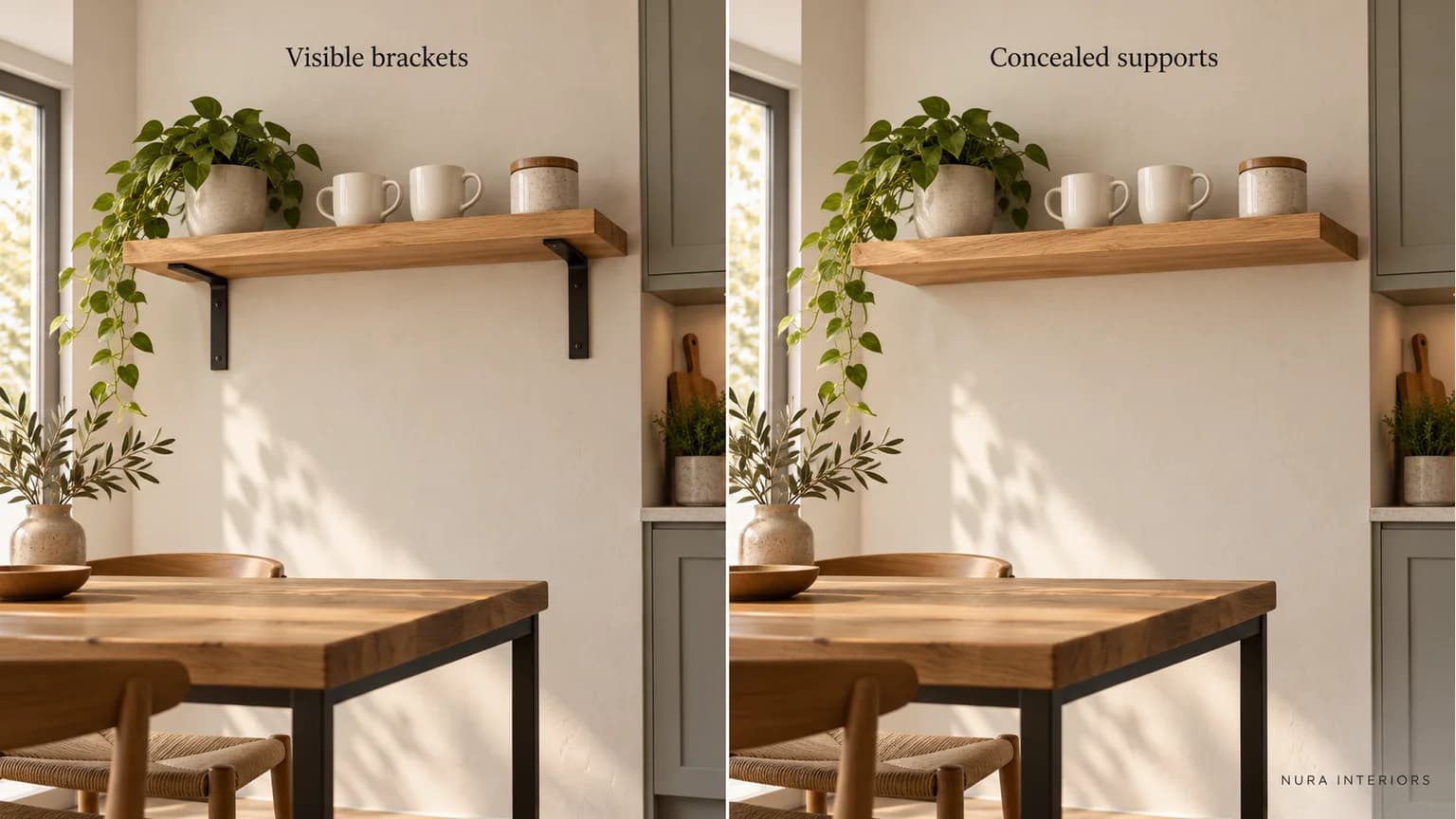

A visible kitchen shelf bracket adds its own shape below or around the board. A concealed-support shelf offers a different proposal: the support is intended to remain out of sight. The decorative choice is whether you want that extra outline to be part of the room.
Compare complete shelf options, rather than choosing a bracket in isolation. The board and the support together are what you will see beside the cabinets and retained furniture.
Visible-bracket and concealed-support shelf concepts beside retained dining furniture. Generic arrangements, not fixing, load or installation specifications. Compare the complete shelf proposals and confirm suitability with the supplier. Nura Interiors. .
Decide whether the bracket belongs in the composition
Traditional Beams explains floating and bracketed shelves through hidden versus visible supports. Visible brackets can be part of a shelf's design, rather than something you automatically need to conceal. That does not make one arrangement right for every kitchen.
Consider a hypothetical household keeping an oak dining table with a dark, open metal base. They also want a shelf for their everyday white mugs. One complete shelf proposal includes dark brackets; another uses concealed supports.
One person likes the idea of another metal outline near the cabinets. The other would rather keep that detail on the table and choose the concealed-support option. Compare the actual bracket shape with the table base, not just the word black on two product pages. A straight angle and a curved bracket offer different details to judge.
Compare the whole shelf, not only the support
Keep the intended mugs broadly the same in the comparison so that a different display does not decide the question for you. Ask for product views that show the underside as well as the front. A photograph cropped tightly around the board does not establish what the complete support arrangement looks like.
| What to compare | Look at the actual proposals | Decide |
|---|---|---|
| Support outline | The visible bracket's shape and position | Do you want this detail beside the cabinetry? |
| Board differences | Edge, thickness and finish as shown | Which differences matter beyond the support? |
| Retained furniture | Bracket detail beside the table base | Repeat that detail, or keep it on the table? |
The household might choose the visible brackets because they like the particular shape, or prefer the concealed proposal. Neither choice requires a rule that one type must be rustic and the other modern. If the boards differ too, acknowledge that you are choosing between complete designs.
Keep the support confirmation with the actual shelf proposal
Choosing a concealed-support appearance does not identify every part of the shelf being ordered. Keep the shelf and support references together with the proposed location and intended contents. A reference image can communicate the clean outline you like, but it cannot establish which product combination or site information that preference depends on. Ask who will confirm the complete proposal before the affected order proceeds.
Imagine a household initially considering a shelf for a small group of recipe books beside a pantry cabinet. Later, it chooses a different board finish and wants the shelf on another wall, with a ceramic serving platter displayed alongside the books. The desired floating appearance remains, but the proposal has changed. This is a hypothetical revision, not a Nura project or an assessment of those objects and walls. Do not assume that an earlier response for the first proposal also covers the revised one.
Identify the current shelf product, its proposed support and the contents being discussed, then locate the revised item on the room information. Ask the relevant supplier or appointed professional which details need confirmation and what remains unknown. A similar-looking board or a repeated bracket brand does not establish equivalence. Keep any response tied to the actual configuration it addresses, rather than carrying a product statement across different shelves or locations. This is not a prompt to substitute brackets, test loads or modify an existing installation yourself.
Record the appearance preference separately from that response. The household might accept the new finish while the revised location or support arrangement remains unresolved. Note the current proposal reference, the specific change and who will provide the outstanding information. If another substitution is made, ask whether the earlier confirmation still applies. That leaves a clear trail from the shelf the household wants to see to the particular arrangement the supplier is actually being asked to provide.
Connect the shelf choice to the kitchen
Keep the actual shelf references with a photograph of the furniture staying in the room. Product suitability and installation requirements need separate confirmation from the relevant supplier; this appearance comparison does not establish them.
Our daily-use shelf styling guide covers the separate decision about arranging the contents. For a Nura kitchen conversation, bring the shelf options and retained-table reference, and ask what relevant examples are available to discuss alongside the cabinetry.