
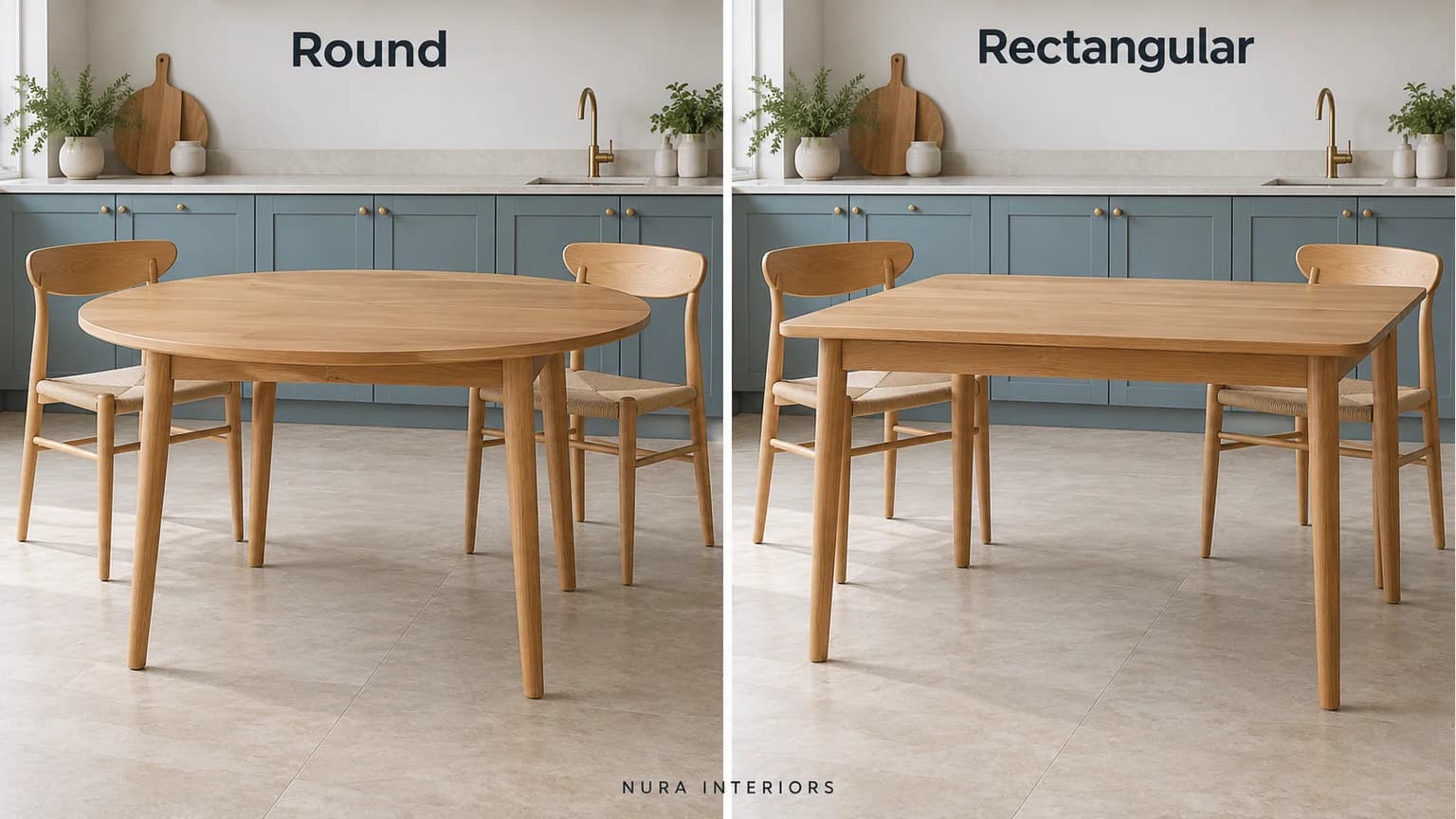

To choose a round or rectangular kitchen table, compare the whole piece beside your cabinetry: the tabletop outline, the base underneath and the chairs you intend to keep. A circle and a rectangle can create different relationships with a long cabinet run, but the shape name alone cannot choose the right model for your room.
Round and rectangular oak tables with separate legs beside blue kitchen cabinetry. Concept furniture alternatives, not a measured fit or capacity comparison. Nura Interiors.
View both table alternatives at full size. These generic furniture concepts do not represent the Rowico model discussed below.
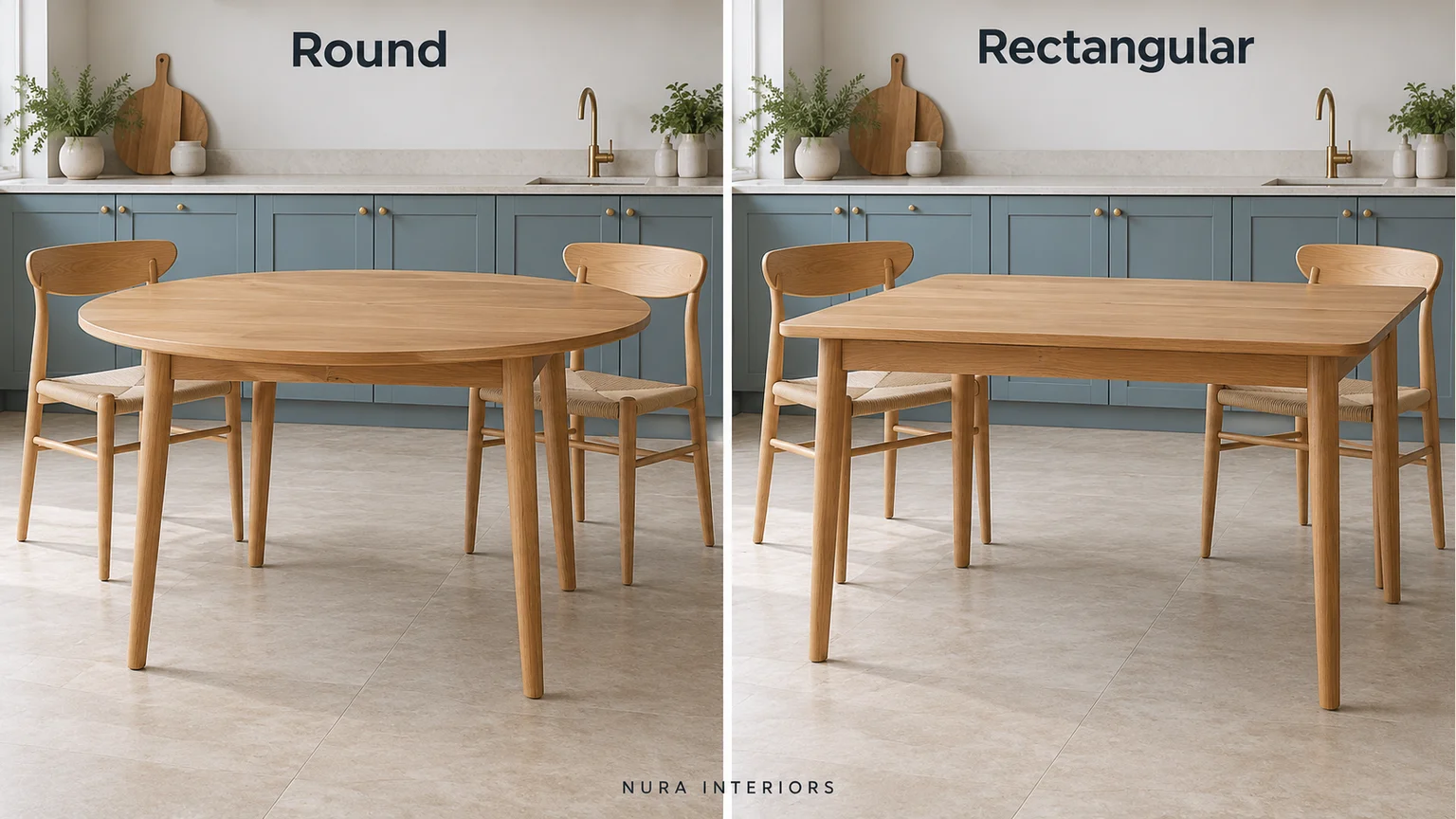
Put two actual tables in the same view
Choose one proposed model of each shape and obtain its dimensions and clear product views. Show each in the same room drawing or view, with the same cabinet run and retained chair references. Keep the furniture at its actual scale rather than shrinking one table until it looks appealing.
Note any other differences. A larger top, darker finish or more prominent base may influence your preference as much as round versus rectangular. This is a comparison of two furniture proposals, not proof that shape alone caused the result.
For a hypothetical kitchen with a long, straight cabinet run, you might prefer a round top as a different outline beside it. Alternatively, you might enjoy the repeated horizontal edge of a rectangular table. Write down which relationship you want rather than assuming that either shape always makes a kitchen feel larger or calmer.
Look below the tabletop
A round table does not necessarily have a central pedestal. Rowico's round Clapperton model, for example, has paired splayed legs. That product detail is a reason to inspect the actual base, not to infer how every round table is supported.
Include the base in your room comparison. Does its outline remain prominent between the chair legs? Is that a detail you want to repeat beside the cabinetry? A top-down outline cannot answer those appearance questions by itself.
| Compare | Keep in view | Record |
|---|---|---|
| Tabletop | Actual size beside the cabinet run | Preferred outline and other model differences |
| Base | Legs or pedestal with the retained chairs | The visible support detail you prefer |
| Chairs | Exact chair and table references | Fit questions for the furniture supplier |
Keep appearance and physical fit separate
Ask the supplier about the actual chair arms, table underside and support positions. Include occupied-chair movement in the wider room plan. A concept image cannot confirm comfort, access or fit. If a table extends, compare its everyday and extended configurations separately.
Our dining-chair colour guide covers the palette; the island-seating guide considers the wider seating arrangement.
Bring the two table references, base views, retained-chair details and room plan to a Nura kitchen conversation about your cabinetry brief. Ask which relevant examples are available before a Fulham showroom visit.