
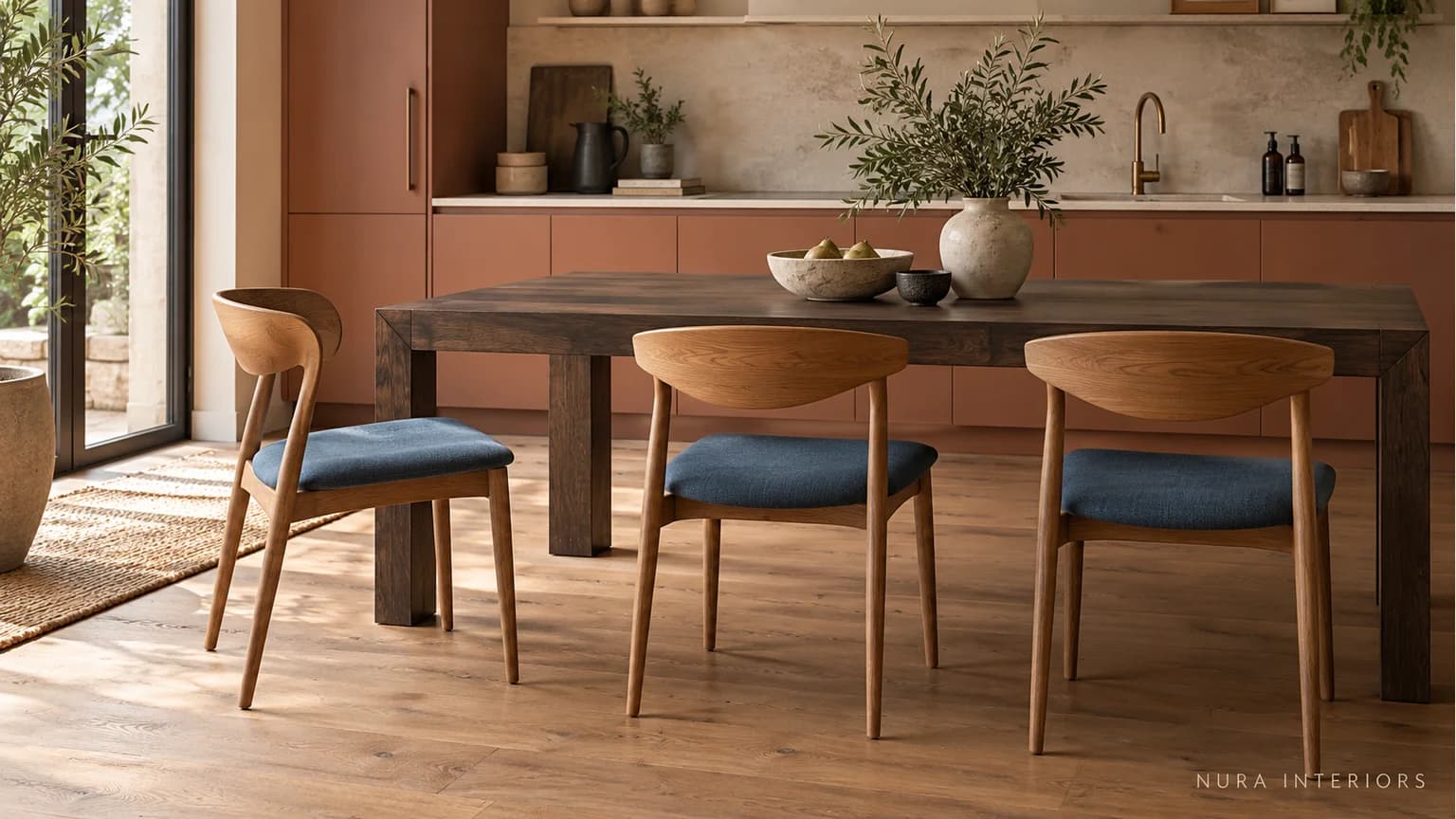

To choose dining chair colour, compare the whole chair beside your table, floor and kitchen cabinetry. Look at it tucked in and pulled out: the seat, back and frame can contribute different amounts of colour in each position. Use that comparison to decide what you want to remain visible in the room.
Make a two-view record
Stand where you normally see the dining area, perhaps at the kitchen doorway. Take one photograph with the chair in its usual tucked-in position and a second from the same viewpoint with it pulled out. Include the table edge, floor and adjacent cabinetry in both views.
Record the surfaces you can actually see. A timber back may be prominent while its coloured seat is partly screened by the table. A fully upholstered back may leave a larger area of fabric visible. The result depends on the chair, table and viewpoint, so check your arrangement rather than assuming the seat disappears.
For a chair you have not bought, request images and dimensions of the exact model from its supplier. If a physical comparison is available, use it to check the relationship with the table. Keep any finish or fabric references with the photographs; a room photograph is a visual brief, not approval of an exact colour match.
Two blue chairs can make different statements
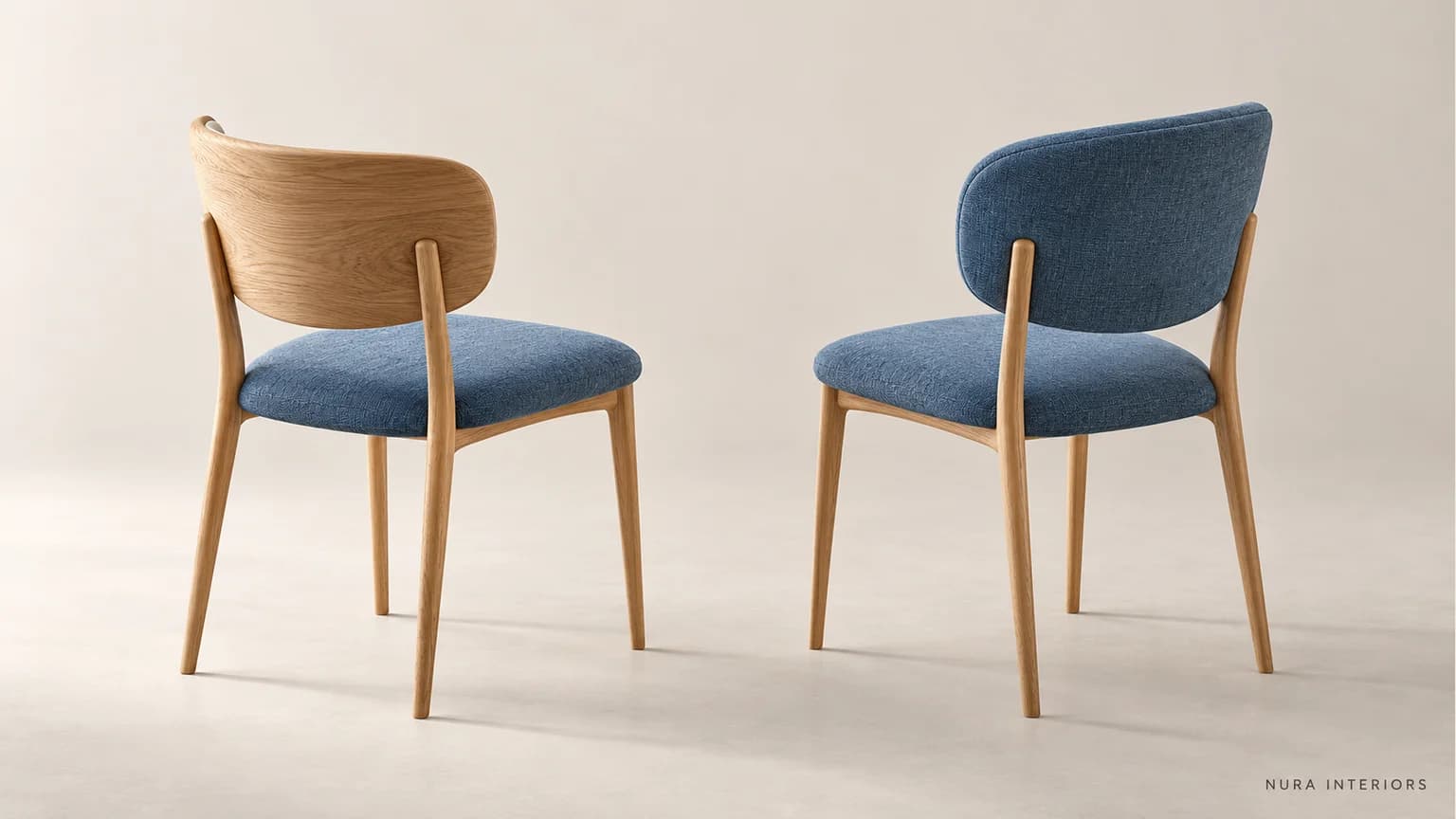
Imagine keeping an oak floor and a dark dining table while planning terracotta kitchen cabinets. One chair has a blue seat and an oak back. Another has blue upholstery across both seat and back. Both introduce blue, but the second puts it on a larger back surface, including the view from behind the table.
If your aim is to retain more visible timber beside the cabinets, compare the oak-backed option. If you want the chair backs to carry the blue accent, compare the upholstered-back option. These are different design intentions; neither is a universal rule for which colour looks best.
Use the same questions for each option
| Record | Tucked in | Pulled out |
|---|---|---|
| Visible colour | Which seat, back and frame surfaces remain in view? | Which additional surfaces become visible? |
| Room context | How do the visible backs and legs sit beside the table and cabinets? | How does the exposed seat sit beside the floor? |
| Your preference | What should stay prominent when the table is not in use? | What should change when someone takes a seat? |
Write a short observation rather than a verdict such as "nice blue": for example, "the oak back remains visible beside the cabinet run" or "the blue back becomes the repeated accent around the table". If you are mixing chairs, make the same record for each model.
For the wider seat-and-frame palette, use our kitchen bar stool colour guide. If a new timber frame needs to work with a retained table or floor, the guide to mixing wood tones covers that separate decision.
Bring the comparison into your kitchen brief
Keep both room views, the model references and available finish samples together.
State which furniture and finishes are staying, and which cabinet finish is still being considered.
Choose what you want the chair backs, seats and frames to contribute to the room.
Confirm fit, comfort and care separately with the chair supplier. Check the actual seat and arm heights, space between table supports and room to pull the chair out. A colour comparison does not establish those requirements.
Bring your two views and retained table finish to a Nura kitchen design conversation. They help connect dining furniture preferences with the cabinet palette and room layout. Explore Elm Park Road for documented cabinetry context, then discuss your own project. Before visiting the Fulham showroom, ask which relevant material samples are available. The concept arrangements here show appearances, not measured products or a completed Nura project.