
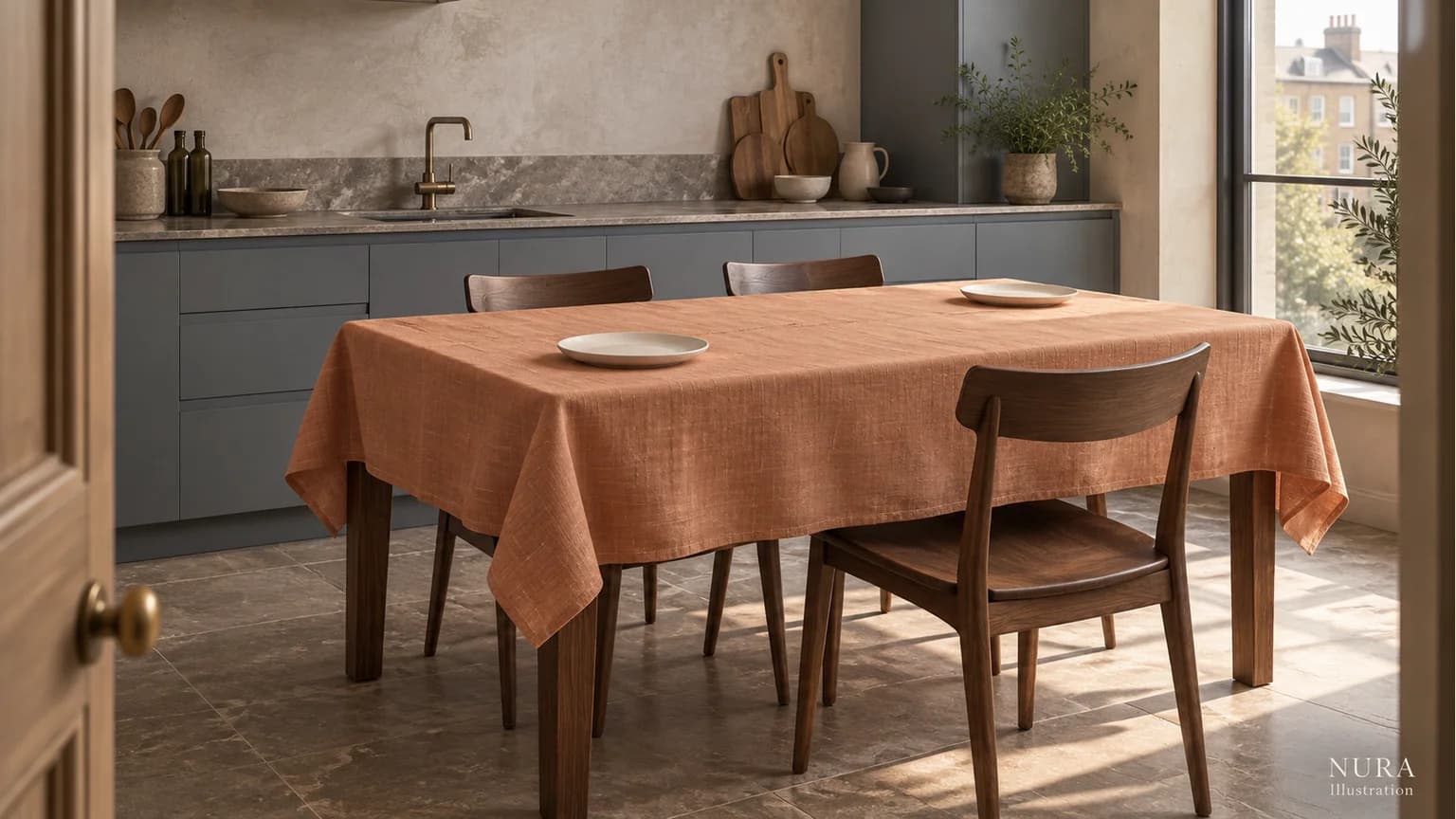

Choose a kitchen tablecloth colour alongside the chairs, cabinetry and crockery you will still see once the table is covered. Matching the fabric only to the wooden tabletop can miss the point: a full cloth hides most of that wood. A runner leaves it in view, so the same colour choice becomes a different composition.
Start with what stays visible
Look at the table from the kitchen entrance. Note the chair backs, nearby cabinet fronts and floor, then decide which relationship you want the cloth to create. A quiet background for patterned plates is a different brief from a broad accent in an otherwise restrained room.
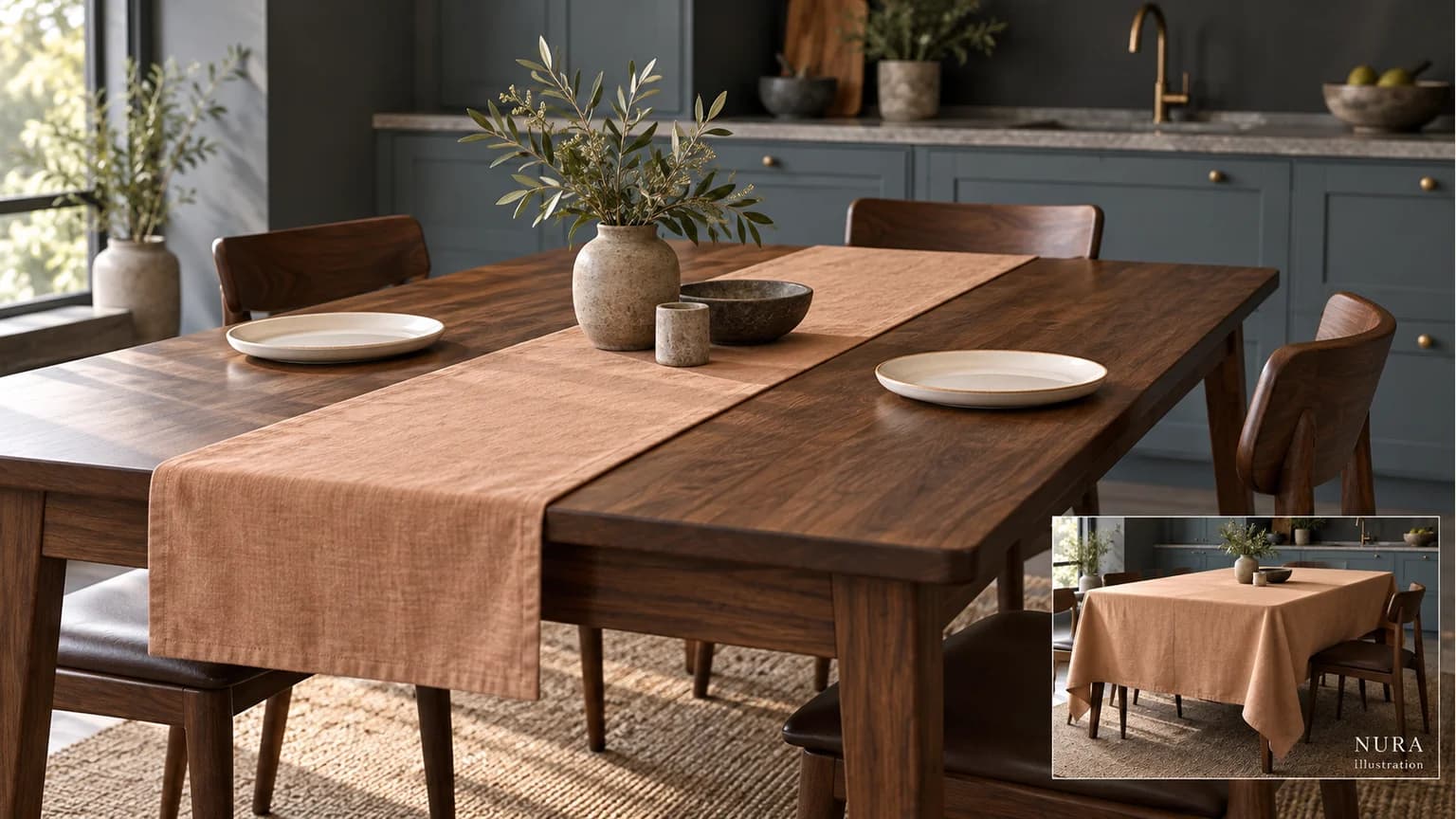
For a hypothetical kitchen with blue-grey cabinets and walnut chairs, an apricot cloth introduces a separate warm colour while the chairs retain the timber connection. If you want the walnut tabletop itself to remain part of the palette, try a runner instead. Neither arrangement needs an exact cabinet-colour match. The useful question is which materials you want to see together, as in a wider kitchen finish palette.
Put your everyday plate on the fabric
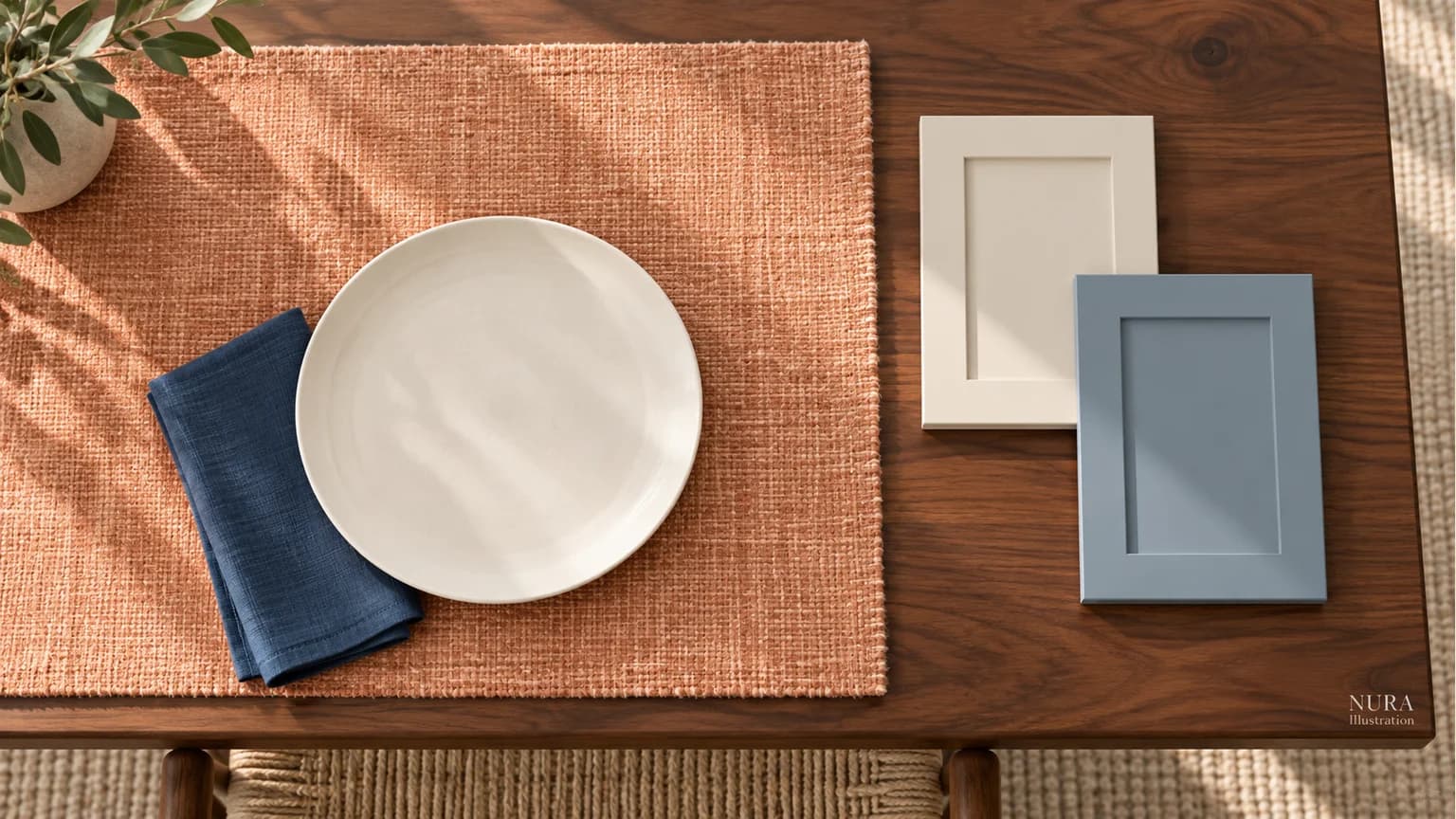
Compare two fabric options with a dinner plate and napkin you already use. A small swatch helps narrow the choice; it cannot show the effect of a whole covered table. Where possible, look at a larger sample on the table and stand back again. Keep the actual kitchen lighting on for an evening comparison rather than judging only a product photograph.
| Option | What to look at |
|---|---|
| Plain neutral cloth | Whether the plates and chair backs remain distinct against it |
| Full accent cloth | How a broad area of colour sits beside the cabinetry |
| Runner | How the fabric and exposed tabletop work together |
Before ordering, read the specific product's care instructions and check the size and drop around your own chairs. Colour does not establish washability or suitability for daily meals. The supplier's table-linen selection guide also separates colour, sizing and care decisions.
Bring the dining area into the kitchen brief
A tablecloth can be a useful reference for a bespoke kitchen palette, particularly when you are keeping the dining furniture. In the documented Elm Park Road kitchen, explore the room's material relationships; these illustrations are separate styling ideas, not photographs of that project.
Bring a room photograph, a crockery reference and any fabric samples you already have to a conversation with Nura. Ask what cabinet finish samples are available to compare, and explain whether you want the dining table to blend into the kitchen or become its colour accent.