
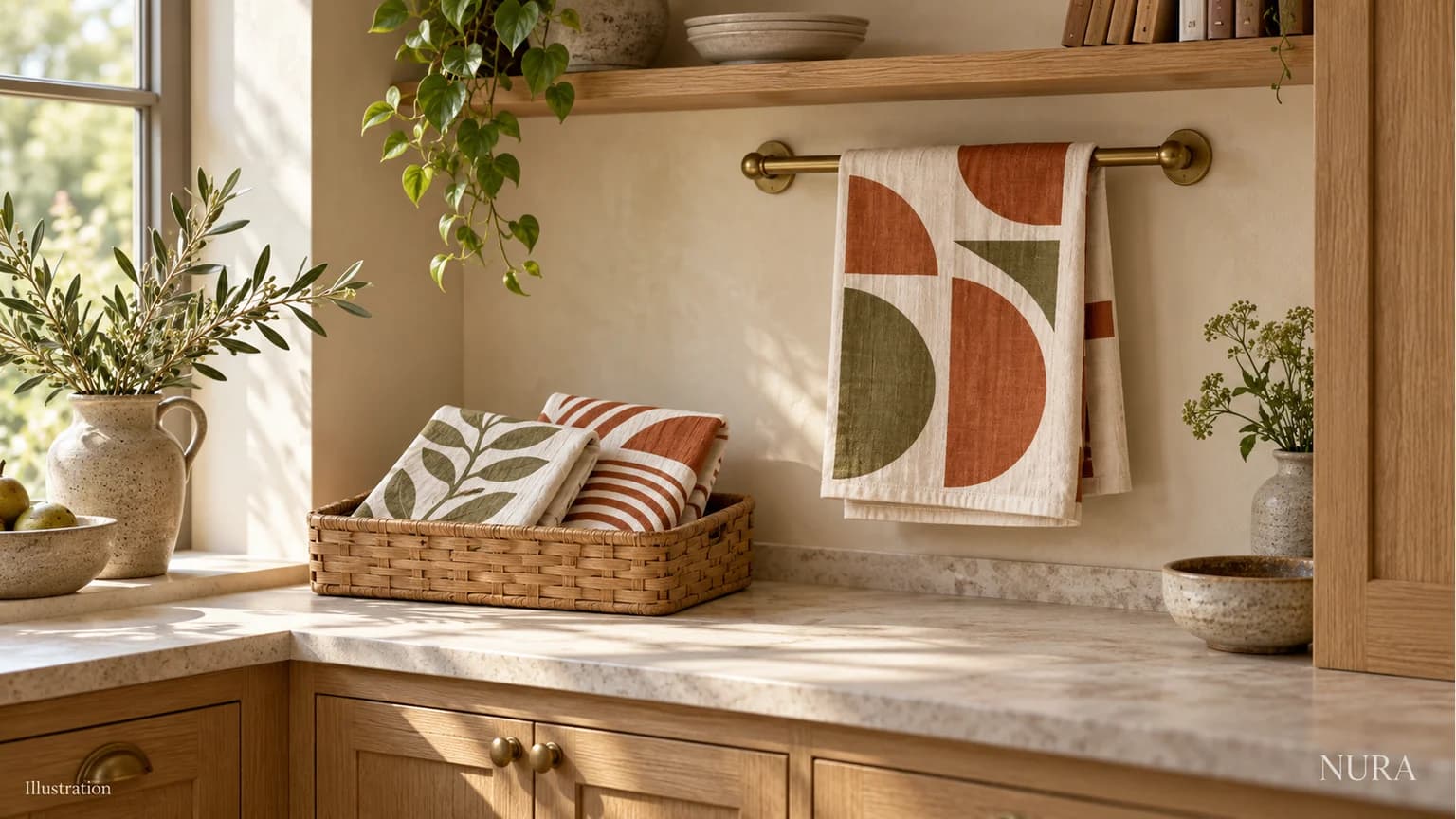

For kitchen tea towel display ideas, start with a towel you already own. Before buying a rail, basket or hanger, compare the visible pattern, the intended position and the way you use that part of the room. A decorative choice should work with the kitchen rather than become another object to move.
1. Decide whether it is decoration or an everyday towel
A textile displayed as wall art has a different job from a towel you reach for repeatedly. Choose the purpose first. A shallow basket of folded spares might suit your routine; a dedicated rail may show more of a favourite pattern. Neither needs to copy a shop display with several layers of fabric.
For a visual comparison, choose a position outside the cooking area. Ask someone to hold a clean, dry towel in place while you look, keeping clear of doors and moving parts. This does not require a trial nail or adhesive hook. Remove it before operating nearby cupboards.
2. Compare the pattern in the fold you will use
Lay the towel open on a table, then fold it as you would for display. Look at which colours, border or motif remain visible. From the kitchen doorway, decide whether that smaller area gives the effect you want. There is no need to expose every part of a design.
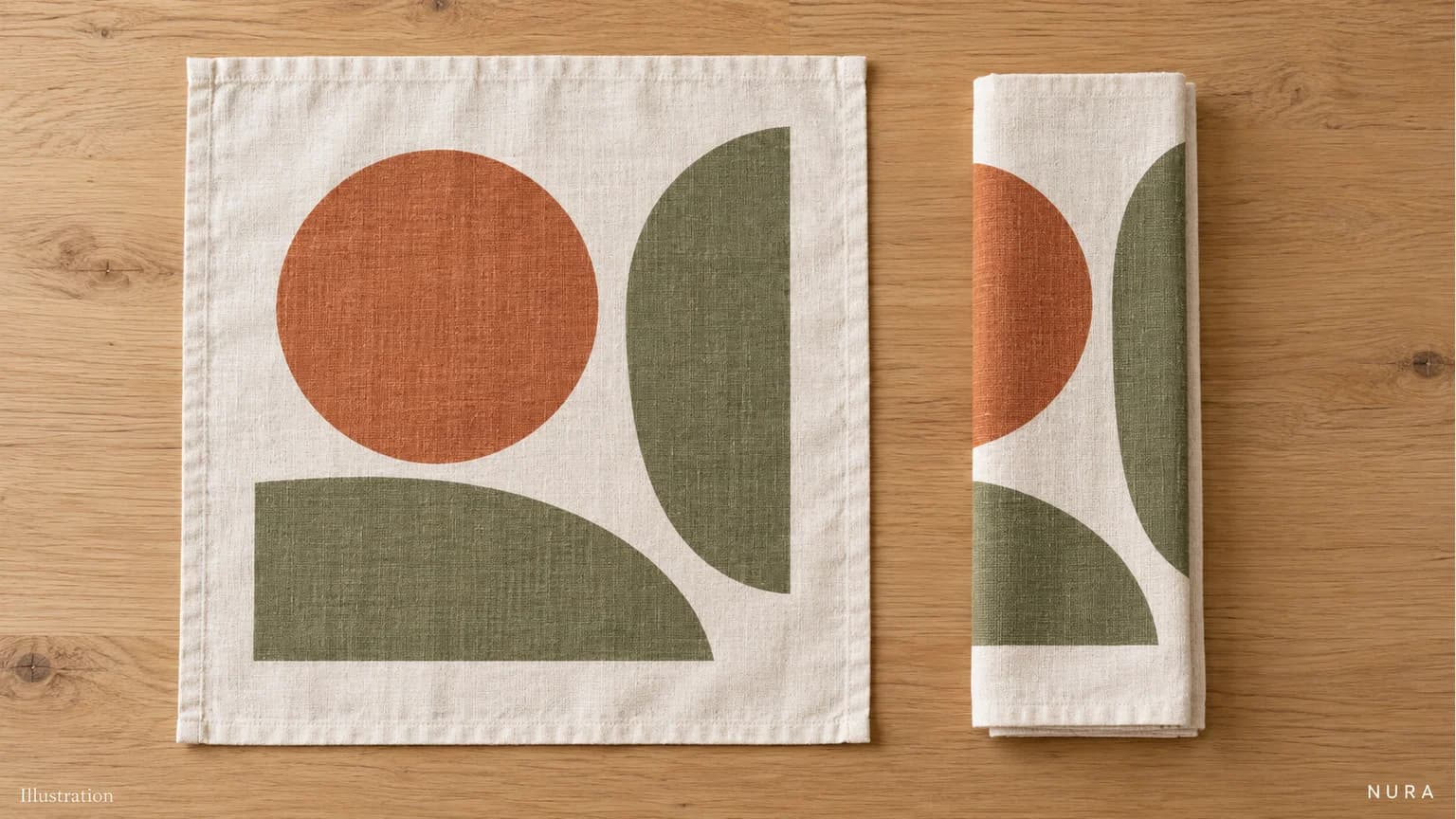
For example, a large central motif may disappear in a narrow fold, while a striped edge stays visible. Try a different fold before choosing a different towel. Keep the comparison about your preferences, rather than treating a particular colour combination as a rule.
3. Check the position before choosing the fitting
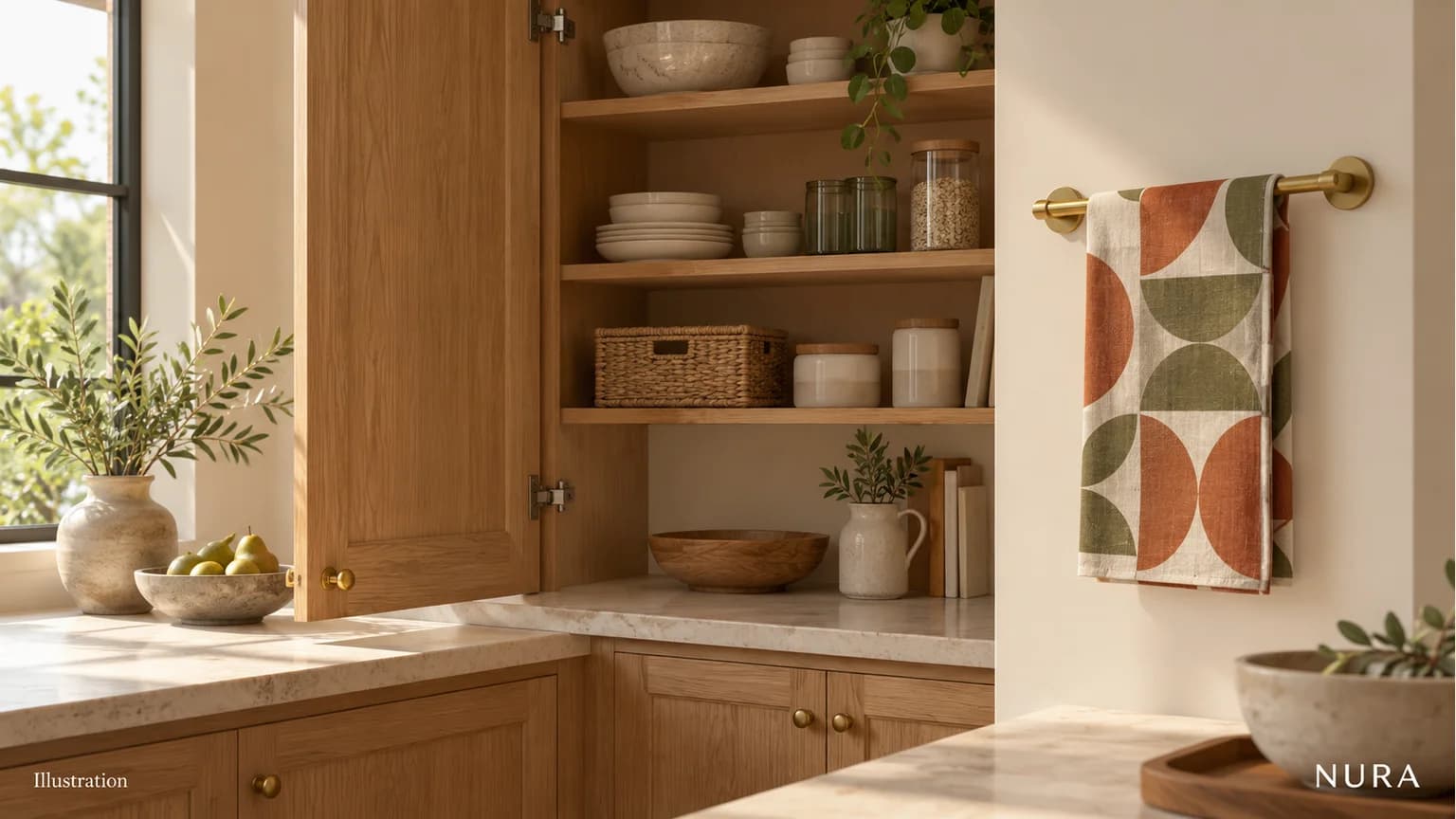
Consider the complete holder and hanging fabric, not just the fixing point. Check the nearby door and drawer movements and the work area you need. A decorative sketch or illustration cannot establish safe clearances or installation suitability. Follow the exact holder’s fixing and load instructions and any relevant appliance instructions.
| Check | What to record |
|---|---|
| Purpose | Decorative display, everyday towel or folded spare stock |
| Appearance | The fold and portion of the pattern you prefer |
| Position | Door movements, usable work area and fitting instructions to check |
Connect the small detail to the room
If you prefer a framed display, compare the outline using our kitchen wall-art frame-size guide. For shelves that also hold everyday items, see our kitchen shelf-styling tip. Planning a wider change? Explore Nura bespoke kitchens and bring your room priorities to a design consultation. The illustrations show possible arrangements, not a completed Nura project or a measured fitting test.