
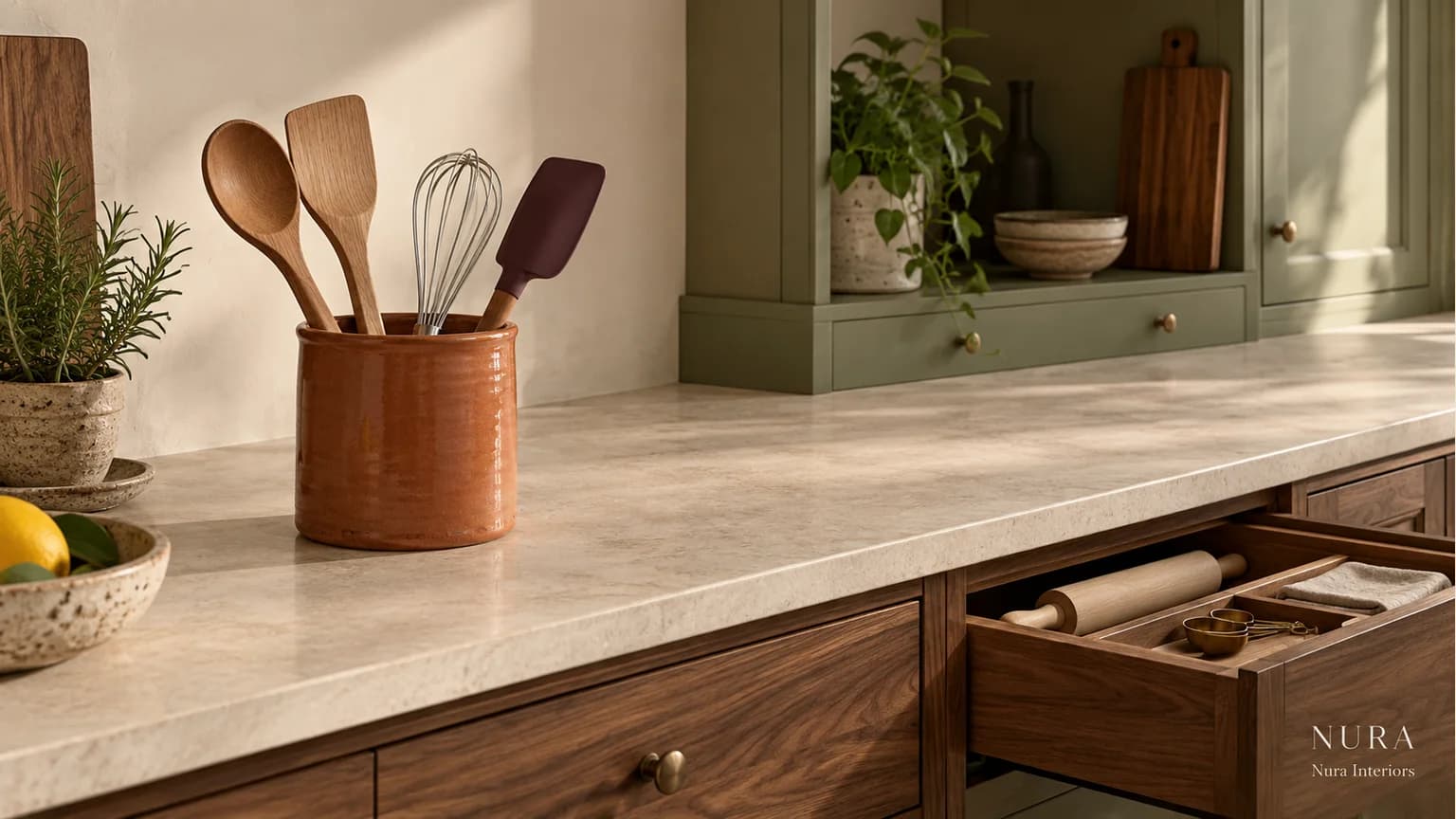

A kitchen utensil holder takes up more room once the tools are in it. Spoon heads, whisks and turners can spread beyond the rim, so compare the filled arrangement with your working surface before choosing a pot for its colour or base size alone.
Look at the whole outline
Start with the tools you want on the worktop, not every tool you own. In a suitable utensil pot you already have, arrange that selection and look from above and from the room entrance. Notice how far the heads spread, whether they hide the splashback detail you like, and what surface remains for your usual chopping board or preparation task.
This is a way to prepare a shopping brief, not a rule about how many tools every household needs. Photograph the arrangement with the rest of the counter visible. An empty product photograph cannot show how your own whisk or broad turner will sit.
Compare access as well as appearance
Take out and return each chosen tool. If the handles bunch together or you must move several others to reach one, compare a different opening or a smaller selection. Check the maker's intended use and care instructions rather than assuming a decorative vase or a particular material is suitable.
| Look at | Question to answer | Possible next choice |
|---|---|---|
| The filled outline | Do the heads spread into the space you use? | Move some tools into a drawer instead of enlarging the pot |
| The opening | Can you take out and replace the tool you want? | Compare a different opening with the same collection |
| The nearby drawer | Where will the tools left out of the pot go? | Plan their compartments alongside the worktop arrangement |
IKEA's utensil-storage guide shows drawer, wall and stand-up alternatives. A pot can be one part of the storage plan, rather than the home for the entire collection.
Bring the pot into the kitchen palette
Suppose your regular cooking uses a wooden spoon, a turner and a whisk, while the rolling pin comes out occasionally. Compare those everyday tools in the pot and give the rolling pin a deliberate drawer position. The useful decision is what stays visible and what storage must work around it.
Then judge the pot's finish beside the retained worktop, cabinet fronts and tool handles. A contrasting colour may be welcome, but it still needs to work when the pot is filled. Keep that photograph with your drawer-organisation brief.
Discuss your kitchen with Nura using the counter photograph, tool list and preferred finishes. Ask what support is available for connecting this small detail with the wider cabinetry and storage plan.