
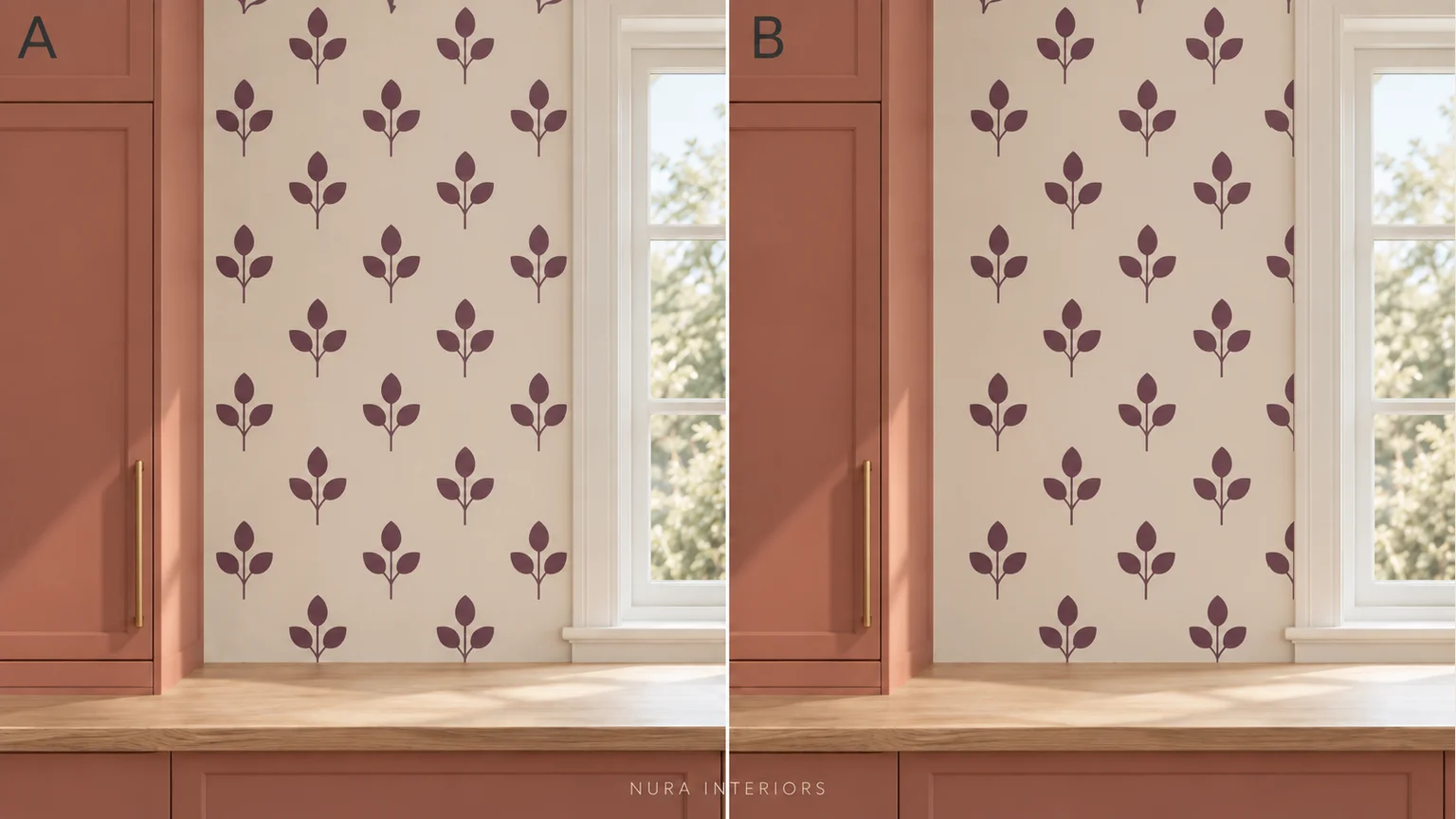

Kitchen wallpaper pattern scale and placement answer different questions: how large is the motif, and where does it land? A pattern can be the size you like yet lose a favourite leaf or flower at a window edge. Keep the pattern's size fixed while comparing two possible placements. The useful question is which partial shapes you are happy to see, rather than whether every leaf or flower can remain whole.
Ask what the sample shows
The size of a leaf is not the same information as the wallpaper's declared repeat and match. Ask the manufacturer for those details and a full-design view that shows how neighbouring widths relate. Do not enlarge a cropped website image and assume it represents the product at its actual scale.
Cole & Son's sample guidance explains that sample formats vary and are intended for colour matching. A sample can help with the palette without showing the whole motif or its relationship with the next width. Confirm what your chosen sample includes.
Follow one motif across the wall
Use the same wall elevation or room view for both comparisons. Mark the window edge and cabinet end, then ask the supplier or decorator for a correctly scaled view of the selected design. Keep that scale unchanged while exploring the placement.
In the paired original-pattern views, A leaves a whole sprig beside the window. B shifts the same-sized pattern, so a sprig is cut by the window edge and the gap beside the cabinet changes. These are hypothetical alternatives, not a scaled manufacturer product or a hanging plan.
View the full-size pattern comparison.
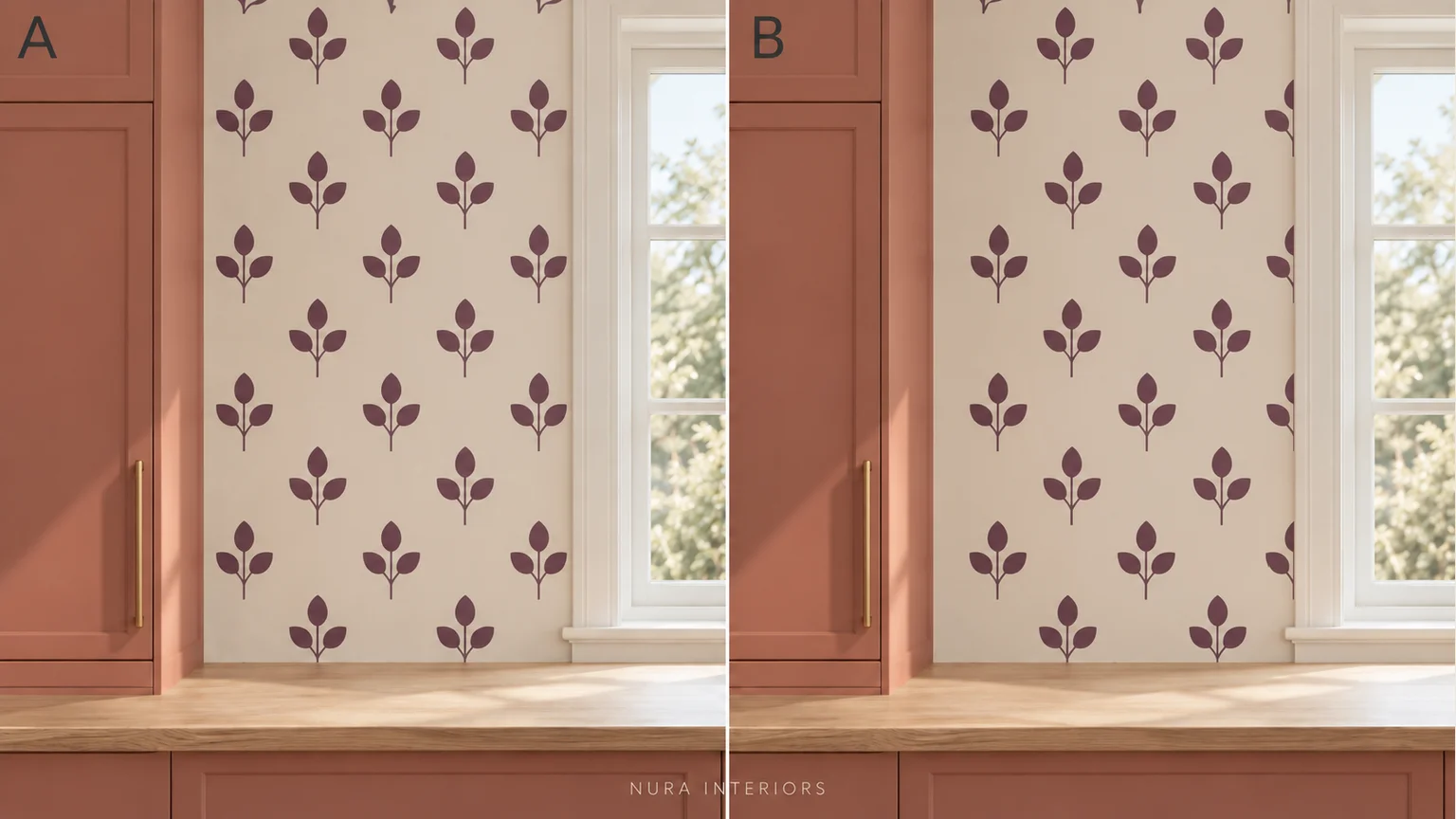
Which crop bothers you less? Note whether the window-side leaf matters more, or whether you prefer the view beside the cabinetry. Accepting a partial motif is a design preference, not a failure.
| Compare | Keep fixed | Record |
|---|---|---|
| Wall | Window and cabinet boundaries | The reference edge used |
| Pattern | Design scale and viewing position | Two labelled placements |
| Preference | The same two alternatives | Preferred crop and unresolved question |
Bring the preference into the kitchen brief
Keep the design reference, declared repeat and match, sample details and both marked-up views together. Ask the supplier or decorator to confirm achievable placement, quantities and hanging layout separately. Check the actual paper's location suitability and care requirements too.
Our finish-palette guide considers colour relationships; the wall-art guide explores a different wall decision.
Bring your preferred view and cabinet/window references to a Nura kitchen conversation about the wider cabinetry brief. Ask which relevant examples are available before a Fulham showroom visit.