

On this page
What separates slim shaker from classic shaker doors
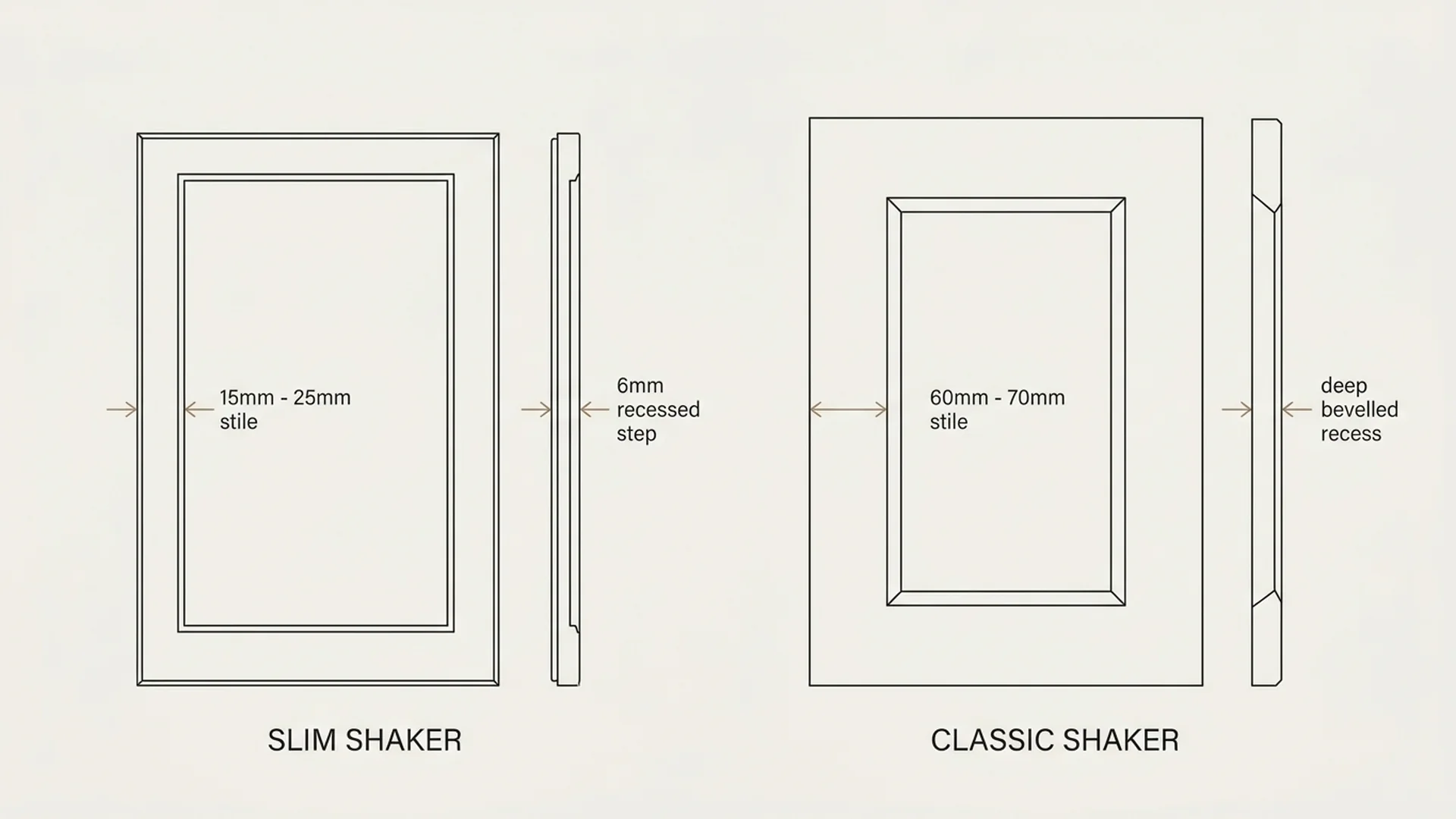
A 20mm border reads differently from a 65mm frame across a long London kitchen wall. Start with the room itself.
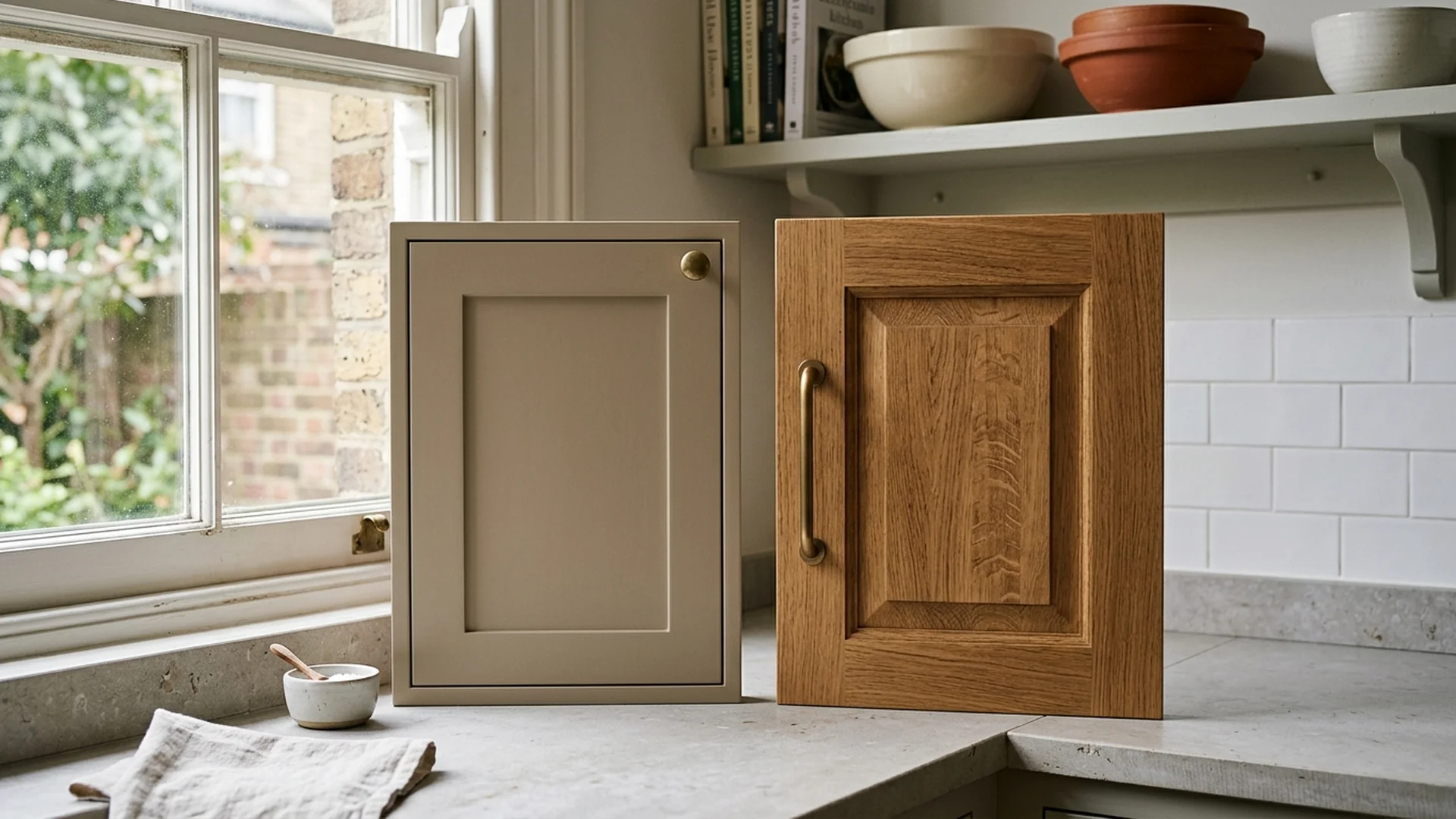
Hold both samples upright together. A classic shaker frame divides the elevation into distinct panels, especially beside narrow drawers and tall appliances. Slim borders leave more visible centre panel within the same overall door size. The difference becomes clearer across several cupboards. One sample cannot show that rhythm.
Keep the cornice in view. Narrow frames can sit quietly beneath detailed Victorian plasterwork without copying every moulding above the cabinet run. Wider frames create stronger shadows.
Rail width and door thickness differ. A quoted 18mm border describes the face profile, not necessarily the supporting core behind the decorative surface.
How frame width changes cleaning and daily wear
Look along the lower rail. Flour and grease settle on horizontal ledges, whether the door is timber or painted board. Shallower rebates reduce those ledges.
The coating matters as much. Repeated abrasive cleaning can damage a finish, so follow the coating supplier's instructions rather than scrubbing a stubborn corner harder. Take a damp sample cloth. Compare how easily the actual profile wipes clean around its inside corners before approving doors beside a busy preparation area.
Wet edges need their own detail. Ask how cut edges and joints are protected beside sinks, dishwashers and kettles. No decorative profile makes timber waterproof.
Hardware, handles and integrated appliance weight
Check the fixing centres first. A cup handle needs enough flat face for its backplate, screws and comfortable finger access. Dimensions vary between handle models.
A narrow stile may need another fixing position, a smaller backplate or a suitable edge pull. Test the chosen combination on a sample door. Fridge doors deserve a separate check. The appliance manual sets panel weight limits and hinge arrangements, while the cabinet specification determines support and permitted door dimensions.
Do not buy rigidity by thickness alone. A 22mm core is one possible specification, not a guarantee against bowing in every tall cupboard or appliance housing.
Check both hands on the pull. Door width and opening resistance change how a handle feels when carrying plates or using the kitchen with limited grip.
Cost differences in bespoke cabinetry specifications
Compare a finished door schedule. A price per front tells little without the coating, edge treatment and handle machining included in the same written scope.
Manufacturing methods differ between suppliers. Some slim profiles are machined into engineered cores; others use assembled frames or planted mouldings. Ask which construction is actually proposed. Veneer selection adds another decision. Sequence adjacent fronts on an elevation so the maker can price grain selection rather than assume every board will match.
Request one comparable quotation revision. Keep cabinet sizes and fitting scope unchanged while pricing the two profiles, otherwise unrelated upgrades can obscure the true finish difference.
Workshop Layer 1: Joinery & Core Stability Specifications
- Core selection: Record the actual board grade, door thickness and finished size. Moisture resistance is not waterproofing. Do not equate a product family name with a moisture-resistant grade.
- Profile sample: Approve the rail width and rebate depth on a physical section. A 15mm to 25mm border is an example range, not a machining tolerance.
- Tall door stability: Confirm permissible height and width with the door maker. Rear tensioners may help where specified; they cannot guarantee zero movement.
- Finish continuity: Agree how end panels, corner posts and replacement fronts receive the same finish reference and sheen.
Workshop Layer 2: Hinge Cup Boring & Perimeter Edge Clearances
- Boring plan: Check the chosen hinge drawing against the face profile and remaining core. Do not use a generic cup setback as a universal rule.
- Appliance fronts: Use the selected appliance installation manual for door weight and fixing positions. Verify handle projection and adjacent clearances before drilling.
- Site fitting: Record the intended finished floor datum and final front gaps. A drawing marked ±1mm needs a defined measurement method and acceptance basis.
- Wet zones: Specify compatible edge sealing and follow the coating system instructions around dishwasher openings and sink cabinets.
Planning your London kitchen joinery
Bring the elevation, not just a photograph. Mark which doors are tall, which drawers open daily and where daylight catches the profile beside your chosen stone.
Ask what samples are available. Our Fulham design studio and showroom coordinates specialist makers to the approved studio drawings, with responsibilities written into each commission.
Compare room proportions in the design lookbook before choosing a frame.
Use the bespoke kitchen cost calculator for indicative cabinetry ranges including assumed VAT. Stone and appliances are separate.
Discuss your sample brief with the Fulham design studio and showroom before commissioning joinery.
Frequently Asked Questions
Do slim shaker doors warp on tall larder cupboards?
They can move if construction or conditions are unsuitable. Confirm the door size, core and support with the maker. Neither 22mm thickness nor a tensioner guarantees a permanently flat panel.
Are slim shaker kitchens harder to clean than classic shaker doors?
Shallower rebates can be easier to wipe. Both styles still need regular cleaning, especially near cooking areas. Follow the actual finish care instructions and avoid abrasive pads.
Can you put traditional cup handles on an 18mm slim shaker rail?
Measure the handle backplate and fixings. Many cup pulls need more flat face than a narrow rail provides. Test another position or handle rather than forcing incompatible fixings.
Where can I see physical slim shaker door samples in London?
Contact the Fulham design studio and showroom before visiting. Ask which profile and coating samples are available, and bring your elevation and material references.
What door thickness is best for slim shaker cabinetry?
There is no thickness that suits every door. Choose the construction for its dimensions, appliance weight and fixing arrangement. Ask the maker to confirm the complete specification.
Can slim shaker doors be painted in custom colours?
Many painted systems offer colour matching. Confirm the coating supplier and physical sample approval process. Review the sample under your room lighting before signing off the finish.
London Bespoke Inspiration
Explore contemporary palettes, storage mechanisms, and architectural joinery.