
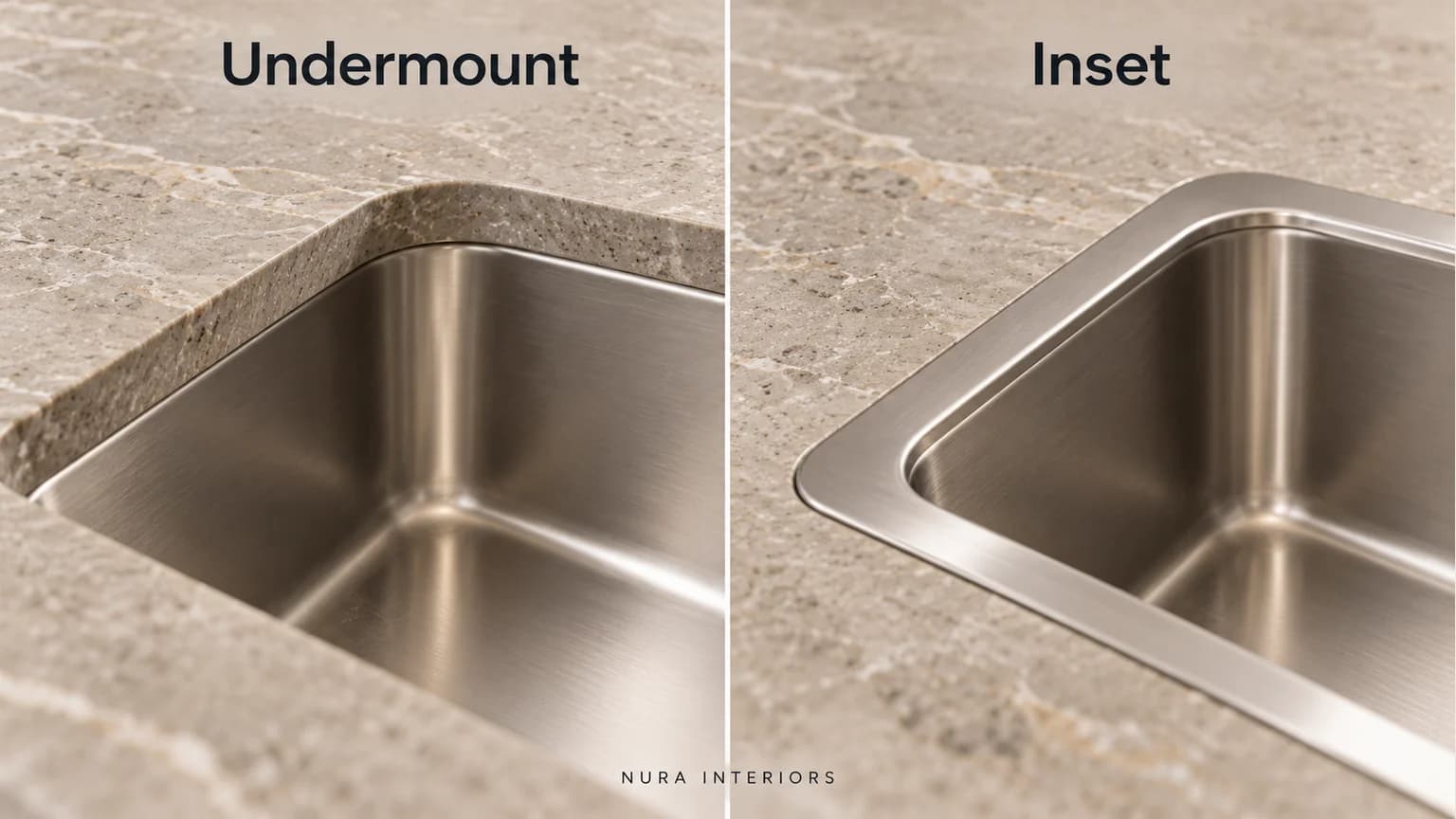

An inset sink sits in the worktop from above, with its rim visible on the surface. An undermount sink is fixed below, leaving the worktop edge visible around the bowl. Choose the relationship you prefer, then confirm that the exact sink and worktop permit it before approving a cut-out.
Compare the junction you will see
Franke's installation overview distinguishes these arrangements from flushmount installation, where the sink rim sits level with the worktop. Flushmount is a separate detail, not another name for undermount.
Look at the proposed sink edge from above and in section. An inset rim can provide a visible outline; an undermount exposes the worktop's cut edge. Ask to see the actual detail rather than assume every inset has a broad rim or every undermount looks identical.
Consider how you would clean that junction, following the selected products' care guidance. A preference for wiping across an uninterrupted surface does not establish material compatibility, and an undermount still has a sink-to-worktop joint.
Find out what the worktop actually is
Imagine two kitchen proposals both described as having a laminate worktop. One uses laminate over chipboard; the other specifies compact high-pressure laminate. The label alone cannot settle whether your preferred sink mounting is permitted.
Polyrey's Compact HPL manual permits drop-in and undermount resin or metallic sinks within its specified system, subject to the manufacturer's instructions. That permission does not approve every compact laminate, every sink material or a chipboard-backed product.
Give the sink supplier and worktop fabricator both product references. Ask them to confirm the compatible arrangement, including support, sealing and the exposed edge. Do not treat adding sealant as an answer to an unresolved compatibility question.
| Decision | Compare | Record |
|---|---|---|
| Visible edge | Actual rim or exposed worktop edge | Preferred junction detail |
| Compatibility | Exact sink and worktop instructions | Confirmed mounting method and unresolved questions |
| Fit | Template, cabinet and surrounding fittings | Approved drawing revision and confirmation responsibility |
Check the opening before replacing a sink
A replacement with the same external width is not automatically compatible with the existing opening. Obtain the current template and compare the cut-out, bowl, cabinet space and proposed mounting detail.
Kohler's product-specific undermount instructions require measuring the actual sink before cutting and checking cabinet clearance for the tap, drain and water supplies. That particular system also specifies a reveal for its accessories. Use your selected model's instructions rather than transferring its reveal to another sink.
Keep a written record of the sink model and permitted mounting, worktop product, construction and thickness, current cut-out template and rim or reveal detail. Add the confirmed support, sealing and clearance requirements, who checks the final arrangement, and which drawing revision is approved before cutting.
Bring the whole sink area into the conversation
Keep mounting separate from single versus double bowl, drainer space and tap reach. Each answers a different everyday question.
Bring your product references, available samples and current plan to a Nura kitchen discussion. Explore our bespoke kitchen service, and ask which relevant examples are available before a Fulham showroom visit.