
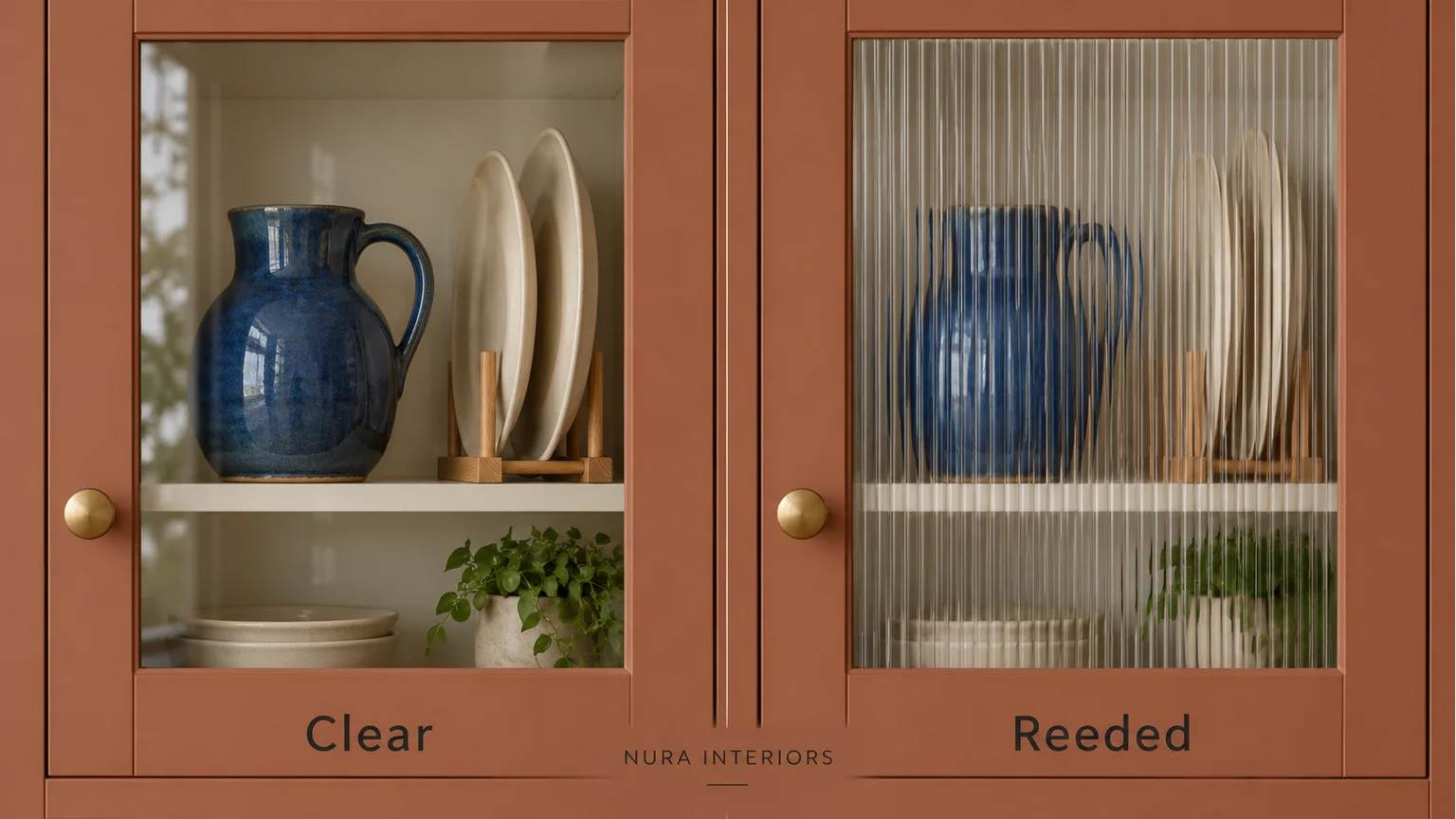

Choose clear or reeded glass for kitchen cabinets by deciding what you want to see through the closed door. Is it the pattern on a favourite plate, the colour of a jug, or a less detailed view of the contents? Make that preference specific before arranging a display or choosing a textured pane from its name alone.
Clear and reeded cabinet-glass concepts with a blue jug and cream plates. Concept alternatives, not a physical sample test or a named glass product. Nura Interiors. .
Name the detail you want to keep
Imagine a cabinet holding a blue jug and patterned plates. One household wants to recognise the plate decoration from the dining table. Another cares more about seeing blue among the surrounding timber and painted fronts. These are hypothetical preferences, not results from a glass comparison.
Write down which detail matters to you. Then use those same pieces when considering the proposed glass. If the plate pattern becomes less distinct through an option, is that an acceptable trade-off, or does it remove the reason you wanted a glazed door? A reeded appearance should not become a promise that everything unwanted will disappear.
Choose the actual pattern
Reeded glass describes a patterned appearance, rather than one universal level of obscuration. Pilkington's decorative range rates its named Reeded pattern at level 2 on its own scale, which runs from 1 for least obscuration to 5 for greatest. That identifies this product; it does not predict exactly how your jug or plates will appear, or rate every glass sold as reeded.
Ask for the reference of the clear pane and the particular patterned alternative being proposed. Keep those references with your notes. A small sample helps a conversation, but it does not represent the full installed cabinet.
Give each glazed pane a purpose
Keep a short record for the cabinet elevation, with observations left open until you have compared the actual proposals.
| Detail you want | Pane and reference | Record after comparing |
|---|---|---|
| Plate decoration | Identify the intended door and glass option | Which detail remains visible, and whether you accept the view |
| Blue jug colour | Use the same jug with the alternative | Whether colour or outline matters more to you |
| Pattern beside adjacent fronts | Note the glass product and proposed line direction | Whether you want that repeated line in the wider elevation |
Do not move the contents simply to make one glass option appear preferable. First settle the material preference, then use our glass-cabinet styling tip to consider the frame, shelves and everyday arrangement.
Decide when the closed cabinet should be lit
Imagine a reeded-glass cabinet holding teacups and serving pieces. The household wants to find a cup when opening it, but also wants the cabinet lit behind its closed doors during an evening meal. Those are two different requests. Accepting the view through the selected glass does not establish that the proposed control can provide both. Specify whether the evening display is part of the brief, rather than assuming it follows from choosing cabinet lighting.
In its display-cabinet lighting guide, Sensio describes its Titan+ Wireless Door Sensor switching lights as the cabinet opens and pairing with its Titan+ Driver. That named arrangement illustrates why the control reference matters; it does not establish the behaviour of another proposal. Ask the lighting supplier to explain how the selected system would serve the requested closed-door display and open-door retrieval, and confirm its compatibility with the actual cabinet and fittings. If it cannot provide the desired combination, decide whether to change the lighting brief or request another supported proposal. Keep electrical and installation details with the appointed professionals.
Bring the glass into the kitchen palette
Compare the proposed pattern beside the cabinet finish and neighbouring surfaces. Our kitchen colour guide considers that wider palette. Record the preferred pane, product reference and unresolved questions, and ask the supplier to confirm its suitability for the complete cabinet.
Bring photographs and those preferences into a bespoke kitchen discussion. Contact Nura and ask which relevant glazing samples or examples are available for your cabinetry brief.