
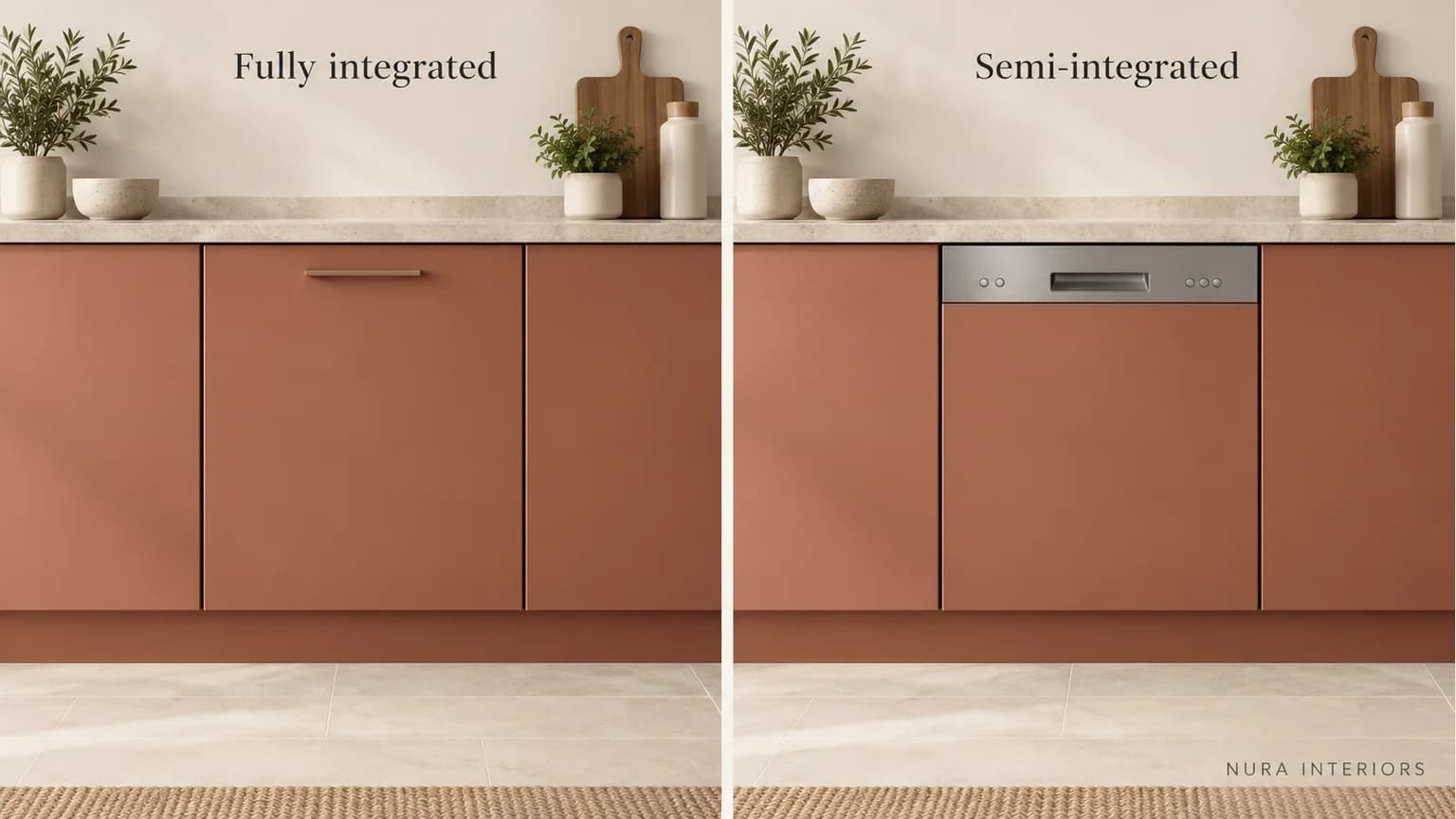

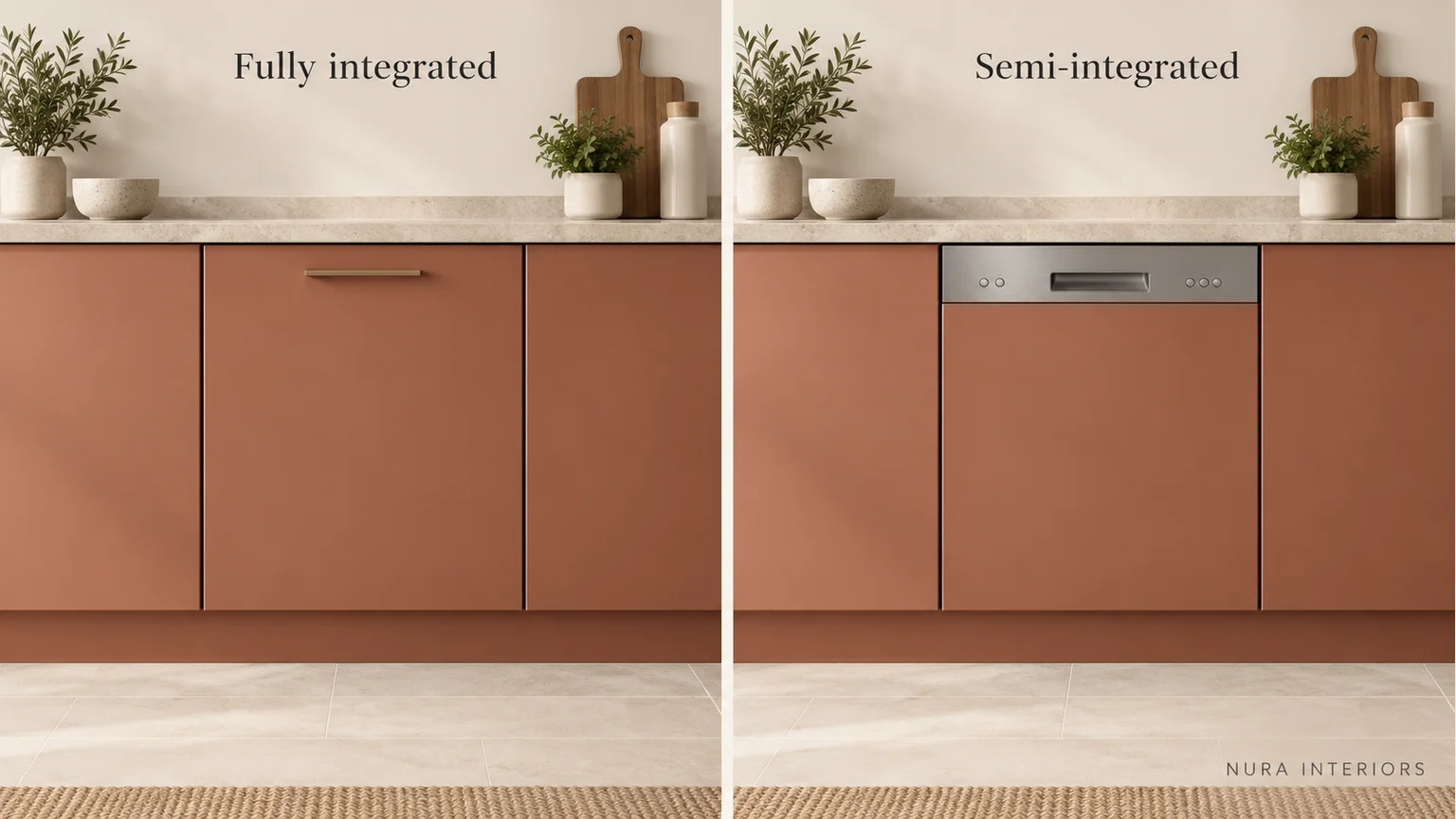
In UK kitchen cabinetry, a fully integrated dishwasher conceals its control panel when the door is closed. A semi-integrated dishwasher leaves a control strip visible above a shorter furniture front. That difference matters when you picture the appliance among the surrounding cupboards, but it does not settle which machine and cabinet front belong together.
Start with two separate preferences: what you want the closed kitchen to look like, and what information you want from the dishwasher during ordinary use.
Fully and semi-integrated dishwasher front concepts when closed. Generic arrangements, not model-specific controls or a fitting specification. Confirm the chosen appliance and furniture-front requirements. Nura Interiors. View the full-size room concept.
Choose the visible front
Beko UK's explanation of integrated dishwashers describes a semi-integrated appliance with a shorter cabinet door attached below an exposed strip containing its handle and controls. In its fully integrated description, the controls are concealed inside and you open the door to select a programme.
On your kitchen elevation, include that visible strip when comparing semi-integrated with fully integrated. Do not judge the choice from a photograph of the furniture panel alone. Consider whether you want the appliance controls to be part of the cabinet composition, or prefer them concealed when the door is closed. Neither preference needs a universal rule about which kitchen style suits it.
Ask what the actual machine tells you
Imagine a household choosing painted cabinet fronts. They prefer the dishwasher's furniture panel to continue the run, but one person wants to know whether a programme is still running while preparing dinner.
Those wishes are not automatically incompatible. They need information about the exact machine, rather than an assumption that every fully integrated dishwasher conceals all progress information or every semi-integrated model displays remaining time. Ask what indicators, if any, remain visible during operation with the door closed, and what each actually communicates. A visible control strip alone does not answer that question.
| Decision | Ask about the actual option | Bring to the kitchen discussion |
|---|---|---|
| Closed front | Which appliance parts remain visible beside the furniture panel? | An elevation showing the proposed strip, panel and handle |
| Control information | What can be seen with the door closed, if anything? | The model's documented indicators and your preferred information |
| Model and front | Is this proposed furniture front compatible with this exact appliance? | The model reference, front proposal and manufacturer's requirements |
For this household, the useful comparison is between documented options that address both preferences. It is not a choice based solely on the words fully or semi-integrated.
Keep appearance and compatibility together
If you are replacing a machine, a preferred appearance does not establish that the existing front can be retained. Confirm the proposed front and exact replacement model together before treating either as settled. For a new kitchen, keep the appliance reference connected to the front design as the cabinetry develops.
The wider dishwasher placement decision covers where loading and unloading happen. A handleless kitchen also needs its opening approach considered alongside the appliance choice. These are related decisions, rather than answers supplied by the integration label.
For a bespoke kitchen discussion with Nura, bring your plan, preferred closed-front appearance and actual model documents. Ask which relevant examples are available to discuss, so the appliance preference can be considered within the wider cabinetry brief.