
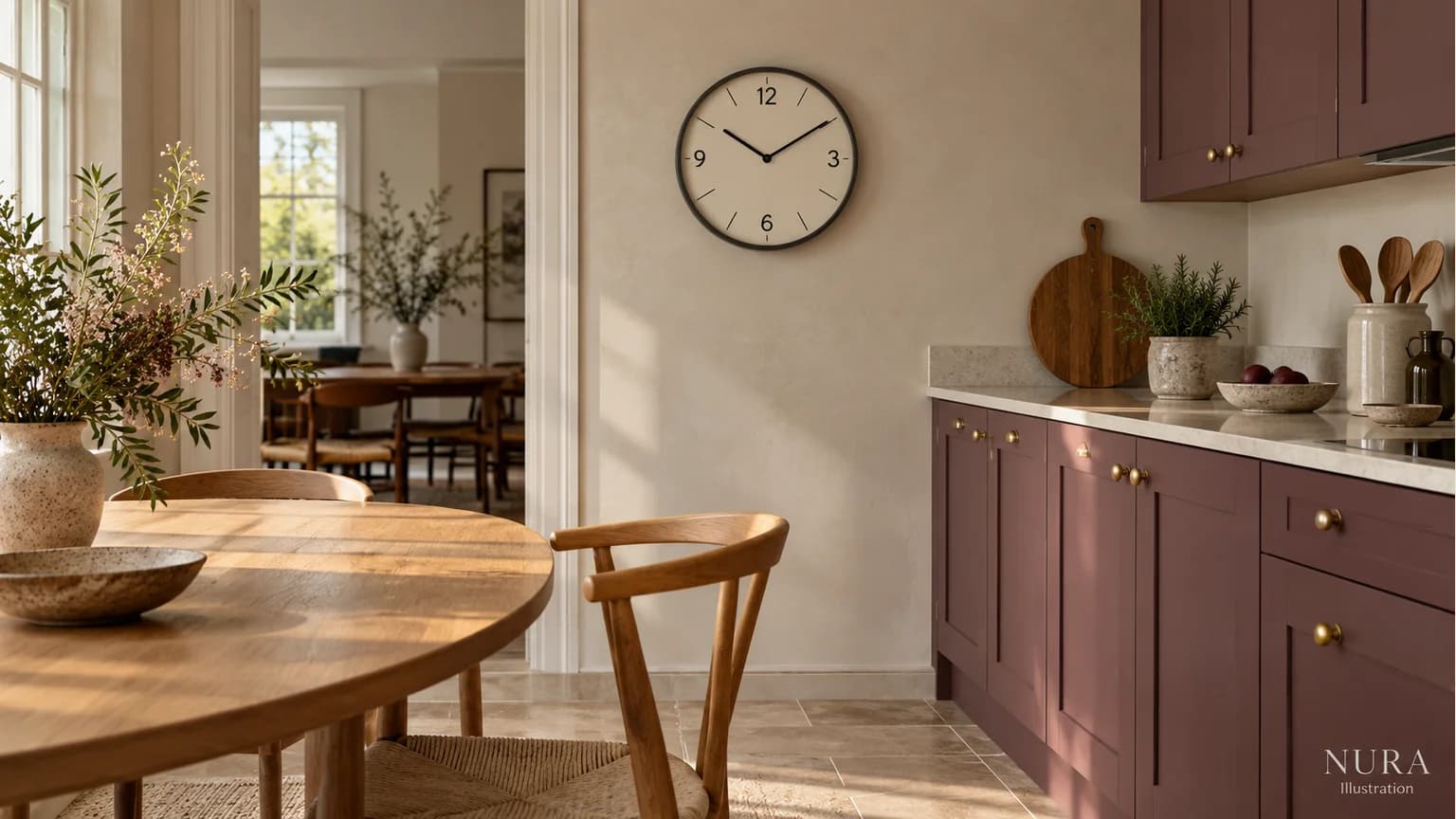

Choose kitchen clock placement from the places where you actually look for the time. Start with your usual dining chair and preparation area, then compare the clock face and frame with the wider kitchen. A position that looks balanced from the doorway may still be awkward from the table.
Compare two everyday views
Sit in your usual chair, then stand at the worktop you use most. Identify a wall area visible from both without a cupboard, tall object or open door interrupting the view. Record which view matters most if one position cannot serve both.
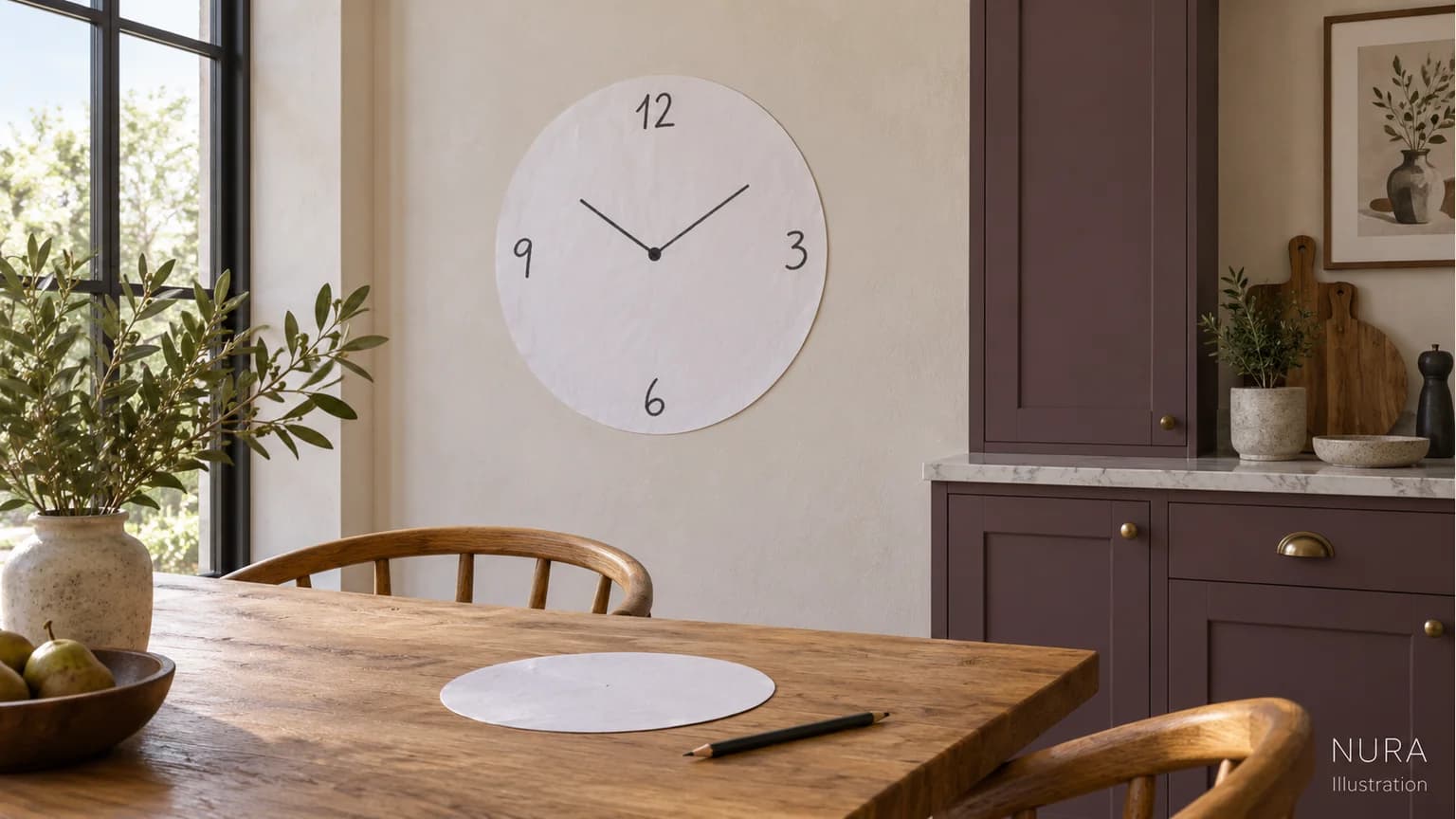
Try a paper circle matching the shortlisted clock's outside diameter on an easily reached area of wall, using a temporary method suitable for the finish. Schoolhouse's placement guide also suggests a paper outline to explore scale. Add a simple face to help imagine the arrangement, but keep the limits clear: paper can help compare position and proportion; it cannot prove the finished product will be easy to read.
| View | Compare | Record |
|---|---|---|
| Dining chair | The wall area from your normal seated position | What interrupts the view? |
| Preparation area | The same position during your usual routine | Is this where you want to look for the time? |
Choose the face and frame together
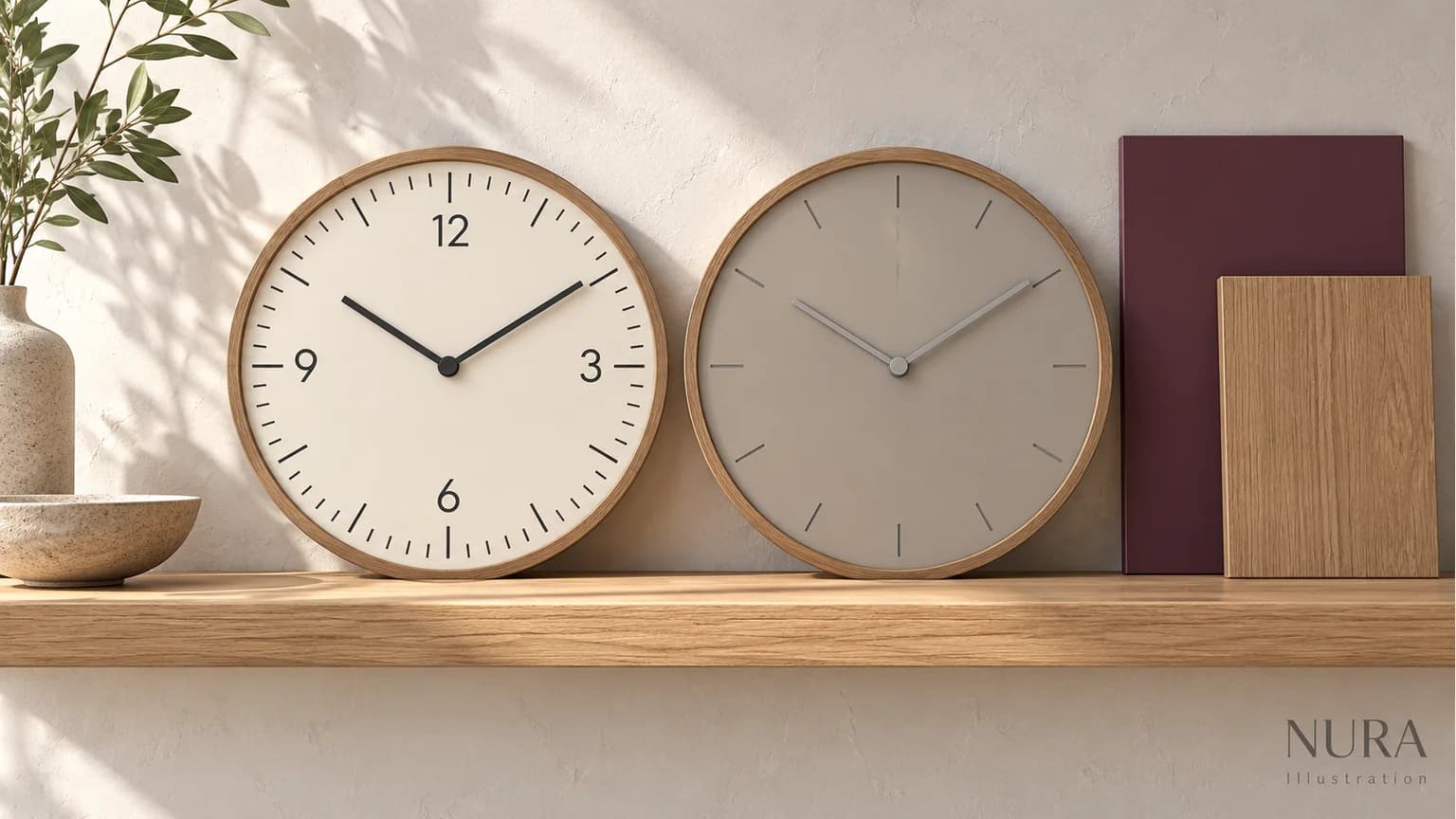
Before committing, compare the actual shortlisted dial from the relevant distance and angle where possible. Look at the hands, markings and face together in ordinary daylight and kitchen lighting. Notice any reflections. If you cannot assess the actual product, keep readability unresolved rather than treating a catalogue photograph or paper circle as proof.
Newgate's interior guide connects kitchen clocks with readable dials and surrounding finishes. You can coordinate the frame with retained oak furniture or metal details without making every part of the clock the same colour as the cabinets.
For a hypothetical household, a grey face might suit plum cabinetry but be difficult for them to read from the table. An ivory face with dark hands and an oak frame offers another palette to compare. The useful decision combines their preferred appearance with their own view, rather than declaring one clock style best for every kitchen.
Keep the clock in the whole-room brief
Follow the exact clock's mounting instructions and use an appropriate installer if unsure. Jones Clocks' guide explains why the wall and hanging mechanism matter. A paper position does not approve a fixing.
Bring wall photographs from both viewing positions, the clock diameter and finish references to a Nura consultation. These inputs help explain how you want the clock, retained dining furniture and kitchen cabinetry to relate. Our wall-art guide considers another decorative footprint, while mixing wood tones starts with furniture you keep. Explore a documented kitchen for context, and ask what relevant material examples are available before a Fulham showroom visit.