
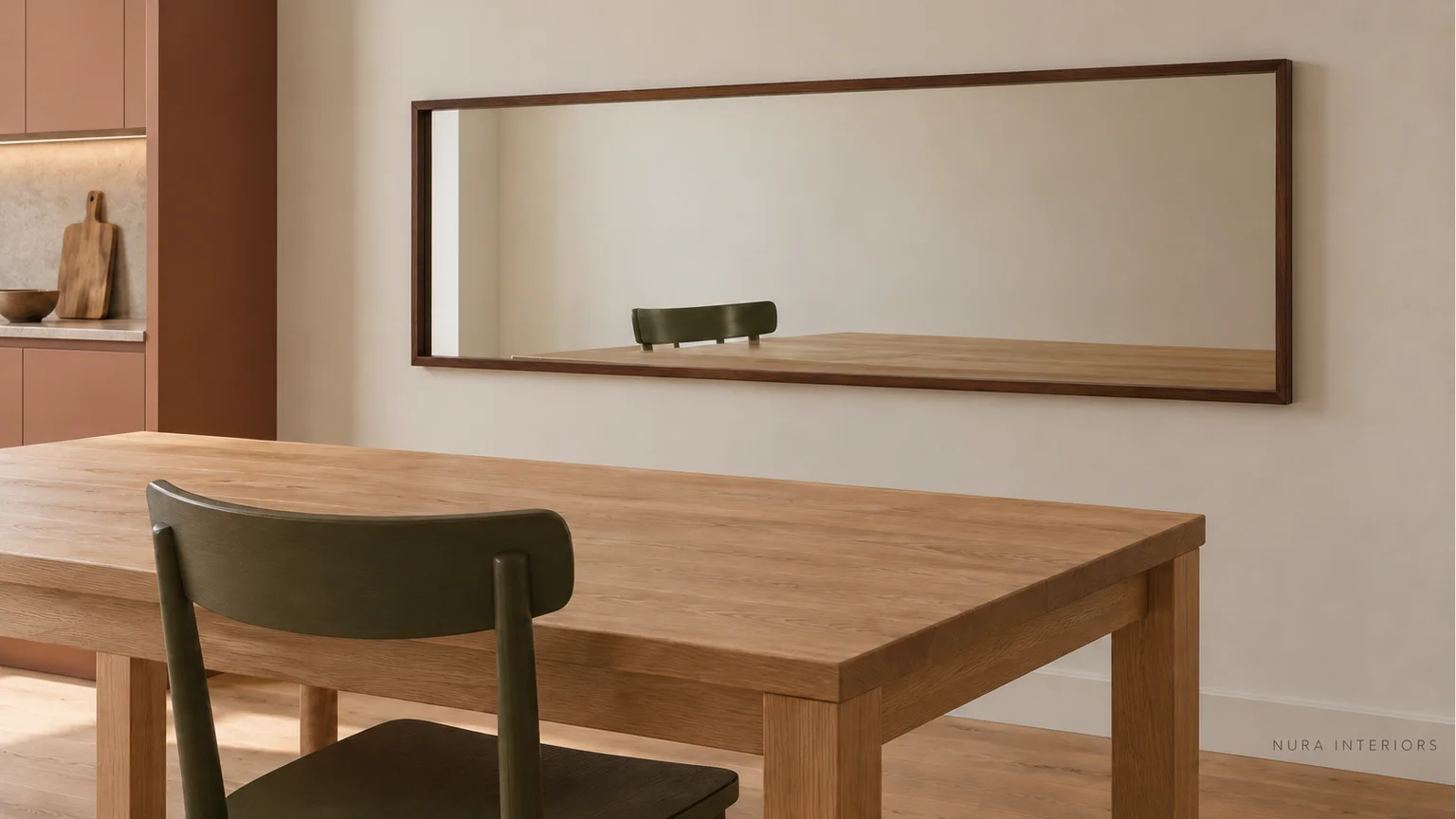

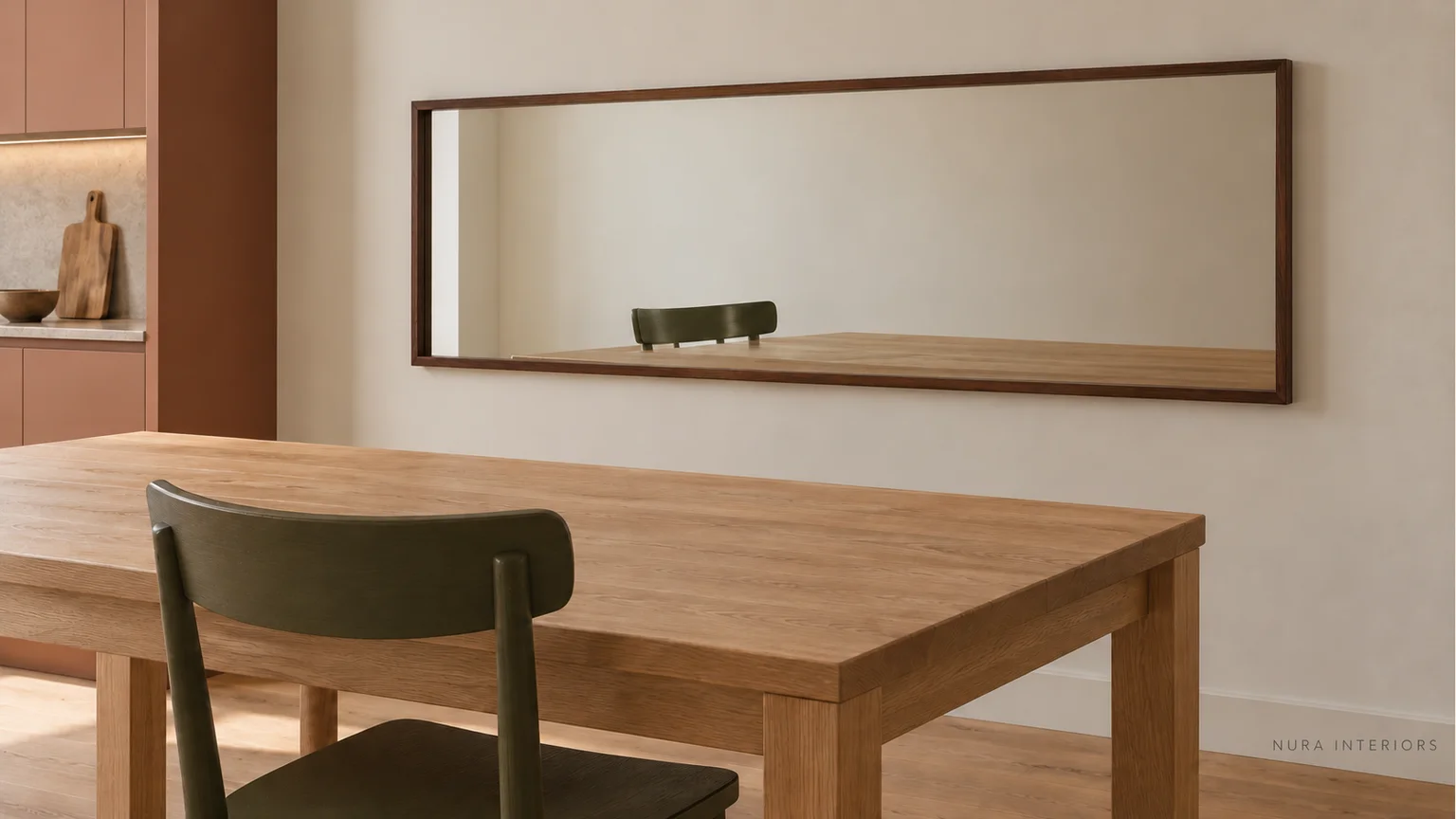
Dining room mirror placement is a choice about the scene inside the frame as well as the frame on the wall. In a kitchen-diner, decide what you want to see reflected from the table and the kitchen entrance. The cupboard fronts, dining furniture and objects used during meals all belong in that conversation.
A dining-room mirror concept with ordinary table and chair details in the reflected scene. Generic arrangement, not a measured sightline or hanging specification. Check what the proposed mirror shows from your actual room positions. Nura Interiors. View the full-size room concept.
Name the scene you want
A view of the cabinet run might appeal more than a reflection dominated by dining furniture. Alternatively, you might enjoy seeing the table and the people around it. Neither preference needs a rule that mirrors must always show, or always avoid, someone eating.
For an existing installed mirror, look at what you actually see from your regular seat and the entrance. For a new proposal, ask how the intended reflection can be represented for discussion. A wall outline shows the frame's proposed boundary; it cannot show the reflection or establish the finished view.
Include an ordinary meal
Imagine a proposed mirror that shows cupboard fronts from the doorway but includes a chair back and table objects from a regular dining seat. The household might welcome both views, or prefer one and ask whether another position is worth considering. This is a hypothetical example, not a prediction for a particular mirror or room.
Include the occupied chairs and everyday table setting. If you prefer the scene only when a vase is centred or a preparation surface is empty, ask whether that is an arrangement you want to maintain. You can reconsider the reflected subject, rather than keeping the room staged for the mirror.
| View | Question | Preference to explain |
|---|---|---|
| Cleared versus occupied | Does my preference survive an ordinary meal? | People and objects that normally remain |
| Different dining places | If our preferences differ, which view takes priority? | The compromise the household accepts |
| Movable objects | Does the preferred scene depend on staging? | What you actually want to keep arranged |
Keep the reflection and fixing decisions separate
Our wall-art guide considers outer frame size and neighbouring cabinetry. The table centrepiece tip addresses the direct view across a meal. A mirror adds the separate question of the reflected scene.
Confirm the actual product, wall position and fixing requirements with the supplier and installer. An appearance preference does not establish those requirements.
Bring whole-room photographs, mirror references and the view you want into a bespoke kitchen discussion. Contact Nura to explain how the dining area should relate to your cabinetry, and ask which relevant examples are available.