
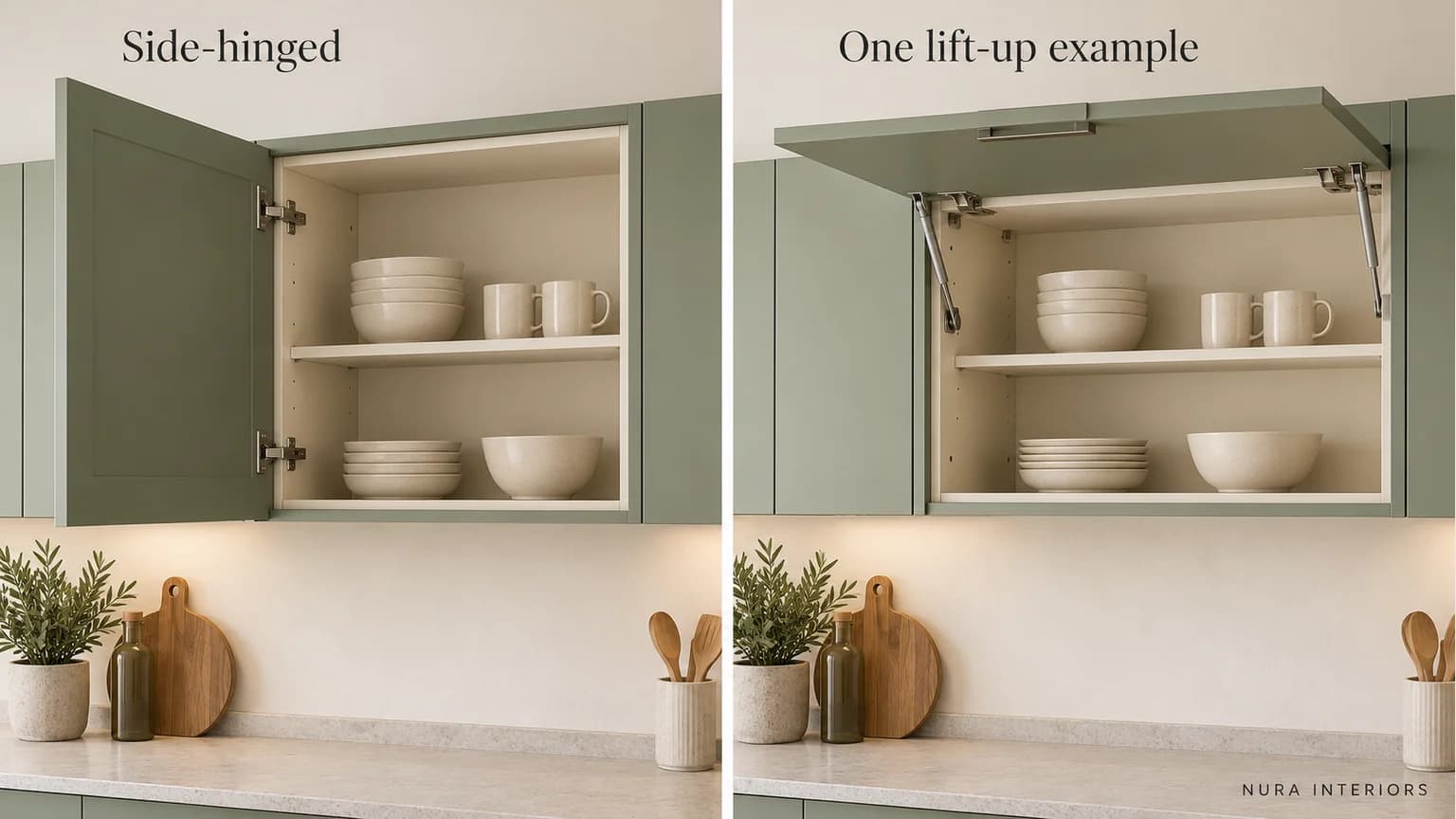

Choose lift-up or side-hinged kitchen cabinet doors by considering the whole task: open the cupboard, take something out, return it and close the door. A front that looks appealing when raised may still leave a closing question for one of its users. Compare the actual proposed fitting at the intended cabinet position, rather than choosing from an open-door photograph.
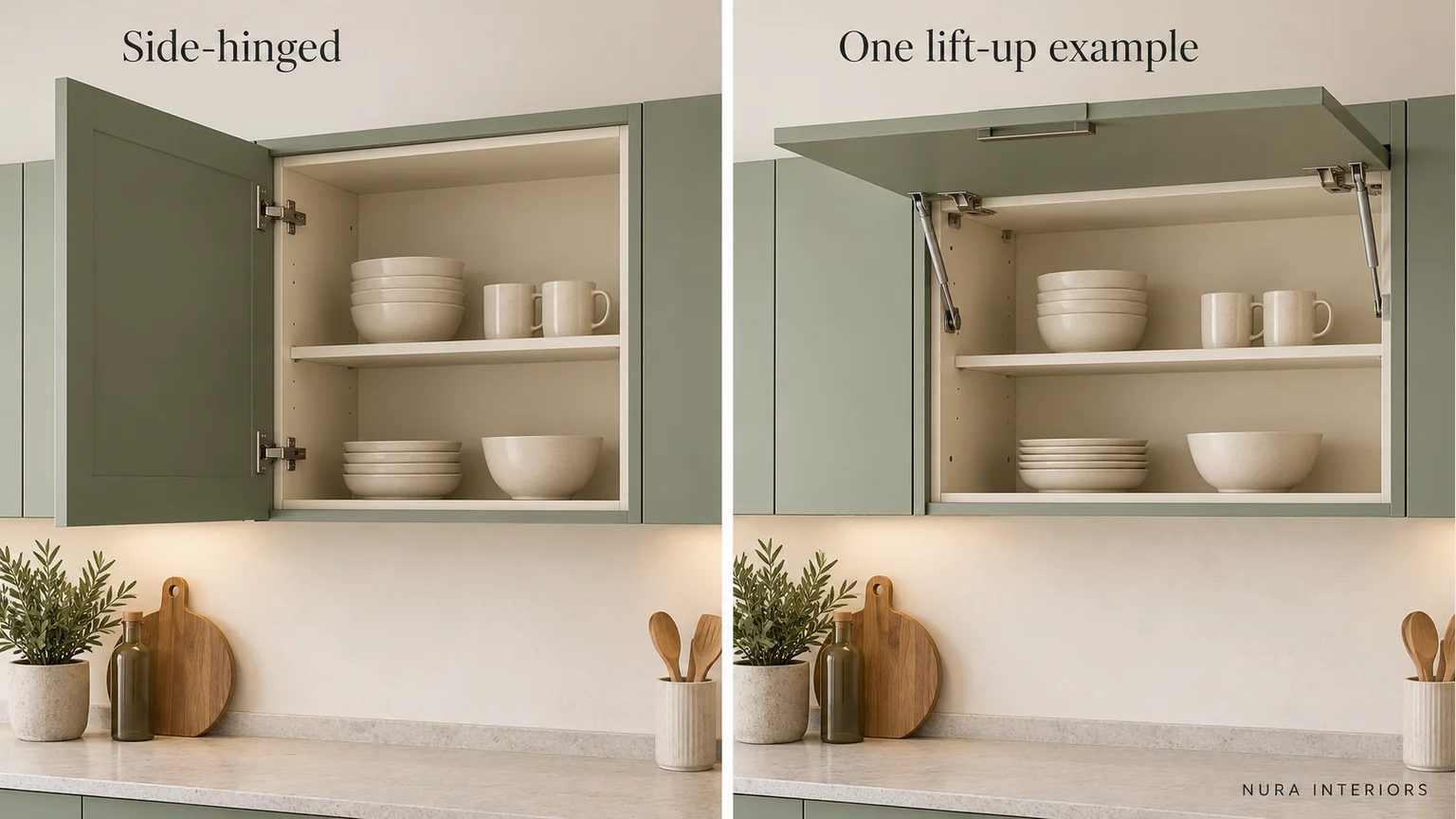
Side-hinged and upward-opening wall-cupboard concepts. The lift front shows one example movement, not every lift fitting. Generic arrangements, not an installation drawing or a tested comparison. Nura Interiors. View the full-size door concepts.
Identify the movement you are comparing
A side-hinged front opens to one side. A lift front moves upwards, but that description covers different paths. Blum's AVENTOS overview, for example, distinguishes a bi-fold front that folds in the centre, an up-and-over front and a front that rises parallel to the cabinet. These are manufacturer examples, not interchangeable specifications or a statement of Nura stock.
Ask for the exact fitting reference and its intended opening action. Keep manual operation separate from an electrically assisted proposal. The appearance of a handleless front does not establish how it opens or closes; our handleless kitchen door guide considers that distinction.
Complete the task, including closing
Ask to try an appropriate working example where one is available. Open it, retrieve a representative item, put it back and close the front fully. Note where your hand begins and where it needs to be at the end. Invite the other regular users to compare the same sequence.
Record differences between the example and your proposal, including cabinet position, door and fitting. A low display unit cannot settle a closing-reach question for a higher cupboard. No example has been tried for this article.
Do not assume that every lift front stops wherever it is released. Blum's HK top guidance ties its variable-stop behaviour to adjustment for the front's weight. Have the selected fitting's operation confirmed by the supplier; this is not an adjustment guide.
| Stage | Record | Ask to confirm |
|---|---|---|
| Opening | Starting contact point and preferred action | Exact fitting and proposed front movement |
| Retrieval and return | Item, shelf and user's standing position | Access with the front in its intended open position |
| Closing | Contact point and each user's preference | How the proposed arrangement completes the task |
Resolve preferences on the kitchen drawing
Imagine two people using the same mug cupboard. One prefers the lift opening but finds its closing contact point awkward in the example tried. The other prefers the side-hinged action. This hypothetical difference belongs in the brief, with the example's limitations, rather than being reduced to “lift doors are better”.
Show the proposed movement alongside the ceiling, adjacent fronts and the place someone stands. Ask the supplier to resolve the actual requirements. Our cabinets-to-ceiling guide separates usable upper storage from a finishing band; neither appearance establishes convenient retrieval.
Bring a cupboard inventory, plan, photographs and unresolved opening or closing preferences to a bespoke kitchen discussion. Contact Nura and ask which relevant working examples are available for your cabinetry brief.