
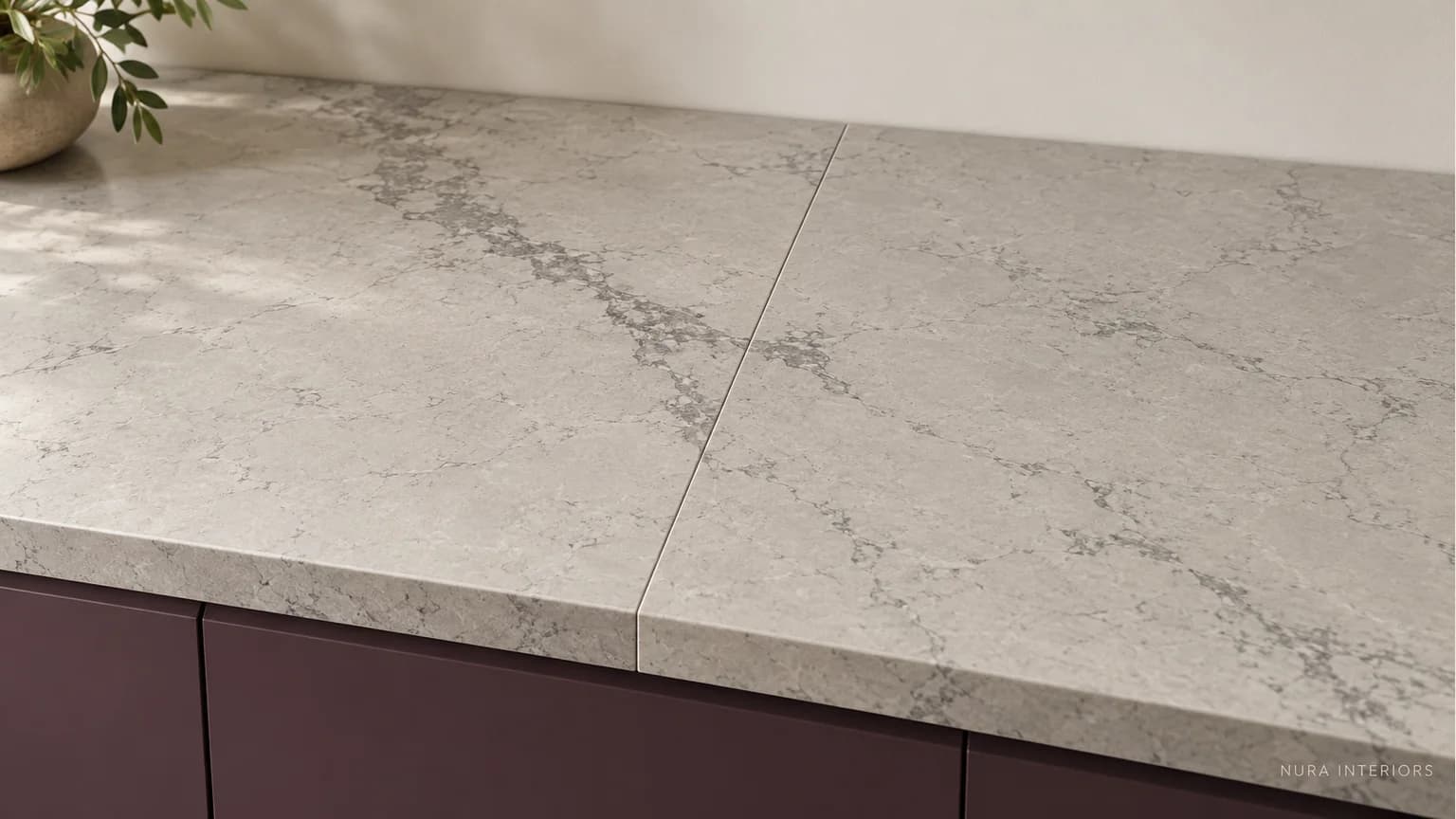

Quartz worktop joints deserve a conversation about both position and appearance. Ask where the sections will meet and what happens to the colour or veining at that point. A small surface sample can help you choose a colour, but it cannot show the proposed transition across a joint in your kitchen.
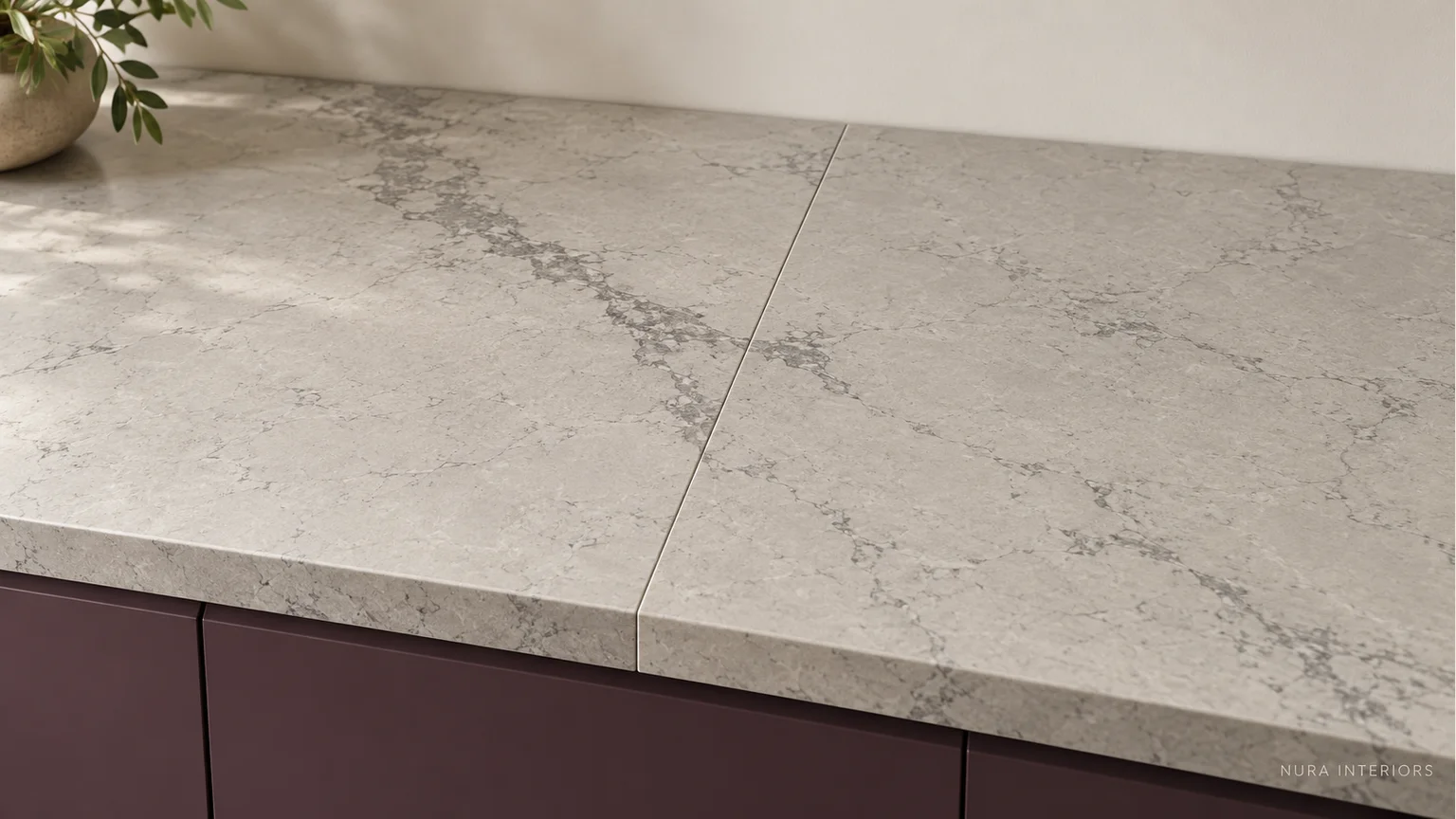
A visible joint and a change in veining across two worktop sections. Generic surface concept, not a named product, measured joint or approved fabrication layout. Confirm the proposed position and pattern arrangement with your supplier. Nura Interiors. View the full-size surface concept.
Separate the joint from the pattern
A joint is where worktop sections meet. Matching a pattern across that meeting is a related design question, rather than a promise that the joint itself disappears.
Gemini's guidance says the joins in its installed Minerox Quartz worktops remain visible to the naked eye. It also says its template and site-survey team confirms their exact positions. That describes Gemini's own range and service. Ask your selected supplier what appearance to expect and when the positions in your proposal will be confirmed.
A phrase such as “colour matched” still needs explaining. Does it refer to the joint material, the tone of adjoining pieces or the arrangement of a prominent vein? Ask to see what the supplier means for the actual product, rather than assuming those are the same thing.
Relate the proposed join to the whole run
Request a worktop layout identifying each proposed joint, the chosen surface and its intended pattern direction. Include the sink, hob and the areas where you prepare or serve food so the discussion relates to the room you will use. The fabricator should explain the requirements of the actual proposal; this is not an instruction to move a joint beside or away from a particular feature.
Imagine a kitchen with a long run turning onto a shorter return. The supplier labels the proposed meeting “Joint A”. The household likes a strong vein in its chosen surface and wants to understand whether it ends, changes direction or meets another part of the pattern there. This is a hypothetical question, not an approved layout or a prediction of how a particular slab will look.
| Consider | Ask the fabricator | Keep with your preference |
|---|---|---|
| Joint A's position | Why is it proposed here? | The named run and relevant room view |
| Pattern transition | What will meet on either side? | Exact surface reference and proposed representation |
| Possible alternative | Is another arrangement genuinely feasible? | The option or constraint explained |
Ask about the actual pattern arrangement
Caesarstone's UK professional guidance advises planning pattern matching with clients. That supports involving you in the appearance discussion. It does not guarantee that every vein can continue across every joint.
Ask how your supplier can represent the intended pieces and transition before cutting. Note whether you are seeing a general reference, a sample or information about the material proposed for your order. If you dislike the transition, ask whether an alternative is feasible. If none is offered, understand the constraint before deciding whether to accept the proposal or reconsider the surface.
Bring the surface into the kitchen brief
Our worktop material guide considers the broader surface choice. The edge-profile article addresses the separate border seen below the top.
Bring the room plan, surface reference and supplier's proposed joint arrangement to a Nura kitchen discussion. Contact the studio to explain which visible transition matters to you and ask which relevant examples are available for your wider cabinetry brief.