
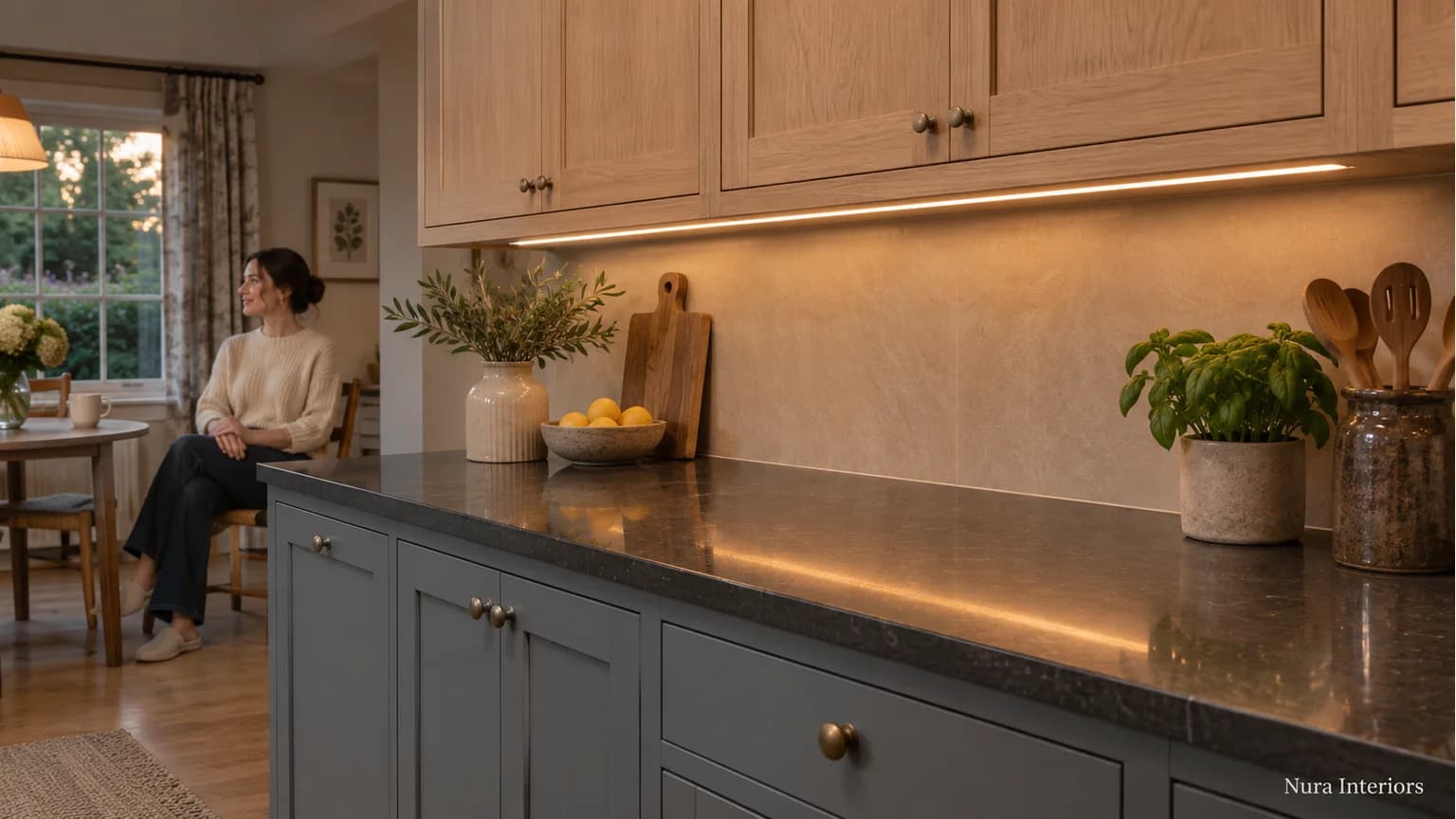

Under-cabinet lighting can present two different things to notice: the fitting or light source itself, and a bright reflection on the worktop. Identify which concerns you, from which position, before choosing a product or changing the cabinet detail. An unobtrusive fitting does not by itself establish the appearance of the surface below it.
Keep the actual worktop finish, selected light and cabinet underside together in the proposal. The aim is a specific question for the lighting supplier, not a universal placement rule or a claim that a photograph proves glare has been resolved.
Describe what you are seeing
From a normal working position, is the source visible below the cabinet edge? From a seat facing the run, is your attention drawn to the fitting, its reflection or both? Record those observations separately. A dislike of a bright line is useful information, but it is not a measured assessment of glare or task illumination.
Include the relevant room view and retained furniture. Someone seated across the kitchen may see a relationship that is less apparent while standing at the counter. Do not assume that a close-up product view represents either position in your room.
Follow a polished-worktop proposal
Imagine a household choosing a polished-looking worktop beneath a perimeter cabinet run. A nearby kitchen seat faces that run. The household wants the underside lighting to remain visually quiet while still supporting the lighting brief. This is a hypothetical preference, not a Nura project or a tested fitting comparison.
Ask the proposal to identify the worktop's actual product and finish, the cabinet underside and front detail, and the selected light. Show the standing and seated viewpoints. A generic glossy surface or an unspecified strip on a drawing leaves important differences unresolved.
Then ask what evidence can help review the proposed combination. If a relevant example is available, note its fitting, worktop and cabinet details and how they differ from yours. A demonstration can explain an appearance preference without establishing the final room's result. Do not improvise a trial with loose fittings or modify installed cabinetry yourself.
Identify the complete fitting arrangement
Sensio's LED-profile guide distinguishes surface, recessed and angled profiles and discusses covers and lighting-product choices. These are different proposed arrangements, not a guarantee that one profile removes reflections from every worktop.
Its Blaze product page identifies a recessed profile paired with its named Neutron strip. That is a specific manufacturer example, not permission to combine arbitrary components or evidence of Nura availability. Ask the supplier to identify the actual fitting, cover and associated products in your proposal.
Keep appearance separate from the complete lighting response. The relevant supplier or appointed professional should confirm the specification and installation requirements. This guide does not prescribe recesses, setbacks, electrical components or adjustments.
| Question | Record with the proposal | Ask to clarify |
|---|---|---|
| What draws attention? | Visible source, reflected line or both | The particular appearance being reviewed |
| From where? | Standing and relevant seated viewpoints | Which views the example represents |
| Which combination? | Fitting, underside detail and worktop finish | Outstanding response and responsible confirmer |
Keep related lighting decisions separate
Our kitchen lighting guide connects task, room and decorative lighting. A less noticeable source does not establish that the preparation task has appropriate light. Conversely, accepting a lighting specification does not mean every visible reflection has been discussed with the household.
Inside-cupboard lighting addresses a different task: seeing stored contents. Do not use an illuminated pantry image as evidence for the worktop arrangement.
Frequently asked questions
Is a bright reflection the same as seeing the light itself?
No. Identify each separately and show the viewpoint from which it matters. Both can belong in the supplier discussion.
Will a cover or recessed profile eliminate reflections?
Do not assume that result. Have the actual fitting, surface finish and room views considered together.
Can I choose from an under-cabinet product photograph?
Use it to identify an option, then ask what it represents and which differences from your proposed kitchen still need review.
Explore Nura bespoke kitchens, then bring the worktop reference, cabinet proposal and viewpoint notes to a design conversation. Ask who will develop and confirm the lighting specification and which relevant examples are available within the agreed project scope.