
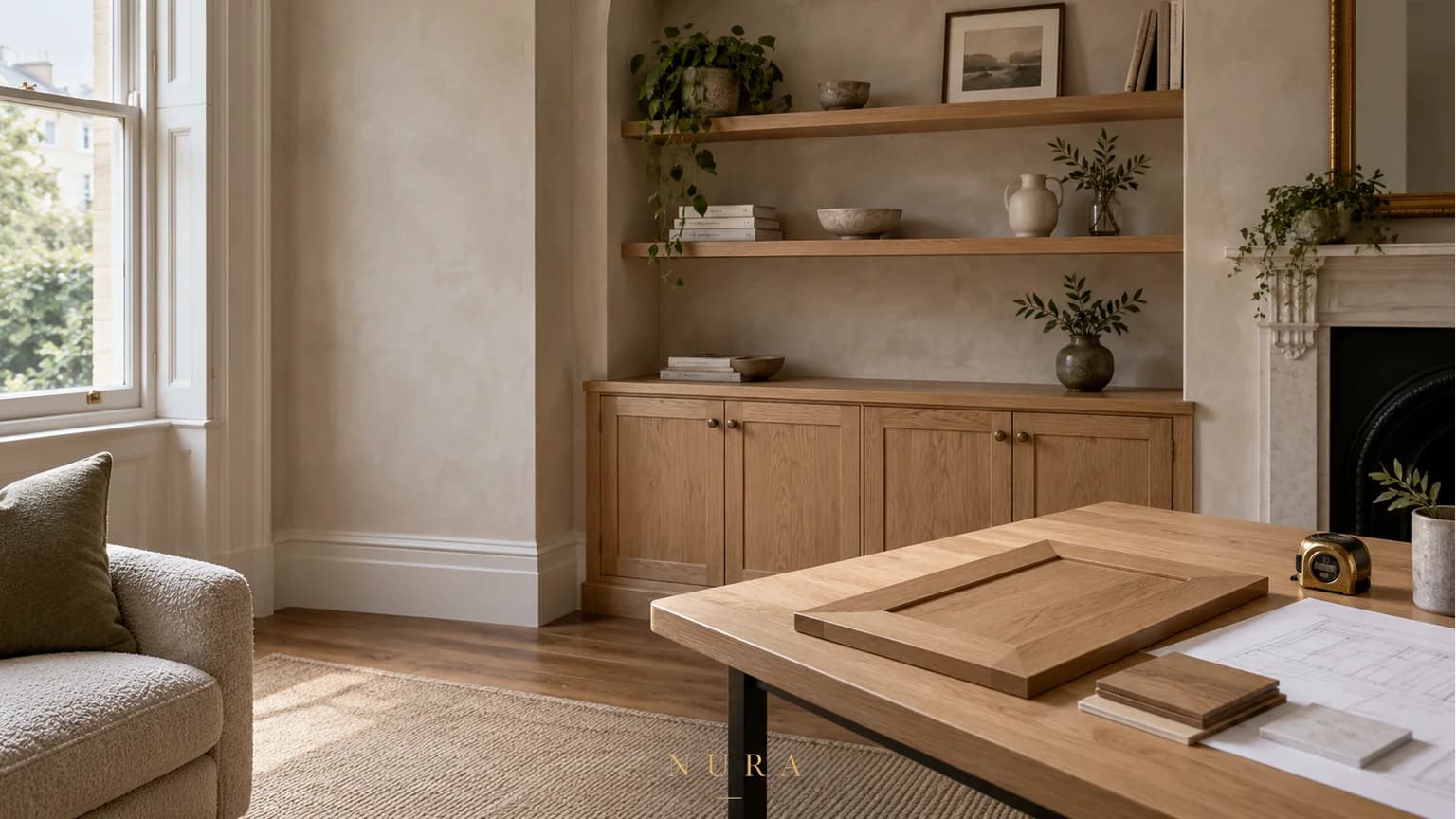

Carpentry vs joinery is a useful distinction when looking for help with a home project, but it is not a complete description of what a business will provide. Joinery commonly refers to making timber components and fitted furniture, often in a workshop. Carpentry often describes building and fitting work on site. In practice, the activities overlap, and businesses use the terms differently.
For a fitted cabinet, the important question is who will develop the design, confirm the site information, make the furniture and install it. A company name alone cannot answer those questions or establish the finish, construction or coordination included in a quotation. Start with the piece you need and ask for the actual scope.
Describe the item before choosing the trade
“We need some joinery” leaves room for very different proposals. Describe the room, the separate furniture items and what they need to do. An alcove cupboard with adjustable shelves, doors and a particular finish is a different enquiry from fitting supplied doors or repairing existing timber work.
Explain what is staying in the room too. Retained skirting, flooring, sockets and nearby furniture affect the questions a supplier needs to ask. Share photographs and available plans, while making clear that they do not replace whatever survey or technical information the project requires.
Then ask whether the business can propose the complete work or only a defined part. A furniture maker may offer installation, work with a separate fitter or supply components only. A site carpenter may make some items as well as fit them. Establish the arrangement rather than assigning capabilities from the label.
Ask who develops and checks the information
Confirm who prepares the proposed layout and details, who records the relevant site conditions and who checks the information before making begins. If an architect or interior designer is involved, explain what they have already developed and what still needs resolving.
Do not assume that a quotation based on an early sketch includes every later drawing, sample or site visit. Ask what the response is based on, which information is provisional and which development tasks are included. This helps distinguish an initial budget conversation from an agreed specification.
Keep the customer's design choices separate from technical questions. Liking a door arrangement does not establish that every fixing, fitting or adjacent interface has been resolved. Ask how the appointed team records reviews and authorises the next stage for your project.
Follow an alcove cabinet through the scope
Imagine a London living room with an alcove beside a chimney breast. The homeowner wants closed storage below and bookshelves above. Existing skirting is to remain, and a socket near the proposed cupboard raises an access question. This is a hypothetical brief, not a Nura project.
One proposal might include developing, making and fitting the cabinet. Another could cover manufacturing from drawings supplied by someone else, with installation priced separately. Neither is automatically unsuitable, but they are different offers.
Ask how the retained skirting will be addressed in the proposed detail and who confirms the socket's relationship with the furniture. Do not assume the furniture supplier includes electrical alterations. The relevant professional should assess any electrical work; the design conversation needs to identify that dependency rather than prescribe a solution.
Use a short scope record to connect the tasks:
| Project need | Ask who provides it | Record in the scope |
|---|---|---|
| Room information | Who surveys the alcove and confirms relevant conditions? | Survey purpose, available information and anything still to be checked |
| Design and specification | Who develops the cabinet layout, details and selections? | Included drawings, finish references, fittings and open decisions |
| Manufacture | Who makes the furniture and from which information? | Items included, current specification and any separately supplied components |
| Installation and interfaces | Who fits the cabinet and coordinates adjoining work? | Fitting scope, access assumptions and responsibilities to agree with other parties |
| Completion and follow-up | Who reviews outstanding items and answers later questions? | Completion arrangements, applicable care information and follow-up contact |
Compare the evidence behind the finish
Ask to see relevant work and clarify what the business actually contributed. A photograph can help explain a visual direction, but it does not establish whether that company designed, manufactured and installed everything shown.
Request appropriate finish references and identify the materials and fittings included in the proposal. A colour name or a general description such as “bespoke quality” leaves important choices unstated. If a physical sample is available, ask what aspect it represents and whether it matches the proposed specification.
Our London joinery firm comparison guide provides further questions for assessing a supplier. Treat relevant examples, clear information and a defined proposal as evidence to consider, rather than assuming one trade label guarantees a particular standard of finish.
Agree changes, access and handover
Before accepting a proposal, ask how a changed shelf arrangement, different finish or newly discovered site condition will be reviewed. Identify who confirms any effect on the scope, quotation or programme and who is authorised to instruct the next action.
Discuss how the furniture will reach the room and what the installation team needs to know about access. Confirm the receiving and fitting arrangements for the actual proposal. “Installation included” is worth clarifying where deliveries, preparation or adjoining trades involve other people.
At completion, establish how outstanding items and relevant care information will be recorded. These questions apply whether one business performs several roles or the work is divided between appointed parties.
Frequently asked questions
What is the difference between carpentry and joinery?
Joinery commonly concerns making components or furniture, often in a workshop; carpentry often concerns building and fitting on site. The terms overlap. Ask the business to describe its actual work, responsibilities and deliverables for your project.
Do I need both a carpenter and a joiner?
Not necessarily as separate appointments. One business may provide the making and fitting you need, or your project may involve several parties. Identify the tasks first, then confirm who covers each one and how their work connects.
How do I compare quotations fairly?
Give suppliers the same item brief and compare included design, site information, materials, fittings, manufacture, delivery and installation. Identify exclusions and provisional choices. Different totals are difficult to judge when one quote covers a complete cabinet and another covers only part of the work.
For a fitted-furniture brief, explore Nura architectural joinery and the bespoke joinery planning guide. Bring your item list, photographs, drawings and unresolved questions to a project conversation. Ask which scope the studio can propose, with the responsibilities and next steps made clear for your home.