

To choose a London joinery firm, connect the work you admire to the work you are actually buying. Ask to see a relevant finished example, inspect a representative sample and request a written description of the proposed materials, fittings, drawings and installation scope. A photograph can help establish a visual direction. It cannot tell you, on its own, which construction or service is included in your quotation.
For a fitted bookcase, wardrobe or cabinet run, the useful outcome is a clear brief: what should it look like, how will it be used, what information is still needed and who will provide it? These seven conversations turn a portfolio review into a more practical comparison.
For room requirements and storage planning, start with the bespoke joinery planning guide. This article focuses on comparing suppliers and recording what their proposals include.
1. Choose an example that answers your project question
Start with the feature that matters most to you. If you want a painted alcove cabinet, a photograph of a timber staircase is limited evidence for that particular decision. Ask for a completed example with a comparable finish, opening arrangement or junction with the building. Confirm whether the example is completed work, a sample or a design proposal.
Look beyond the wide room view. Request details of a door edge, an internal corner and the point where the cabinet meets the floor or wall. Then ask which of those details is proposed for your project. A different specification may be appropriate, but the distinction should be explained rather than left to inference.
2. Review the sample and the written specification together
Use a physical sample to discuss colour, sheen, texture and edge treatment. View the face and edge together and ask how the sample relates to the finished item. Keep its reference with the quotation or drawings so a later discussion concerns the same choice.
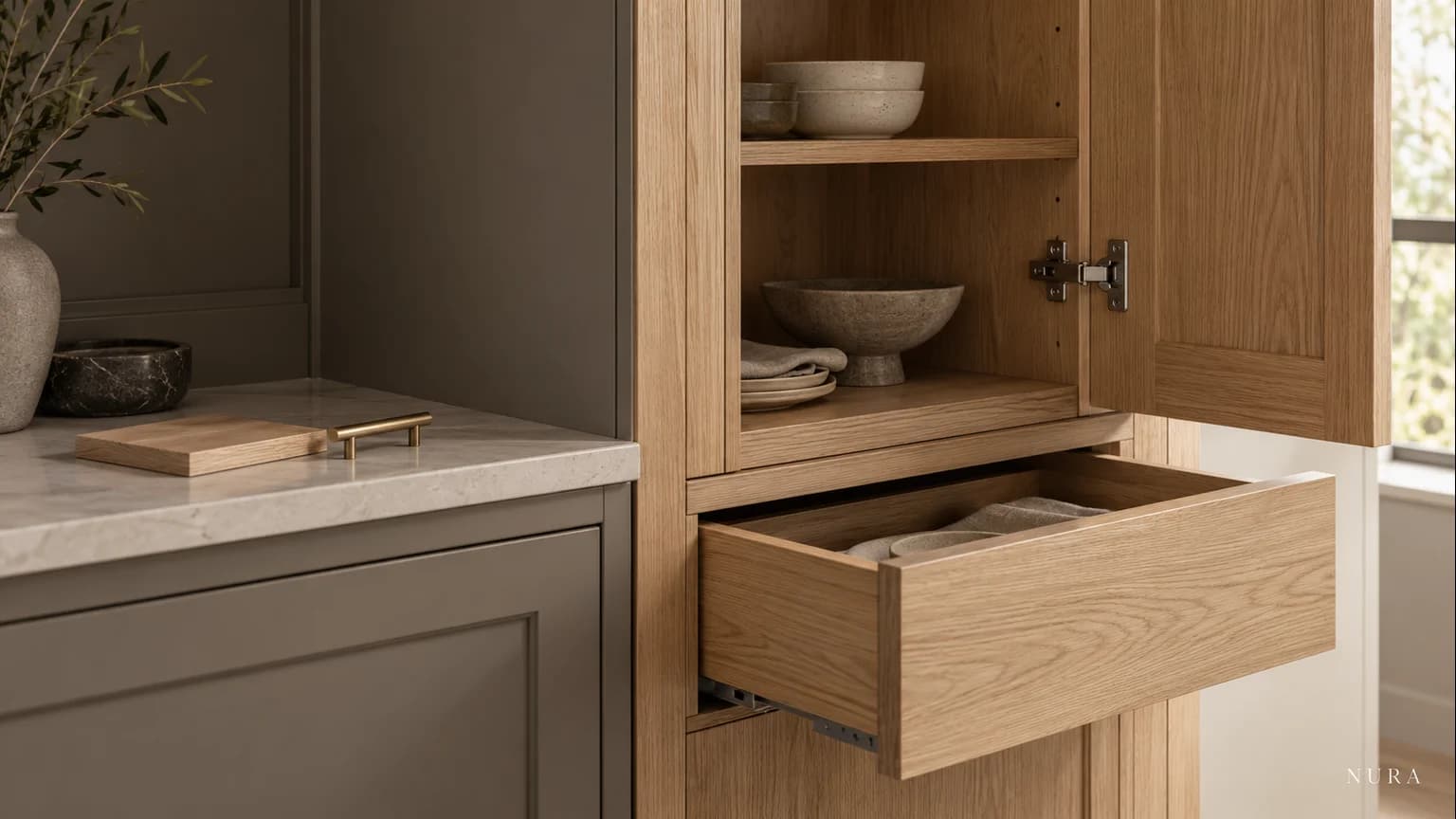
Ask what each part is made from: doors, shelves, cabinet sides and backs need not share one construction. A material name or panel thickness alone is not a complete description. Request the proposed board or timber, finish, edge treatment and relevant care information. Ask the supplier to explain why the combination suits the intended use.
For example, if one proposal offers a veneered door and another a painted door, record the difference before comparing prices. Do not describe one as equivalent to the other simply because both photographs show a similar colour.
3. Try the moving parts and identify the actual fittings
Open the sample door and extend the drawer. Consider the grip, opening movement, access to the contents and whether the arrangement suits the people who will use it. Ask which hinge or runner model is included and whether the sample uses that model.
A manufacturer's name is not a full hardware specification. For example, Blum's UK MOVENTO range includes different nominal lengths and load capacities. Ask the supplier to identify the selected product and confirm its suitability for the proposed drawer and use. This is a product-selection question, not a reason to insist on the largest rating for every drawer.
4. Ask how the design will be checked against the room
Discuss the actual building conditions: skirting, cornice, floor levels, adjacent doors, sockets and access to services. Ask when the relevant measurements will be taken, who records them and what must be confirmed before manufacture is instructed.
Request a drawing that explains the proposed junctions. If a filler, scribe or shadow gap is part of the design, ask where it will appear and how it affects the visible proportions. Avoid choosing a universal gap or allowance from a general article. The detail needs to answer to the room, the construction and the agreed appearance.
For the related review process, read what you are approving in kitchen shop drawings. The same useful distinction applies here: receiving a drawing is different from answering its open questions or authorising a stated action.
5. Compare quotations against one named brief
Make a short comparison record before choosing on price. If two quotations describe different finishes, fittings or installation scopes, note those differences first. Ask for clarification where an item is unspecified; do not fill the gap with an assumption from the portfolio.
| Decision | Ask to see or identify | Record before comparing |
|---|---|---|
| Appearance | Relevant completed example and physical finish sample | Sample reference and any differences from the example |
| Construction | Proposed materials, edges and cabinet details | Named specification and questions still open |
| Moving parts | Working sample and selected fitting models | What is included and what requires confirmation |
| Fit to the building | Survey information and proposed junction details | Who checks the information and when |
| Delivery and installation | Written inclusions, exclusions and access assumptions | Responsibilities and work by others |
| Changes and aftercare | Proposed change procedure and supplied care information | Contact, next action and written terms to review |
Imagine two quotations for a painted bookcase. One names a sample, drawings and installation; the other describes only a painted unit. The useful next step is to ask the second supplier to clarify those items. The shorter description does not establish either a saving or inferior workmanship. It leaves a comparison unfinished.
6. Clarify the delivery, fitting and change process
Ask who manufactures, delivers and installs the joinery, and who is your point of contact at each stage. Discuss access to the property, protection of nearby finishes, any work by other trades and the information needed to plan the sequence. Confirm the available scope rather than assuming a studio, workshop and installer are the same business.
If you propose a change after a sample or drawing has been reviewed, ask which information changes and what the effect may be on the scope, price or programme. Obtain a clear response before giving the next instruction. Keep the revised reference with the project record. For a more detailed comparison of changed specifications, use the value engineering joinery guide.
7. Leave with clear open questions and a next step
After the meeting, separate what you have chosen from what remains unanswered. A finish sample may be agreed while a shelf arrangement or installation detail is still open. Identify the person who will respond and the next document or conversation needed.
Ask what care information will be supplied and how to raise a concern after installation. Read the written aftercare or guarantee terms actually offered; do not infer cover or response times from a general promise of quality. Your aim is an understandable proposal, not a collection of impressive technical terms.
Questions when choosing a joinery firm
Can I judge joinery quality from portfolio photographs alone?
Use photographs to discuss appearance and relevant examples, then ask for samples, proposed construction details and written scope. A photograph alone does not identify the materials, fittings or installation service included in your quotation.
Must good joinery use one particular board thickness or runner brand?
No single board thickness or brand name describes a complete joinery proposal. Ask for the actual specification, selected fitting models and an explanation of how they suit the intended use. Review those details alongside the appearance, construction and installation scope.
What should I bring to a first joinery discussion?
Bring available plans, photographs of the room, a list of what you want to store or use, and a few visual references. Mark known constraints and unanswered questions. Ask the studio what additional survey or design information it needs for your project.
Discuss your joinery brief with Nura
Explore Nura's architectural joinery service, then bring your room information, references and open questions to a conversation with the studio. Ask which design, drawing, supply and installation responsibilities are available for your brief. A useful first meeting should make the next decision clearer, without treating a portfolio image as a complete specification.