
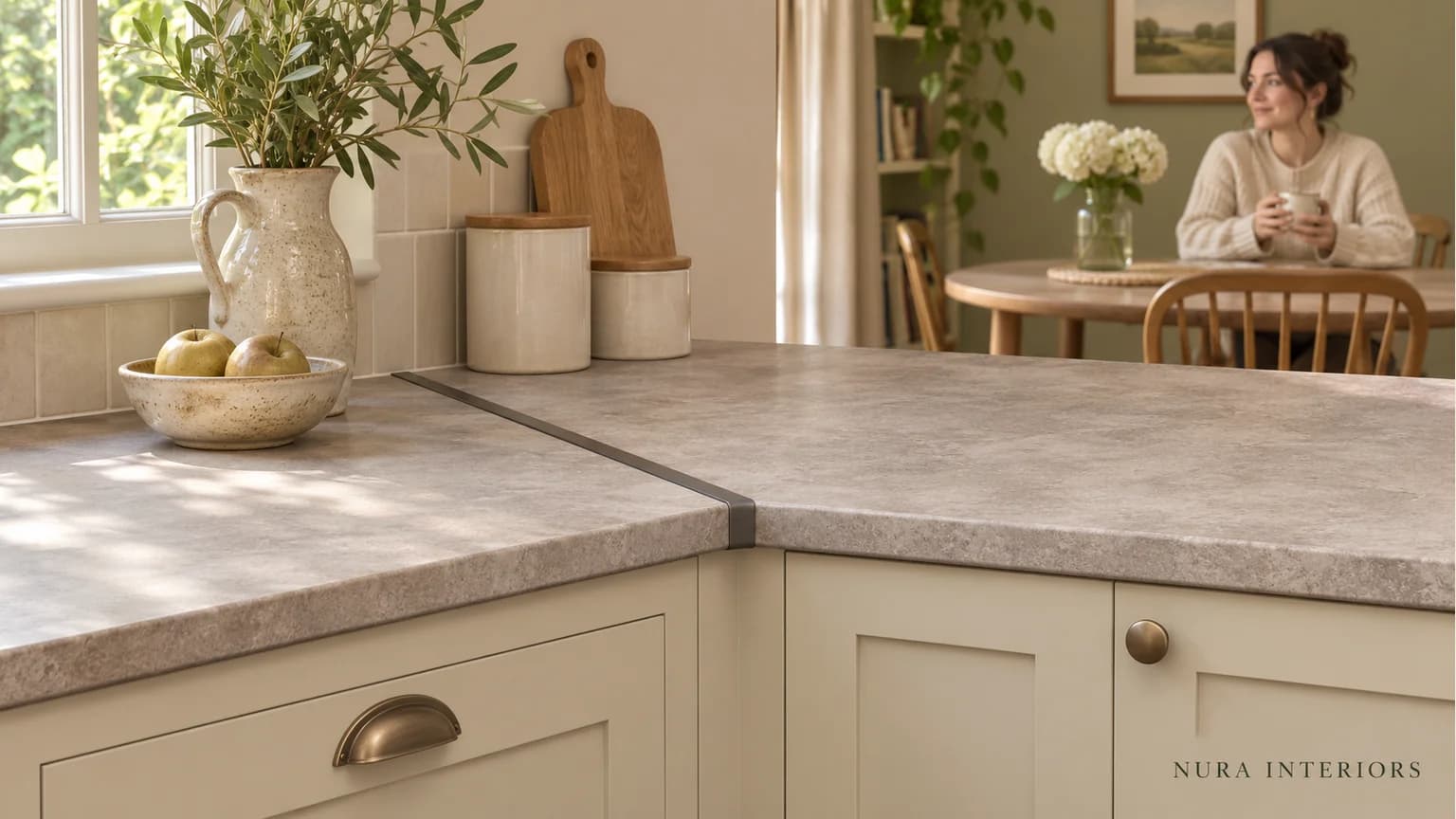

Laminate worktop joining strips need to be identified as part of the actual worktop proposal, not chosen from a product name alone. Ask which accessory is being offered, where the joint will sit and what remains visible. Then compare its appearance with any suitable alternative the supplier actually offers.
A preference for a quieter junction does not establish the complete joint or its compatibility. Keep the worktop product, proposed accessory and relevant installation response together before accepting the order. There is no universal reason to use or avoid a strip in every kitchen.
Identify the accessory before comparing it
An edging strip for an exposed cut edge is not automatically a joining strip between two worktop sections. End caps and accessories for different meetings also need distinguishing. A search result can put these products close together without explaining which one your kitchen requires.
Worktop Express's edging collection identifies products for laminate edges, while B&Q's accessory category lists straight joints, corner joints and end caps. Those categories help frame the question; they do not confirm that a particular accessory suits your worktop.
Ask the supplier for the exact strip or accessory reference, its intended role and the worktop product it is proposed with. Include the worktop's front profile and finish, rather than assuming a similar-looking top will use the same component. Ordinary laminate and compact laminate should not share an installation assumption merely because both names contain laminate.
Put the visible joint on the kitchen plan
Identify the proposed meeting on a worktop layout and relate it to the views that matter in the room. Where will you normally see it: from the entrance, the preparation area or a dining seat? Ask for a relevant product view or detail showing the proposed profile and finish, not only a close-up of an unrelated accessory.
Imagine a household considering a light stone-effect laminate with a dark joining strip at a visible corner. It wants a calm surface but has not decided whether the contrasting line should be part of that appearance. This is a hypothetical brief, not a Nura project or a tested worktop comparison.
Ask the supplier to show what that actual strip would look like at the identified meeting, including its relationship with the worktop's front edge. Keep the worktop reference and location the same when comparing options. A different decor, photograph angle or lighting condition can otherwise become the reason one junction seems preferable.
The household might accept the contrasting line because it likes that defined detail. Or it might ask whether a different specified finish or a suitable alternative joint is available. Record the preference without treating a visible strip as automatically poor workmanship or an unobtrusive-looking alternative as technically approved.
Compare an actual alternative, not a promise
Worktop Express's joining-strip guidance describes a prepared joint alternative without a surface joining strip. That supports asking what your supplier can offer for the selected worktop. It is not a fitting instruction or evidence that every strip can be omitted, removed or replaced in the same way.
Have the supplier identify what its alternative includes and how its expected appearance will be represented. Do not equate the absence of a strip with an invisible joint. Ask which differences belong in the quotation, including any relevant preparation, fitting or finishing scope, without assuming one option is cheaper or quicker.
| Decision | Keep with the proposal | Confirm before ordering |
|---|---|---|
| Product identity | Worktop and accessory references, profile and finish | What the accessory does and its compatibility |
| Visible result | Joint location and relevant proposed detail | Intended contrast and appearance at the front edge |
| Alternative and scope | Actual offered option and included work | Applicable requirements and outstanding responses |
Keep appearance separate from joint confirmation
EGGER's laminate joint guidance distinguishes joining and sealing work from finishing an exposed edge. Use that distinction to ask for the requirements applicable to your selected product. A strip's appearance or presence should not be treated as proof that the complete joint has been resolved.
Ask who confirms the proposed arrangement, what care information applies and which questions remain open. Do not select adhesives, remove existing fittings or alter a worktop from a general guide. If there is existing swelling or damage, obtain an appropriate assessment rather than assuming a covering strip is the remedy.
Our worktop material guide considers the broader surface choice. The edge-profile guide addresses the separate outline at the exposed front. Keep both connected to the actual joining proposal without transferring another material's detail.
Frequently asked questions
Is an edging strip the same as a joining strip?
Not necessarily. Ask which accessory is specified and whether it finishes an exposed edge or relates to a meeting between sections.
Can I have a laminate joint without a visible strip?
Ask whether the supplier offers a suitable alternative for the exact product and layout. Have its appearance and included work explained before deciding.
Does a joining strip establish that the joint is sealed?
Do not infer that from the component alone. Obtain the applicable product-specific joining and care response for the complete arrangement.
Explore Nura bespoke kitchens, then bring the worktop reference, proposed joint location and accessory information to a design conversation. Ask what relevant examples can be discussed and how the surface proposal fits the agreed scope; a strip supply or repair service should not be assumed.